



Three Tankers Hit by US Strikes in Gulf Crisis; Indian Sailors Killed- New Delhi Lodges Strong Protest
A rapidly escalating maritime crisis in the Gulf region has triggered international concern after three commercial oil tankers were struck by United States military forces within a span of three days, resulting in the deaths of three Indian sailors and raising fresh questions about the safety of civilian shipping in one of the world’s most strategically important waterways.

The incidents occurred amid a growing confrontation surrounding Iran and the Strait of Hormuz, through which nearly one-fifth of the world’s oil and gas supplies normally pass. The United States military has been enforcing a blockade against Iranian ports following heightened tensions with Tehran, leading to increased scrutiny of vessels suspected of carrying Iranian oil.
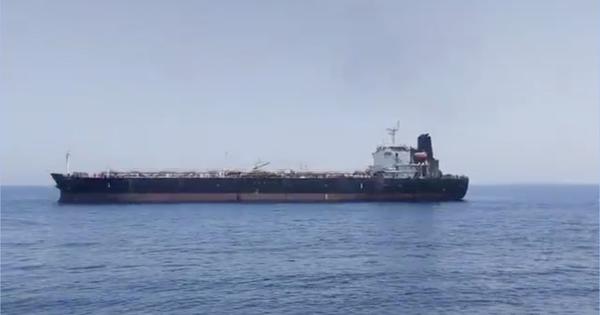
The latest strike took place on Thursday when the tanker Jalveer was hit in the Gulf of Oman. According to the United States Central Command (Centcom), American forces targeted the vessel after it allegedly violated the blockade and failed to comply with repeated instructions from US authorities. Centcom stated that two Hellfire missiles were fired into the ship’s engine room, disabling the vessel.
The attack sparked panic among the crew, who immediately issued distress calls seeking assistance from nearby ships and the Omani Navy. Audio recordings circulating among maritime monitoring agencies reportedly captured crew members blaming the United States for the strike and accusing Washington of targeting merchant vessels. Satellite images later showed smoke billowing from the tanker.
Fortunately, all 20 Indian sailors aboard the Jalveer were successfully evacuated with the assistance of Oman’s naval authorities. Indian officials confirmed that no casualties were reported in the latest incident.
Centcom defended its actions by alleging that the vessel was transporting Iranian oil in violation of the blockade. However, maritime records indicate that Jalveer has operated regularly between Gulf ports and India over the past year and has not been subject to US sanctions.
The strike followed a more tragic incident on Wednesday involving the tanker Settebello. Three Indian sailors lost their lives after US forces fired what officials described as precision-guided munitions into the vessel’s engine room. Another 21 crew members were rescued from the damaged tanker.
India’s Minister for Ports, Shipping and Waterways, Sarbananda Sonowal, described the deaths as deeply unfortunate and assured that the bodies of the deceased sailors would be repatriated without delay.
The United States maintained that Settebello had attempted to transport Iranian oil and had ignored repeated directions from American forces. However, the vessel’s management company, IOS Marine FZE, strongly rejected those allegations.
In a sharply worded statement, the company said there was no communication whatsoever from US authorities before the strike and challenged Washington to provide evidence of any warnings or instructions allegedly issued to the vessel. The company further stated that the tanker had no connection with Iran or Iranian oil exports.
Although the ship itself has not been sanctioned by the United States, maritime monitoring groups have previously linked it to the transportation of Iranian crude. Tracking records indicate that the tanker had recently sailed between Gulf ports and several destinations in China. The vessel’s tracking system had reportedly been inactive since the end of May, making it difficult to determine its precise location at the time of the strike.
Satellite imagery obtained days before the attack placed the tanker approximately 120 kilometres off the Omani coast near Sohar.
The first of the three incidents occurred on Monday when the tanker Marivex came under attack. The vessel, formerly known as Arihant, had previously been sanctioned by the United States for alleged involvement in transporting Iranian petroleum products.
According to distress messages transmitted by the crew, the vessel caught fire and began taking on water shortly after being struck. Crew members repeatedly pleaded for help, warning that the ship was sinking.
Centcom later confirmed that an F/A-18 Super Hornet fighter aircraft launched from the aircraft carrier USS Abraham Lincoln had fired a precision weapon into the ship’s engineering and steering compartments, effectively disabling the vessel.
With the tanker crippled and flames spreading onboard, the crew issued emergency signals that prompted a rescue operation. Flight-tracking records indicated that an Omani military helicopter was dispatched from Masirah Island, while videos later showed crew members being airlifted from the vessel’s deck to safety.
The attacks have generated strong diplomatic repercussions, particularly in India, whose nationals formed a significant portion of the crews involved.
New Delhi has condemned the targeting of commercial vessels and civilian maritime infrastructure, arguing that such actions threaten the safety of innocent seafarers. India’s Ministry of External Affairs summoned a senior US diplomat to formally register its protest and demand clarification regarding the attacks.
Indian authorities have also sought assurances regarding the safety of thousands of Indian sailors currently operating in Gulf waters.
The crisis has intensified concerns within India’s maritime community. The country supplies one of the world’s largest pools of merchant seafarers, with nearly 300,000 Indians serving aboard vessels globally. Government figures indicate that more than 18,000 Indian seafarers are currently working in the Gulf region, while at least 13 Indian-flagged ships remain stranded in and around the Strait of Hormuz.
Maritime unions and seafarers’ organizations have expressed alarm over the deteriorating security environment. The Forward Seaman’s Union of India (FSUI) warned that merchant mariners are increasingly being caught in geopolitical conflicts over which they have little control.
“Seafarers are workers, not soldiers,” the union declared, urging governments and international organizations to ensure greater protection for civilian crews operating in volatile waters.
Strategic analysts have also warned that continued attacks on merchant vessels could place additional strain on relations between India and the United States. While experts believe the broader partnership between the two countries remains strong, repeated incidents involving Indian nationals could generate significant political and diplomatic friction.
As tensions continue to mount in the Gulf, the latest attacks have underscored the growing risks facing commercial shipping and the thousands of seafarers navigating one of the world’s most vital maritime corridors. With global energy supplies and regional stability hanging in the balance, calls are growing louder for restraint, transparency and the protection of civilian shipping from becoming collateral damage in an increasingly dangerous geopolitical confrontation.

Author: shipping inbox
shipping and maritime related web portal