



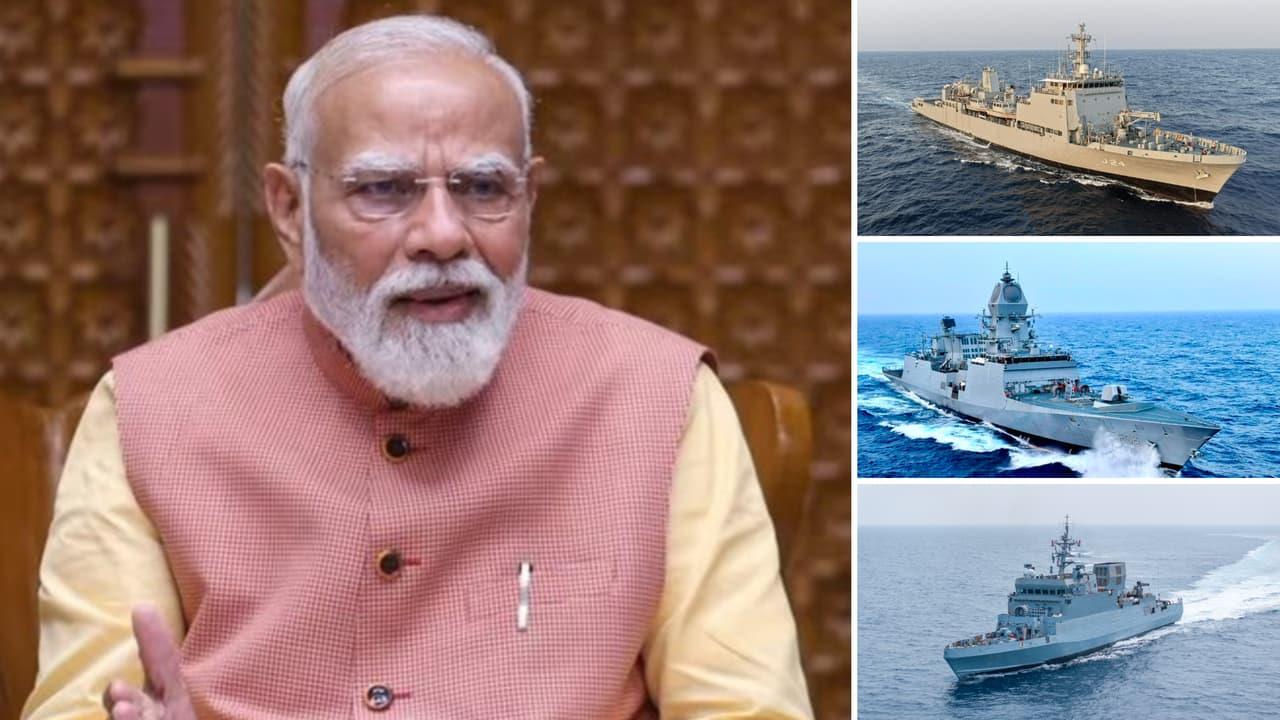
PM Modi to Commission Three Indigenous Naval Platforms in Kolkata

Kolkata: Prime Minister Narendra Modi will commission three indigenously built frontline naval platforms in Kolkata on Sunday, marking another milestone in India’s push for self-reliance in defence manufacturing and maritime capability enhancement. The induction ceremony will take place at the Syama Prasad Mookerjee Port in Kolkata in the presence of senior naval officials and defence representatives.
The three platforms — stealth frigate INS Dunagiri, survey vessel INS Sanshodhak and anti-submarine warfare shallow water craft INS Agray — have been designed and built in India, underscoring the government’s emphasis on the ‘Aatmanirbhar Bharat’ initiative in the defence sector.
Officials said the commissioning of the vessels represents a significant strengthening of the Indian Navy’s operational preparedness in the Indian Ocean Region amid growing strategic competition and maritime security challenges.
INS Dunagiri, a Project 17A stealth frigate, is among the Navy’s most advanced warships. Built by Garden Reach Shipbuilders and Engineers (GRSE) in Kolkata, the vessel incorporates enhanced stealth features, advanced weapons systems and improved survivability. It is the second ship under the Project 17A programme aimed at modernising India’s naval combat fleet.
The warship is expected to play a crucial role in multi-dimensional naval operations, including anti-air, anti-surface and anti-submarine warfare missions. Defence experts say Project 17A frigates reflect India’s growing expertise in complex warship design and indigenous defence production capabilities.
INS Sanshodhak, the survey vessel being commissioned alongside the frigate, will strengthen the Navy’s hydrographic and oceanographic capabilities. Such vessels are critical for conducting coastal and deep-sea surveys, nautical charting and underwater data collection that aid both military and civilian maritime operations.
The third platform, INS Agray, is an anti-submarine warfare shallow water craft designed to detect and neutralise underwater threats in coastal areas. The vessel forms part of India’s broader efforts to improve littoral defence capabilities in response to increasing submarine activity in the region.
According to defence officials, the induction of these platforms demonstrates the rapid pace of indigenous naval shipbuilding in the country. Around 45 warships are currently under construction in Indian shipyards and are expected to be delivered over the next few years.
The Indian Navy has increasingly focused on domestic manufacturing, with a large share of modern naval assets now being built in Indian shipyards using indigenous technologies and systems. Government officials say the strategy not only reduces dependence on foreign suppliers but also boosts local industry, employment and technological innovation.
The commissioning ceremony in Kolkata also highlights the growing importance of eastern India in the country’s defence manufacturing ecosystem. GRSE, one of India’s leading defence shipyards, has emerged as a key contributor to naval modernisation programmes.
Prime Minister Modi has repeatedly stressed the importance of maritime security and India’s aspiration to emerge as a major maritime power. The induction of advanced naval platforms is expected to further strengthen India’s strategic posture in the Indo-Pacific region, where geopolitical competition and security concerns continue to intensify.
With the addition of INS Dunagiri, INS Sanshodhak and INS Agray, the Indian Navy is set to enhance its operational reach, surveillance capabilities and underwater warfare preparedness, while reinforcing the country’s commitment to indigenous defence production.

Author: shipping inbox
shipping and maritime related web portal