



DGMA Unveils Marine Environmental Management Report 2026 to Steer Greener Indian Shipping
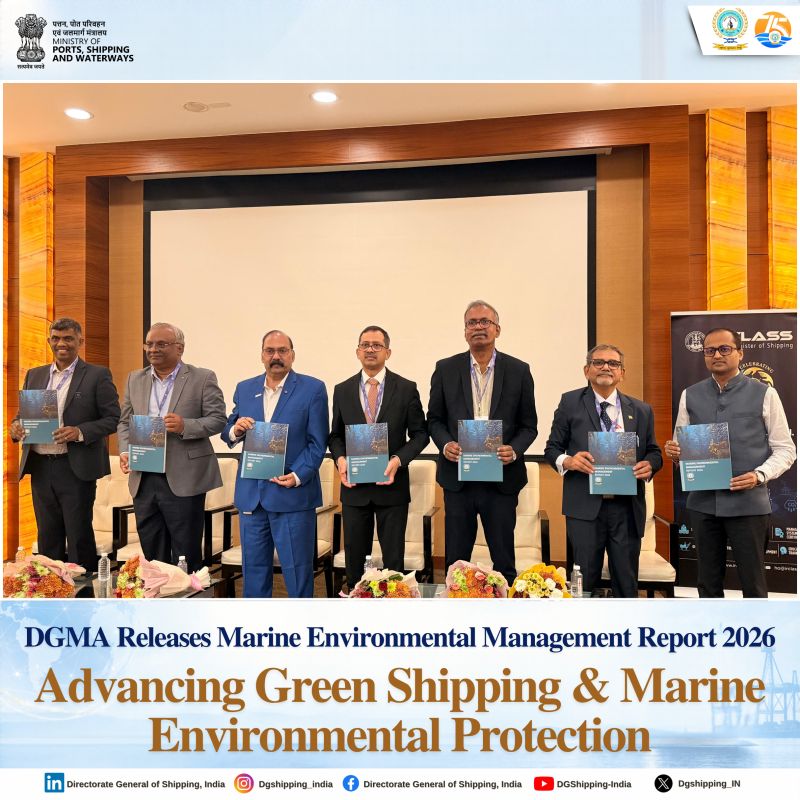
MUMBAI — In a major push toward sustainable maritime governance and eco-friendly operations, the Directorate General of Maritime Administration (DGMA) officially released its Marine Environmental Management Report 2026 during a high-level industry workshop held in Mumbai.

The report was unveiled during the seminar titled “Safety First at Sea: Enhancing Safety & Compliance Standards across Indian Shipping,” organized collaboratively by DGMA and the Indian Register of Shipping (IRS). The event brought together leading maritime administrators, technical experts, shipowners, and environmental compliance specialists to deliberate on strengthening maritime safety while reducing the ecological footprint of the domestic shipping sector.
A Comprehensive Assessment of Green Shipping
Drawing upon extensive empirical data collected throughout 2025, the Marine Environmental Management Report 2026 delivers an in-depth audit of India’s maritime environmental track record. The document tracks essential environmental metrics, detailing carbon emissions, fleet-wide fuel consumption trends, and the operational rollout of green shipping technologies across Indian-flagged vessels.
Key focus areas addressed in the comprehensive publication include:
-
Emissions & Fuel Efficiency: Baseline measurements of greenhouse gas (GHG) and carbon emissions from domestic shipping, paired with comparative trends in fuel consumption across vessel categories.
-
Pollution Control & Plastic Ban: Progress on the strict prohibition of single-use plastics onboard vessels and in coastal waters, ensuring strict alignment with MARPOL Annex V guidelines.
-
Port Reception Facilities (PRF): Operational audits of waste collection and disposal mechanisms available at major and non-major Indian ports to prevent ship-generated waste from entering marine ecosystems.
-
Ballast Water Management (BWM): Regulatory compliance rates regarding the Ballast Water Management Convention to curb the transfer of harmful aquatic organisms and pathogens along India’s extensive coastline.
Bridging Gaps Through Data-Driven Governance
While recognizing positive strides in the adoption of energy-saving technologies and cleaner fuel alternatives, the report candidly outlines critical areas requiring urgent intervention. Notably, it underscores the need for accelerated retrofitting of older tonnage, enhanced compliance monitoring at smaller ports, and standardized digital reporting for fuel oil data.
Officials at the workshop emphasized that the annual publication reflects DGMA’s steadfast commitment to data-driven regulatory governance. By establishing transparent baselines and monitoring year-on-year environmental performance, maritime authorities aim to ensure that India remains at the forefront of international environmental conventions set by the International Maritime Organization (IMO).
The release of the report marks a decisive step in India’s transition toward decarbonized waterways, balancing commercial fleet growth with marine ecosystem conservation.

Author: shipping inbox
shipping and maritime related web portal