



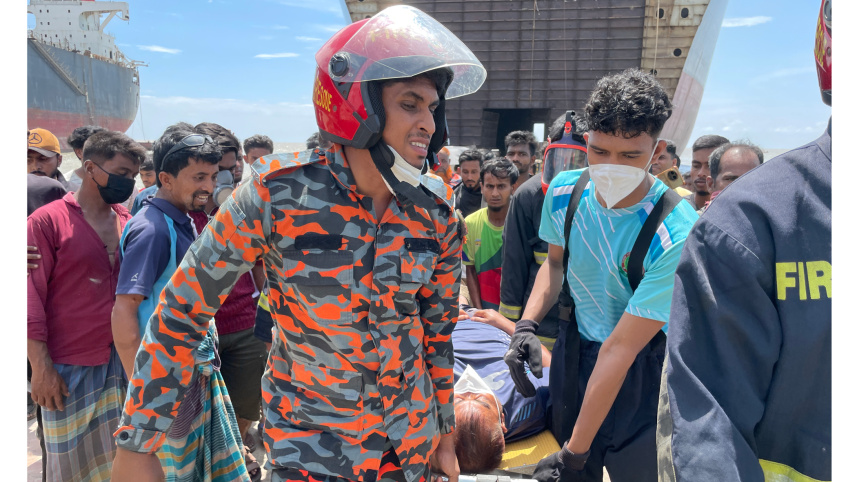
Ship Recycling Safety Under Scrutiny as Bangladesh Workers Continue to Die
Chattogram: The deaths of nine workers at a ship recycling yard in Bangladesh have once again raised serious questions about the effectiveness of the country’s regulatory framework and the gap between safety rules on paper and their enforcement on the ground.

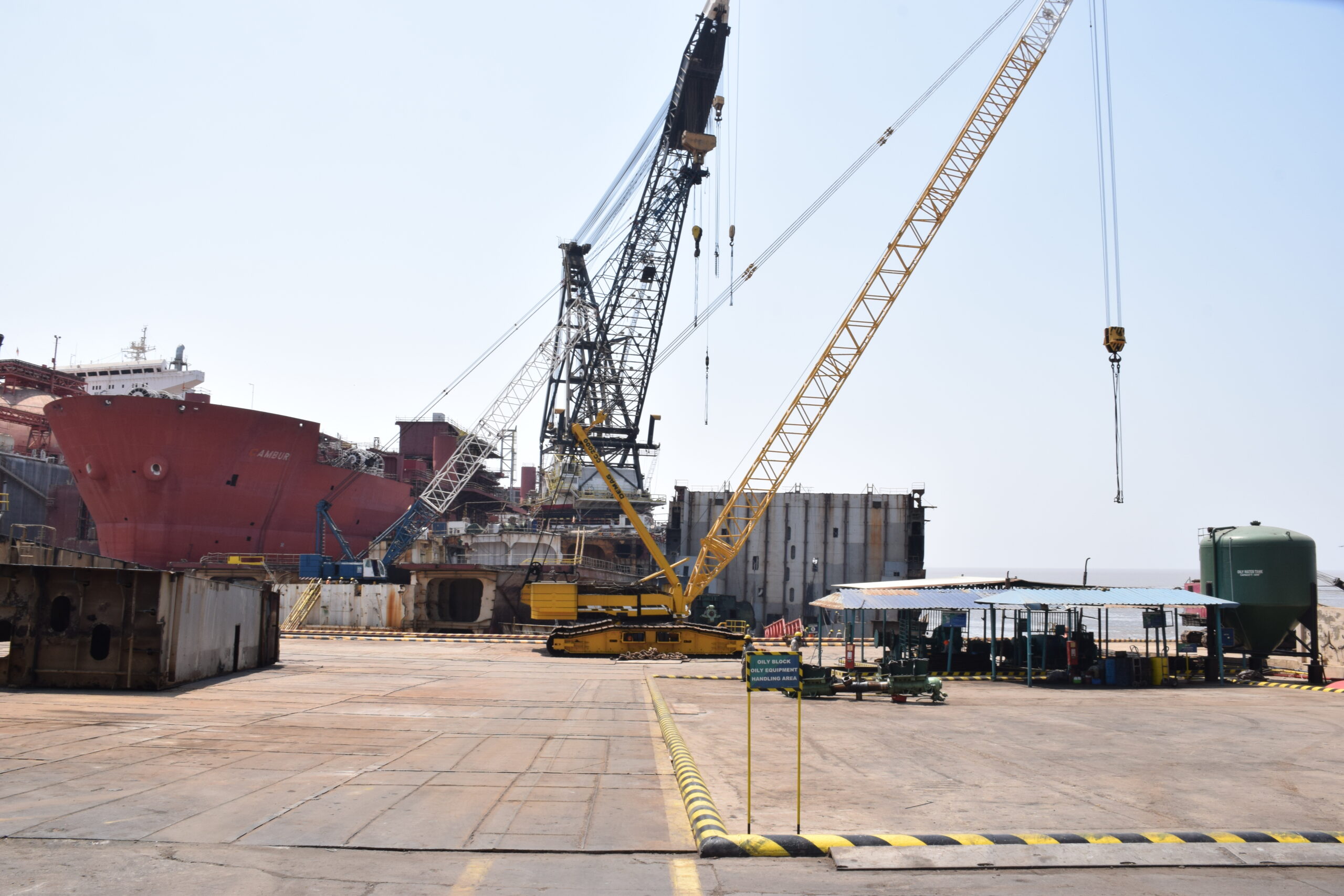
The latest tragedy occurred on August 14 at Ferdous Steel Ship Recycling Industries in Bhatiari, Sitakunda, Chattogram, where workers were dismantling an old LNG carrier. According to an immediate report by Bangladesh’s Department of Inspection for Factories and Establishments (DIFE), toxic gas accumulated inside the vessel, with excessive carbon monoxide causing breathing difficulties and loss of consciousness. Five workers died at the site, while four others succumbed to their injuries in hospital. Another 10 to 12 workers were reportedly injured or fell seriously ill.
What has intensified concern is that the safety problems at the yard were reportedly known to regulators before the accident. DIFE had inspected the facility and issued notices on February 2, May 4 and June 8, directing the company to address identified safety deficiencies. When the problems remained unresolved, DIFE filed a case before the Chattogram Labour Court on July 15. Yet, only weeks later, workers were exposed to a fatal hazard inside the vessel.
The incident has therefore raised a fundamental question: if authorities had already identified safety violations, why was dangerous work allowed to continue?
Bangladesh has a substantial body of legislation governing ship recycling and workplace safety. The Bangladesh Labour Act, 2006 gives inspectors powers to stop the use of machinery, buildings or facilities when they pose an imminent danger to human life. It also contains specific provisions concerning dangerous fumes in confined spaces, including vessels. Entry into such spaces is restricted unless appropriate safety measures, certification and rescue arrangements are in place.
The Ship Breaking and Ship Recycling Rules, 2011 also provide for periodic safety evaluations and allow authorities to suspend cutting operations when unsafe practices are detected. In addition, the Bangladesh Ship Recycling Act, 2018 established the Bangladesh Ship Recycling Board (BSRB) and strengthened institutional oversight of the sector.
Bangladesh has also moved toward international standards. The Hong Kong International Convention for the Safe and Environmentally Sound Recycling of Ships entered into force globally on June 26, 2025. The convention establishes requirements covering hazardous materials, ship recycling plans and authorised recycling facilities. Bangladesh’s adoption of these standards was expected to accelerate the transformation of its ship recycling industry into a safer and more environmentally responsible sector.
However, the latest accident demonstrates that certification and legislation alone cannot guarantee worker safety.
According to reports cited by The Daily Star, more than 150 people have died in shipbreaking accidents in Sitakunda since 2014, while more than 200 have suffered injuries. Twelve people had reportedly lost their lives in the sector in 2026 alone by the time of the August 14 accident.
The problem is particularly complex because several government agencies share responsibility. DIFE is responsible for occupational safety, while the Department of Explosives deals with issues such as gas-free certification. The Department of Environment oversees environmental clearance, while the Bangladesh Ship Recycling Board supervises important aspects of ship recycling. Effective coordination among these agencies is therefore essential.
A major lesson from the Ferdous Steel incident is that a yard’s general certification cannot automatically establish that every vessel entering the facility is safe to dismantle. Vessel-specific risk assessments, gas testing, confined-space procedures, appropriate protective equipment and emergency rescue arrangements must be completed before workers enter and cutting begins.
The economic importance of ship recycling makes the issue even more significant. Bangladesh’s ship recycling sector supplies raw materials to the country’s steel industry and employs thousands of people. A 2017 assessment cited by The Daily Star estimated annual industry output at around Tk 53.3 billion, with approximately Tk 5 billion generated annually through customs duties, income taxes and VAT. The sector was also estimated to support between 25,000 and 40,000 full-time-equivalent jobs.
But economic contribution cannot justify preventable deaths.
The industry’s transition toward “green” ship recycling must therefore go beyond certificates and documentation. Regulators need to ensure that safety procedures are actually followed inside yards, that violations trigger immediate preventive action, and that unsafe vessels or operations are stopped before workers are exposed to danger.
The tragedy at Ferdous Steel should serve as a wider warning for the global ship recycling industry. The Hong Kong Convention represents an important step toward safer and environmentally sound recycling, but its success ultimately depends on implementation, inspection and accountability.
For Bangladesh, the immediate challenge is clear: regulations must become effective safeguards rather than merely documents. When a dangerous condition is identified, authorities must have the resolve to stop work until it is corrected.
Workers dismantling ships at the end of their service should not have to pay for regulatory failures with their lives. The real measure of a “green” or compliant ship recycling yard is not the certificate displayed at its gate, but whether every worker returns home safely at the end of the day.

Author: shipping inbox
shipping and maritime related web portal