



Global Ship Recycling Markets Remain Under Pressure as Monsoon, Weak Steel Prices Weigh on South Asia: BEST OASIS
World’s largest Cash Buyers for Ships sending for recycling BEST OASIS in their weekly ship recycling report opined that the global ship recycling market continued to face challenging conditions this week, with subdued demand, weak steel prices and seasonal disruptions keeping sentiment under pressure across the major recycling destinations of India, Bangladesh, Pakistan and Türkiye. While vessel availability remains limited, recyclers have shown little urgency to secure new acquisitions amid uncertain domestic market conditions and declining scrap prices.

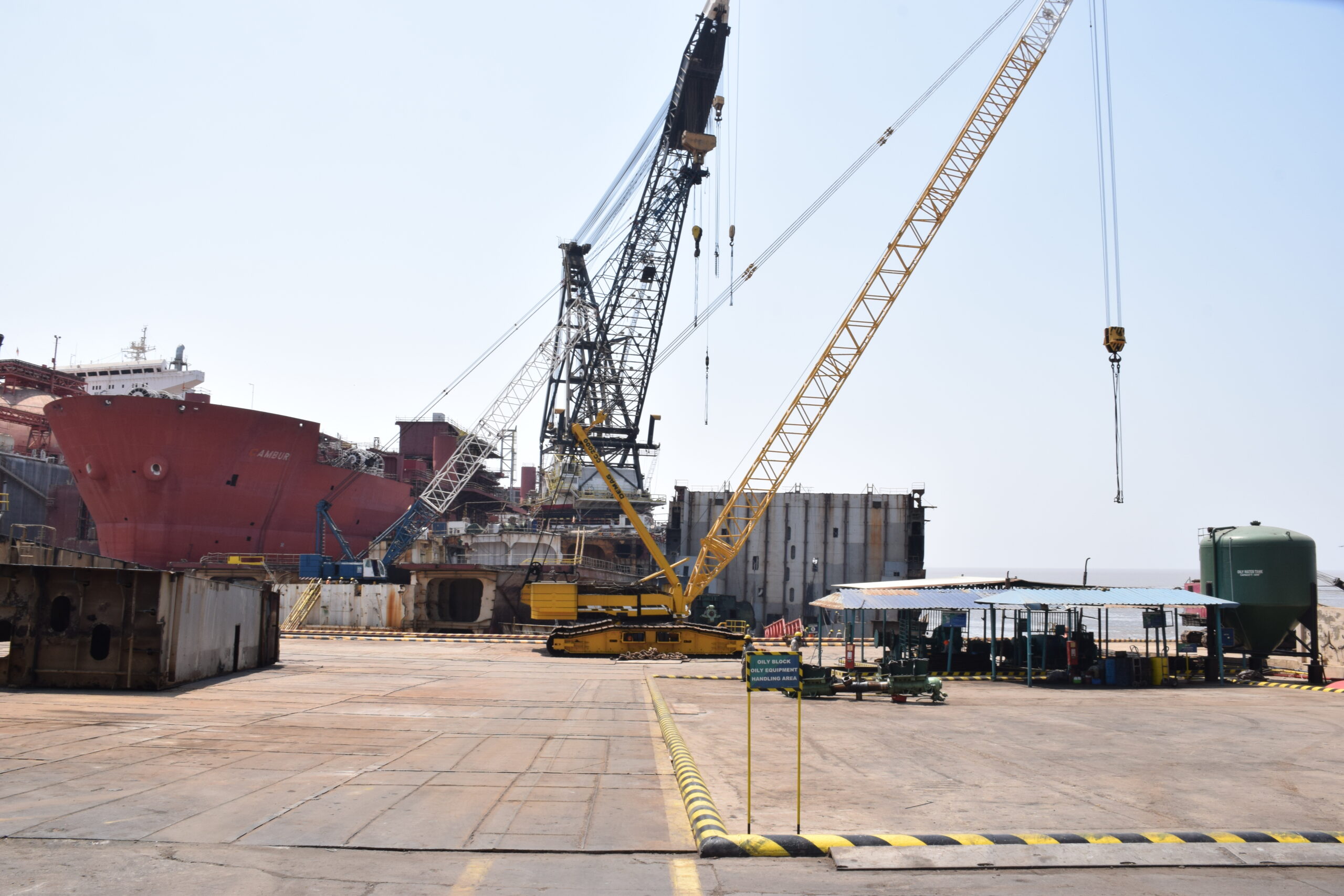
India, one of the world’s leading ship recycling destinations, witnessed a further deterioration in market sentiment after a relatively weak previous week. Industry participants reported that buying interest remained muted as recyclers exercised caution amid soft domestic steel prices and limited availability of suitable vessels for demolition.
The onset of the annual monsoon season is expected to further slow recycling activities over the coming weeks. Heavy rains typically affect beaching operations, cutting schedules and overall yard productivity, prompting many buyers to delay fresh commitments until market visibility improves.
Market observers believe further softening cannot be ruled out in the coming week as recyclers continue to monitor steel demand and currency movements before making significant purchasing decisions.
Despite the subdued sentiment, indicative recycling prices in India remained largely unchanged at around USD 430 per light displacement tonne (LDT) for container vessels, USD 415 per LDT for tankers and approximately USD 400 per LDT for bulk carriers.
Bangladesh also experienced a subdued week as most Hong Kong Convention (HKC)-compliant recycling yards already possess sufficient vessel inventories, reducing the need for additional purchases. Buyers remained highly selective, preferring quality vessels while offering lower price levels than shipowners were willing to accept.
Earlier expectations that the national budget would introduce a significant increase in import duties had temporarily supported market prices. However, the actual increase was limited to approximately USD 2-5, disappointing market participants and triggering a fresh decline in offered prices after the budget announcement.
Heavy rainfall over the past several weeks has further disrupted recycling operations across Chattogram, slowing vessel deliveries and cutting activities.
Nevertheless, Bangladesh’s government continues to demonstrate strong support for the sector. Officials from the Ministry of Industries recently visited several ship recycling yards, underlining the government’s commitment to strengthening environmental compliance and restoring Bangladesh’s position as one of the world’s leading ship recycling nations.
Indicative prices in Bangladesh remained at approximately USD 485 per LDT for container ships, USD 475 per LDT for tankers and USD 435 per LDT for bulk carriers.
Pakistan’s recycling market remained largely unchanged during the week, with recyclers continuing to wait for fresh vessel supply before returning actively to the market.
However, the recent decline in domestic shredded scrap prices is expected to exert downward pressure on ship recycling prices in the near term. Industry participants believe the direction of the market will largely depend on domestic steel demand and the availability of recycling candidates over the coming weeks.
Current indicative prices stand at around USD 470 per LDT for container vessels, USD 460 per LDT for tankers and USD 450 per LDT for bulk carriers, although further corrections cannot be ruled out if scrap prices continue to weaken.
Türkiye’s recycling market also remained under pressure, with Aliaga yards continuing to face difficult trading conditions. The recent market correction has failed to revive buying sentiment, while the ongoing depreciation of the Turkish lira continues to reduce the country’s competitiveness against South Asian recycling destinations.
Local recyclers maintained a preference for larger vessels, but such candidates remain scarce in the market. As a result, activity remained limited throughout the week.
Indicative prices in Türkiye held steady at around USD 280 per LDT for container ships, USD 270 per LDT for tankers and USD 260 per LDT for bulk carriers.
International scrap steel markets also reflected the softer trend. HMS 1&2 (80:20) scrap prices stood at approximately USD 365 per tonne across India, Bangladesh and Pakistan, while Türkiye recorded around USD 370 per tonne. Shredded scrap prices remained near USD 380 per tonne in South Asia and USD 390 per tonne in Türkiye, with week-on-week declines ranging between 2.5% and 4.5%.
Currency movements offered little relief to recyclers. The US dollar strengthened marginally against the Indian rupee, Bangladeshi taka, Pakistani rupee and Turkish lira during the week, adding further pressure on import economics across recycling markets.
Among vessels reported sold during the week, notable transactions included the 48,447-LDT FPSO Cidade de Niteroi, delivered in Denmark with the sale price undisclosed. The motor tankers Yue Chi and Fei Chi were sold on an as-is basis from Hong Kong at USD 515 per LDT each. The reefer vessel Frio Antarctic achieved USD 565 per LDT for delivery to Alang, while Avunda Reefer was delivered to Chattogram at USD 470 per LDT. Additional sales included the bulk carrier Bulan for delivery in Bangladesh and passenger craft Akdeniz and Aeolos Kenteris II for recycling in Aliaga, with prices remaining undisclosed.
Overall, the global ship recycling industry continues to face a cautious outlook as seasonal disruptions, soft steel fundamentals and limited vessel availability combine to suppress market activity across the major recycling destinations. Industry participants will closely monitor steel prices, currency movements and post-monsoon recovery to gauge whether buying confidence can return during the second half of the year.

Author: shipping inbox
shipping and maritime related web portal