



OPEN LETTER TO ALL MEMBERS OF THE EUROPEAN PARLIAMENT by www.shippinginbox.com
Subject: Upholding Regulatory Credibility and Global Maritime Sustainability: Support the Inclusion of Compliant Indian Ship Recycling Facilities on the European List

Date: November 28, 2026
Published by: Shipping Inbox (www.shippinginbox.com)
Dear Members of the European Parliament,
As the European Parliament deliberates on the motion for a resolution objecting to the European Commission’s proposal to add two Indian ship recycling facilities to the European List of Ship Recycling Facilities, Shipping Inbox—speaking alongside global maritime stakeholders, shipowners, and industry observers—urges you to reject the objection and support the Commission’s evidence-based decision.
The European Union has long positioned itself as a global standard-setter in environmental protection, circular economy practices, and occupational safety. However, the credibility of EU legislation depends on consistent, objective enforcement rather than geographical double standards. Approving facilities that have proven their compliance through rigorous auditing is essential to securing a sustainable future for global maritime dismantling.
We ask Members of the European Parliament to weigh the following empirical facts and audit findings before casting your vote:
1. Independent Audits Confirm Full EU SRR Compliance
The two Indian facilities under consideration are not being granted exemptions; rather, they have undergone exhaustive, multi-stage evaluations conducted by independent verifiers appointed by the European Commission.
-
Technical Parity: Publicly available inspection reports confirm that both yards satisfy every requirement of the EU Ship Recycling Regulation (EU SRR) and its Technical Guidance Note—the exact same benchmarks applied to every facility currently on the European List.
-
Regulatory Integrity: Rejecting non-OECD facilities that have objectively met the EU’s stringent legal, environmental, and worker-safety criteria undermines the rule-based framework of the EU SRR and removes the primary incentive for third-country yards to invest in compliance.
2. Documented Infrastructure Transformation and HKC Alignment
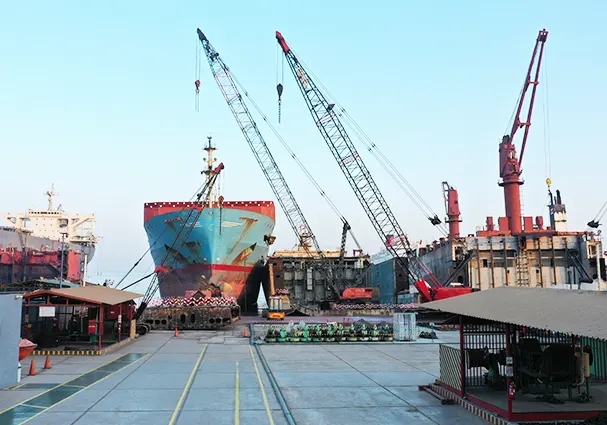
Since the adoption of the Hong Kong International Convention for the Safe and Environmentally Sound Recycling of Ships (HKC) in 2009—which entered into force globally in June 2025—leading yards in Alang, India, have undergone a structural transformation.
-
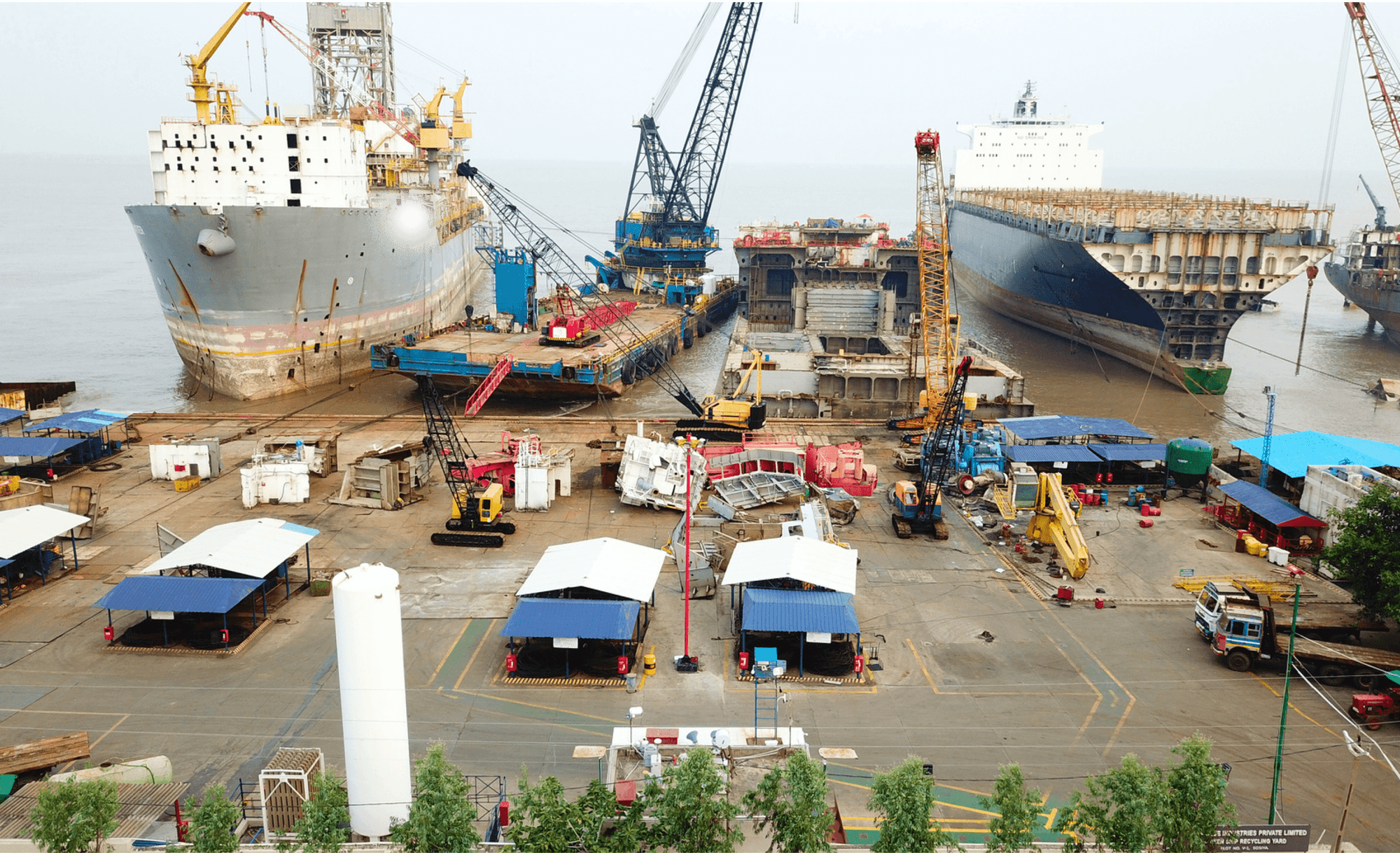
Capital Investment: Over the past decade, compliant Indian facilities have invested millions of dollars in impermeable concrete flooring, advanced drainage and hazardous waste containment systems, heavy-lift cranes, medical infrastructure, and rigorous worker safety training.
-
Fulfilling EU Objectives: A core mandate of the EU SRR is to elevate global dismantling standards and bridge operational disparities between OECD and non-OECD nations. Recognizing these upgraded facilities validates years of documented progress and encourages further industry-wide reform across South Asia.
3. Resolving the Structural Capacity Deficit on the European List
The global merchant fleet is entering a period of accelerated fleet renewal, driven by aging tonnage and stricter International Maritime Organization (IMO) decarbonization regulations.
-
Growing Recycling Demand: Industry projections indicate a sharp surge in end-of-life ocean-going vessels over the next decade.
-
Insufficient EU-Only Capacity: Current European List facilities lack the physical dry-dock dimensions, deep-water access, and workforce capacity required to absorb the volume of large commercial vessels approaching retirement. Expanding the list to include verified global yards is a practical necessity to prevent regulatory bottlenecks and illicit re-flagging practices.
4. Market Complementarity: Allies Rather Than Competitors
Empirical maritime data demonstrates that European recycling yards and compliant Indian yards serve fundamentally distinct segments of the maritime sector:
-
Fleet Specialization: EU-listed facilities primarily dismantle offshore structures, fishing vessels, ferries, and inland waterway craft. Conversely, Indian yards specialize in large, ocean-going merchant vessels such as container ships, bulk carriers, and tankers.
-
Tonnage Reality: Global recycling data shows that while EU yards account for roughly 8% of the total number of vessels recycled worldwide, they represent only 2% of the Light Displacement Tonnage (LDT). On average, ships dismantled in the EU are approximately 30% the size of the global average.
Because they handle different vessel classes and tonnages, compliant Indian yards complement—rather than compete with—European dismantling operations.
Conclusion and Call to Action
The inclusion of these two Indian facilities is a milestone for safe, circular, and environmentally sound ship recycling. A vote against their inclusion does not protect European yards; instead, it penalizes frontrunners who invested heavily to meet European standards and weakens the global reach of EU environmental policy.
Shipping Inbox respectfully calls on all Members of the European Parliament to stand by objective audit findings, reject the motion for a resolution, and endorse the European Commission’s proposal.
Respectfully submitted,
The Editorial & Maritime Policy Team
Shipping Inbox

Author: shipping inbox
shipping and maritime related web portal