



Green Recycling of FPSOs and North Sea Structures
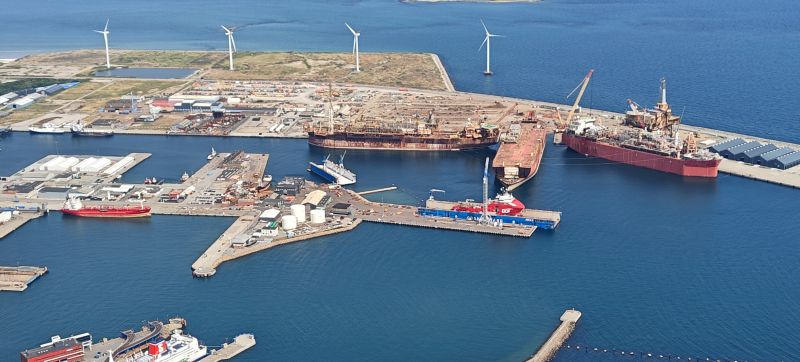
FREDERIKSHAVN — In a major milestone for sustainable offshore decommissioning, Modern American Recycling Services Europe (M.A.R.S. Europe) has announced that its deepwater facility is operating near peak capacity. The yard is currently managing the simultaneous dismantling of three massive Floating Production Storage and Offloading (FPSO) vessels alongside major legacy topside infrastructure from the North Sea basin.

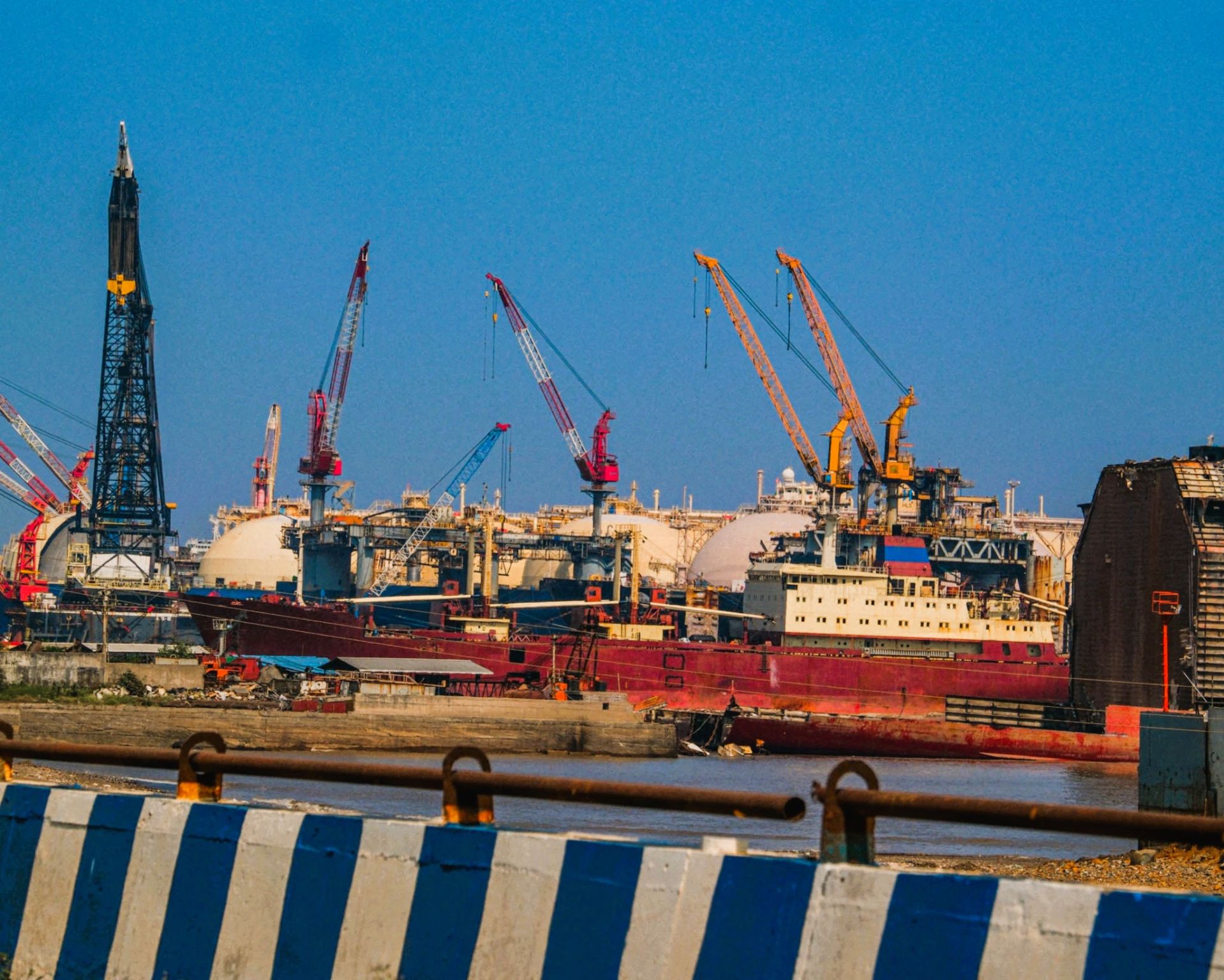
At the center of current operations are three globally recognized production vessels: the FPSO Fluminense, formerly operated by Shell offshore Brazil; the Northern Endeavour FPSO, previously stationed in the Timor Sea; and the FPSO Cidade de Niterói (MV18), retired by MODEC. Moored alongside these floating giants is the massive Heather platform topside, delivered through an EnQuest and Allseas campaign, sitting adjacent to and partially framed by the Northern Endeavour.
The convergence of multiple multi-thousand-ton assets highlights an accelerating industrial pivot toward certified, environmentally sound end-of-life solutions for retired marine energy infrastructure.
Raising Global Standards
For decades, the final disposal of offshore energy assets posed severe environmental, legal, and reputational hazards. Obsolete vessels frequently ended up on tidal beaches across South Asia, where uncontained toxic materials, occupational hazards, and lack of heavy containment drew sharp international condemnation.
By contrast, the decommissioning underway at the Frederikshavn yard follows strict adherence to the European Union Ship Recycling Regulation (EU SRR). The EU-approved framework enforces complete containment on impermeable surfaces, preventing hydrocarbons, heavy metals, naturally occurring radioactive materials (NORM), and hazardous chemicals from leaching into marine or soil ecosystems.
The former owners—including Shell, MODEC, and EnQuest—specifically selected the facility to align with the world’s most stringent benchmarks for responsible ship dismantling. Their decision signals a broader commercial recognition across the global energy and offshore maritime sectors that end-of-life management requires the same rigorous environmental, social, and governance (ESG) oversight applied during operational extraction.
Circular Economy in Heavy Industry
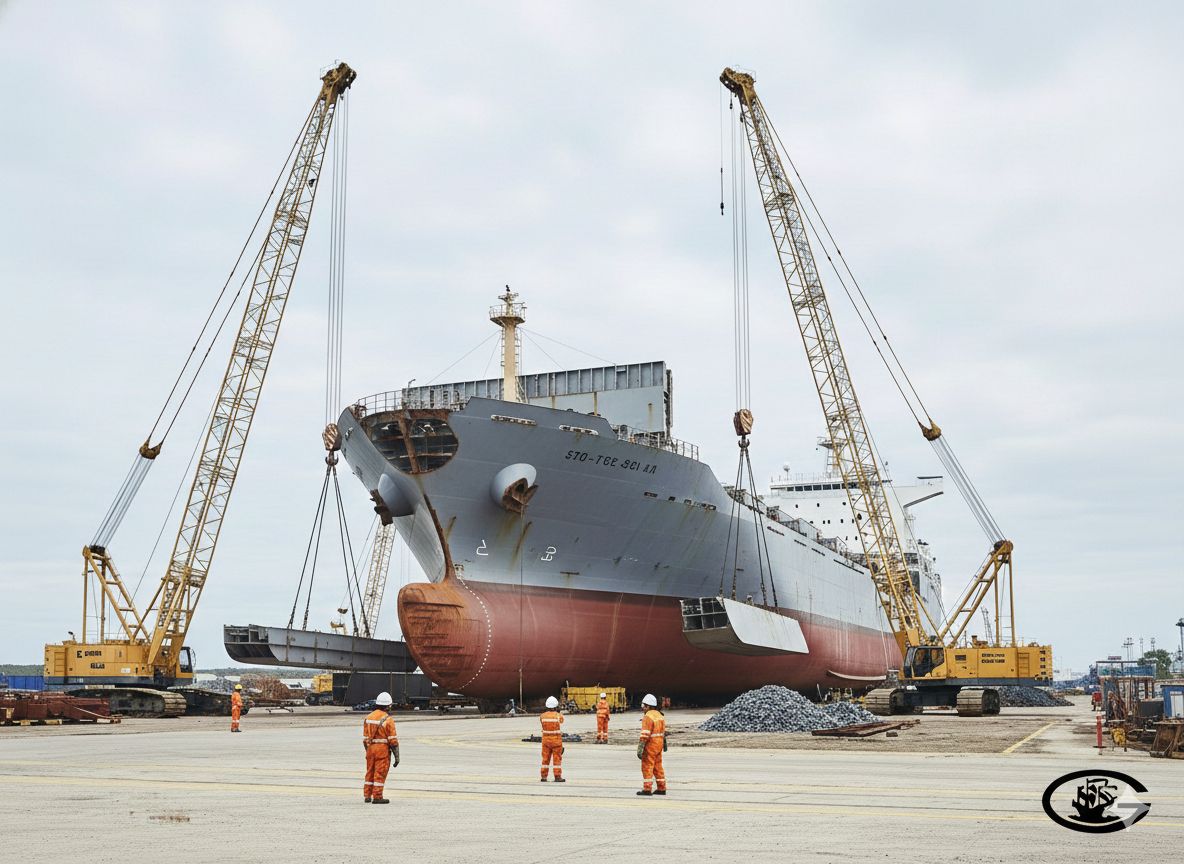
Decommissioning assets of this magnitude is an intricate engineering challenge. Each vessel undergoes extensive hazardous material abatement, gas-freeing, and structural preparation before heavy cutting begins. Specialized high-capacity mobile and gantry cranes work systematically to slice steel hulls and complex processing modules into transportable sections.
The objective reaches far beyond safe waste disposal; it feeds directly into the circular economy. Decommissioned FPSOs and topsides yield tens of thousands of tons of high-grade marine steel and non-ferrous alloys. Once segmented and processed, the metals are sent directly to electric arc furnace (EAF) mills across Europe. By substituting virgin iron ore with recycled heavy steel scrap, the process cuts carbon dioxide emissions in secondary steelmaking by up to 70 percent per ton produced.
A New Chapter for Legacy Energy Infrastructure
As mature oil and gas fields reach depletion across the North Sea, Latin America, and Australasia, hundreds of complex platforms, subsea networks, and floating installations will require retirement over the next decade. Industry analysts estimate global decommissioning expenditures will exceed tens of billions of dollars through the 2030s.
The simultaneous processing of the Fluminense, Northern Endeavour, Cidade de Niterói, and Heather topside proves that clean, industrial-scale recycling is not only technically viable but commercially indispensable. Through transparent, EU-certified yards, maritime energy operators are establishing that decommissioning can protect sensitive coastlines, ensure worker safety, and turn redundant industrial behemoths into sustainable resources for future infrastructure.

Author: shipping inbox
shipping and maritime related web portal