



India-Bahrain Maritime Tie-Up Targets Middle East Ship Recycling Boom
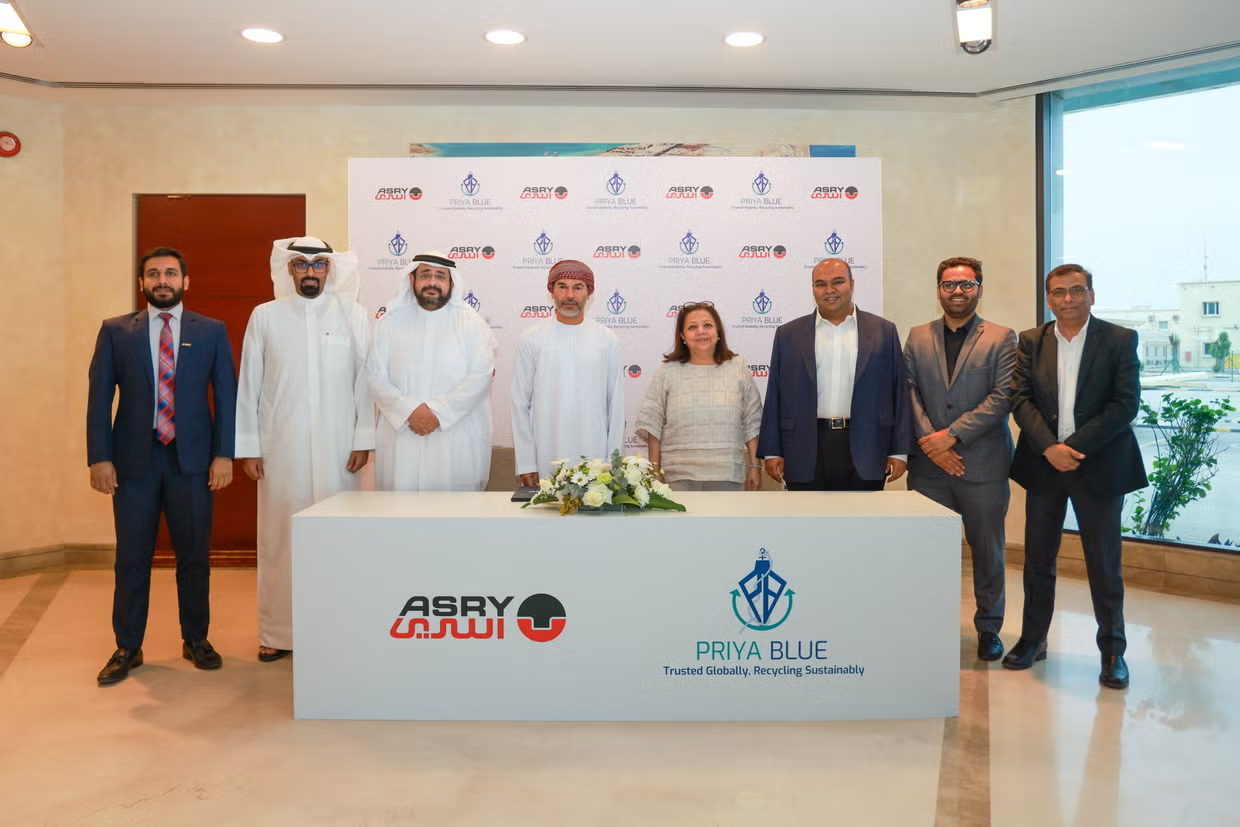
A major Indo-Bahrain maritime partnership has marked a new milestone in sustainable ship dismantling with the launch of the Middle East’s first dedicated green ship recycling facility in the Kingdom of Bahrain. The project, jointly developed by India’s Priya Blue Group and Bahrain-based Arab Shipbuilding & Repair Yard (ASRY), is being described as the region’s largest and most advanced environmentally compliant ship recycling yard.

The facility is expected to significantly strengthen the Middle East’s position in the global ship recycling industry at a time when international regulations are pushing shipowners toward safer and greener disposal practices for ageing vessels and offshore assets.
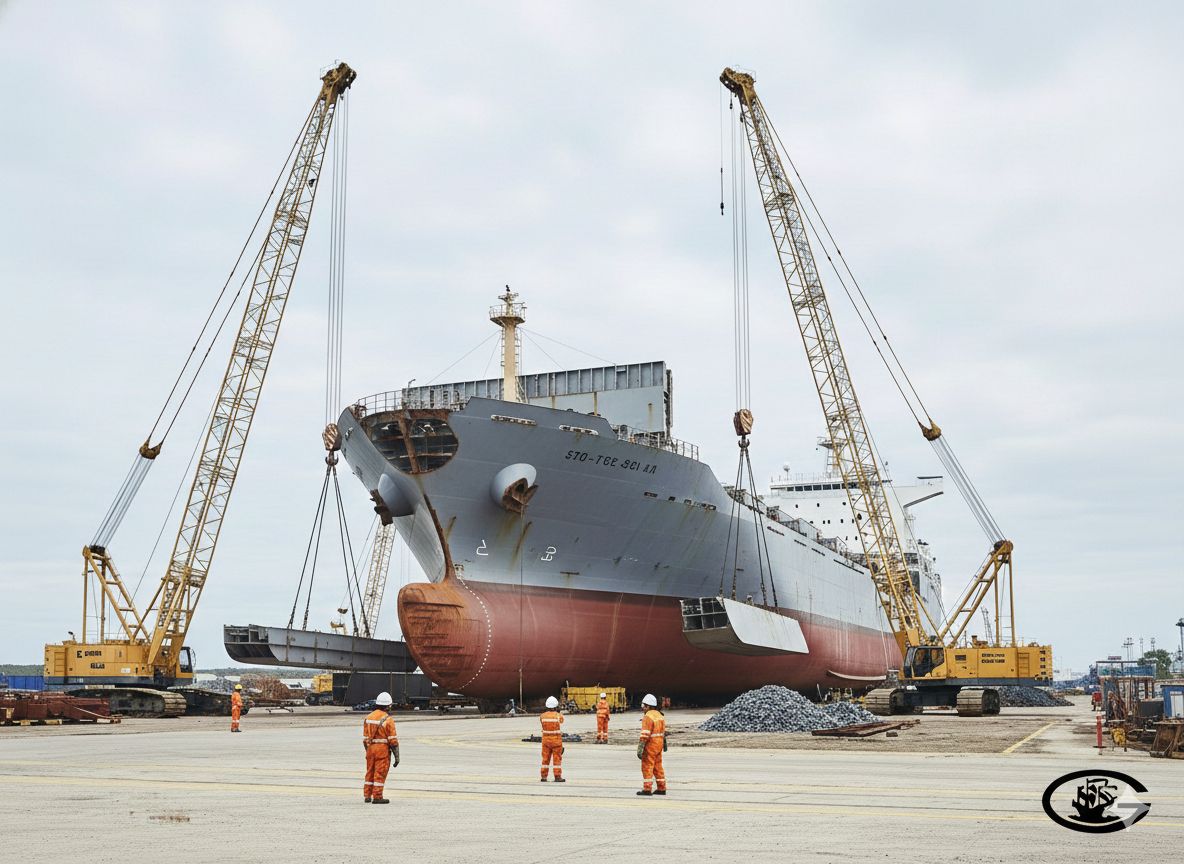
According to details announced this week, the new yard has been designed to recycle vessels entirely on fixed structures through dry dock and alongside berth operations, eliminating the environmentally hazardous beaching method traditionally associated with ship dismantling in several parts of South Asia. Industry experts say the move reflects a broader transition in global maritime recycling toward higher environmental and worker safety standards.
The Bahrain-based operation will be capable of handling some of the world’s largest vessels, including Ultra Large Crude Carriers (ULCCs). In addition to conventional merchant ships, the facility will also dismantle highly complex offshore energy assets such as Floating Production Storage and Offloading units (FPSOs), Floating Storage Units (FSOs), Mobile Offshore Drilling Units (MODUs), offshore drilling rigs and other marine structures.
One of the project’s most notable features is its ability to manage Naturally Occurring Radioactive Material (NORM) and other hazardous waste streams through a fully licensed and compliant disposal system. Officials associated with the venture stated that this makes the Bahrain facility one of only two ship recycling operations globally with such specialized capability.
The joint venture aims to operate in full compliance with both the International Maritime Organization’s Hong Kong International Convention for the Safe and Environmentally Sound Recycling of Ships and the European Union Ship Recycling Regulation. These frameworks have increasingly become the benchmark for global shipowners seeking environmentally responsible recycling solutions.
The launch also represents a significant international expansion for the Priya Blue Group, one of India’s leading green ship recycling firms based in Gujarat’s Alang recycling cluster. With more than three decades of experience, the company has established itself as a major player in environmentally compliant ship dismantling and has recycled over a hundred complex vessels.
The company holds Hong Kong Convention certification from ClassNK and is compliant with European Union recycling requirements under certification from Lloyd’s Register.
Its partner, Arab Shipbuilding & Repair Yard, commonly known as ASRY, is among the Gulf region’s most established maritime repair and conversion yards. Operating for nearly five decades, ASRY brings extensive infrastructure, technical expertise and regulatory support capabilities to the venture.
Maritime analysts believe the project could reshape recycling patterns in the Gulf region by offering shipowners a strategically located alternative between Europe and South Asia. Bahrain’s geographic position near major international shipping routes is also expected to attract vessels from the Middle East, Africa and Europe seeking compliant recycling solutions.
The development comes amid growing international pressure on shipping companies to dispose of end-of-life vessels responsibly as stricter environmental rules and sustainability commitments gain momentum across the maritime industry. Demand for certified green recycling yards has risen sharply in recent years, particularly among European shipowners bound by tighter environmental regulations.
Industry observers say the Bahrain venture could also create new economic opportunities in the Gulf’s maritime sector by expanding industrial activity linked to steel recovery, waste processing and offshore asset decommissioning.
With the global shipping industry preparing for a major wave of vessel retirements over the coming decade, the Priya Blue-ASRY partnership is expected to position Bahrain as a key emerging hub in the future of sustainable ship recycling.

Author: shipping inbox
shipping and maritime related web portal