




Subcontinent Ship Recycling Markets Remain Under Pressure as Currency Weakness
The South Asian ship recycling sector continued to face significant headwinds this week, as deteriorating local currencies, weakening steel fundamentals, and subdued vessel availability combined to put recyclers under renewed financial strain. Across major locations—Alang, Chattogram, and Gadani—buyers have maintained a cautious stance, reflecting persistent uncertainty and a lack of clear pricing direction. Turkey, meanwhile, reported little change, with the Turkish Lira continuing its downward slide.

Alang: Caution Deepens as Rupee Slides and Steel Prices Dip
In India, market sentiment remained distinctly subdued as domestic macroeconomic pressures contributed to widening pricing mismatches between sellers and recyclers. The sharp depreciation of the Indian Rupee against the U.S. Dollar over recent weeks disrupted expectations across the industry. The INR briefly crossed the psychologically significant ₹90 per USD before settling at ₹89.35, leaving import-dependent recyclers facing sharply increased dollar-denominated costs.
Simultaneously, local steel plate prices slipped by US$5 per tonne, closing at US$390 per tonne, further constraining buyers ability to match elevated asking levels for aging vessels. Compounding this pressure was the growing influx of discounted dark-fleet tankers, whose lower selling prices continued to drag down domestic steel valuations.
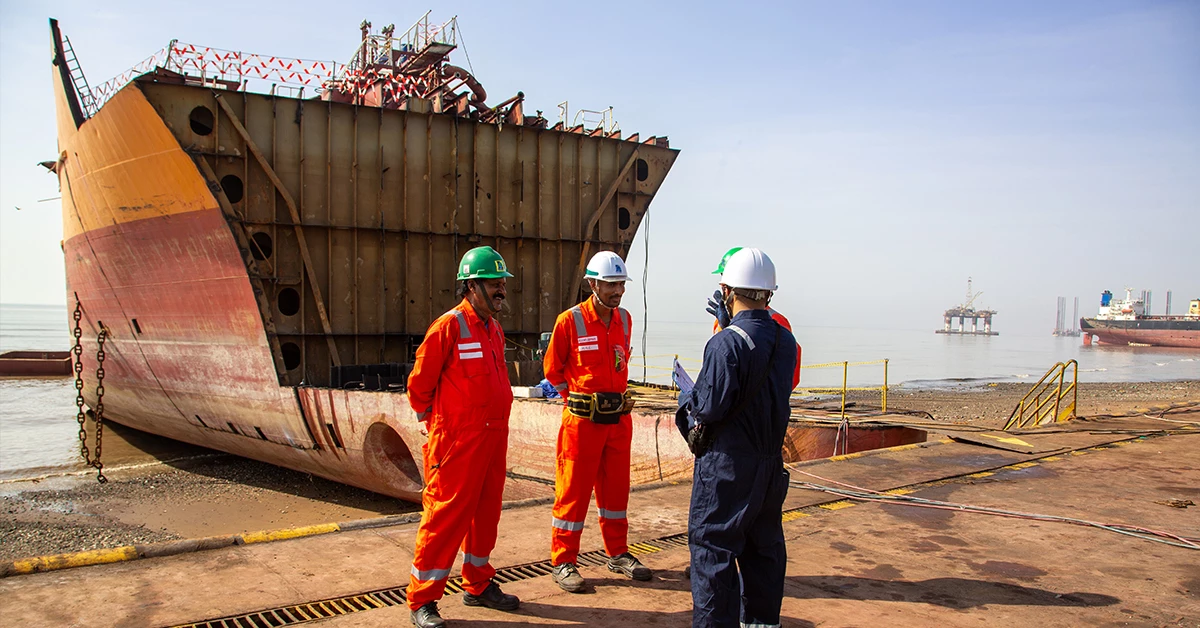
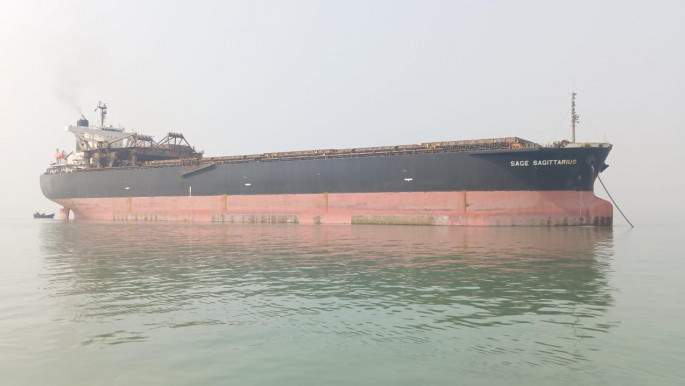
Ship availability remains critically low. The few vessels available in the market are being diverted to Bangladesh, leaving Indian yards largely idle. Only two units were recorded at anchorage or awaiting decisions this month: the Conico Atlas—a 20,001-LDT tanker currently under arrest—and the Morality tanker, awaiting further movement.
Market participants say the combination of a weak Rupee, slipping steel fundamentals, and absence of tonnage has contributed to a “directionless and increasingly fragile” sentiment in Alang. Buyers remain reluctant to commit, and local recyclers are struggling to establish firm pricing indicators.
Chattogram: Market Eases but Buyers Remain Wary
Bangladesh saw further deterioration in its local market environment, although vessel prices softened only slightly during the week. The correction in prices, however, failed to stimulate buying interest. Instead, sentiment remained weak, as uncertainty surrounding regional fundamentals and vessel availability persisted.
Taking cues from weakened activity in India and Pakistan, recyclers in Chattogram also adjusted their price expectations downward. With no competitive pressure in the current environment, buyers opted to hold off on aggressive purchasing.
No arrivals or beachings were reported during the month so far. Market analysts noted that, until clearer pricing direction emerges, Bangladeshi recyclers are likely to continue their conservative approach.
Gadani: A Hint of Positivity Amid Low Volumes
Pakistan’s ship recycling market recorded limited activity this week, though an improvement in sentiment was noted following recent smaller-vessel transactions concluded at modest levels. Despite ongoing softening in local prices and muted demand, the sector received a significant boost with a major regulatory development.
Prime Green Recyclers became Pakistan’s first fully Hong Kong Convention (HKC)-compliant yard, with certification granted by Bureau Veritas. The milestone marks a turning point for Pakistan’s recycling industry, which has historically lagged regional competitors in achieving global safety and environmental standards.
While volumes remain low and mills operate below capacity due to weak domestic steel demand, the HKC certification is expected to improve Pakistan’s international standing and may attract higher-quality tonnage in the future.
No vessels were reported at anchorage in December.
Aliaga: Lira Weakens Further; Market Stable but Bleak
In Turkey, the Lira resumed its downward trajectory, falling to TRY 42.51 per USD. Despite the currency’s slide, the ship recycling market remained largely unchanged, with recyclers maintaining a stable but pessimistic outlook. No major movements in pricing or buyer behaviour were recorded during the week.
Bunker Price Snapshot
Global bunker fuel prices displayed mixed trends across major ports. Singapore’s VLSFO stood at US$435 per tonne, while Hong Kong and Fujairah recorded US$456 and US$431, respectively. MGO prices remained elevated, ranging between US$666 and US$712 per tonne across hubs including Houston, Rotterdam, and Fujairah.
Currency Movements
The Rupee’s depreciation dominated subcontinental currency discussions, with the INR weakening 0.62% week-on-week. Pakistan’s PKR and Bangladesh’s BDT both showed marginal stability, while China’s CNY held unchanged.
Ferrous Scrap Markets: Mixed Sentiment Across Regions
India:
Imported scrap activity remained muted with only marginal improvements in buyer inquiries. The sharp weakening of the Rupee—the lowest in nearly two decades—has significantly increased import costs. EU HMS 80:20 was assessed at US$315–320/t, shredded scrap at US$336–342/t, and PNS at US$340–345/t CFR.
Pakistan:
Scrap prices held stable despite slow downstream demand and cash constraints. Mills continued operating at reduced capacity, with EU shredded assessed at US$356–358/t CFR and UAE HMS 80:20 at US$338–340/t.
Bangladesh:
Imported scrap demand remained weak due to slow rebar sales and uncompetitive containerised offers. Regional offers included Brazil HMS at US$330/t CFR, Malaysia Holo at US$325/t, and Australia HMS at US$345/t. Higher-priced PNS material from Singapore and Hong Kong offered at US$365–370/t drew limited interest.
Turkiye:
In contrast to South Asia, Turkey’s deep-sea scrap market showed strength, supported by firm rebar demand and active mill purchasing. EU-origin HMS 80:20 held at US$362/t CFR, while U.S. material traded between US$367–369/t CFR. Collectors in Europe face pressure as a stronger euro affects competitiveness.

Author: shipping inbox
shipping and maritime related web portal