



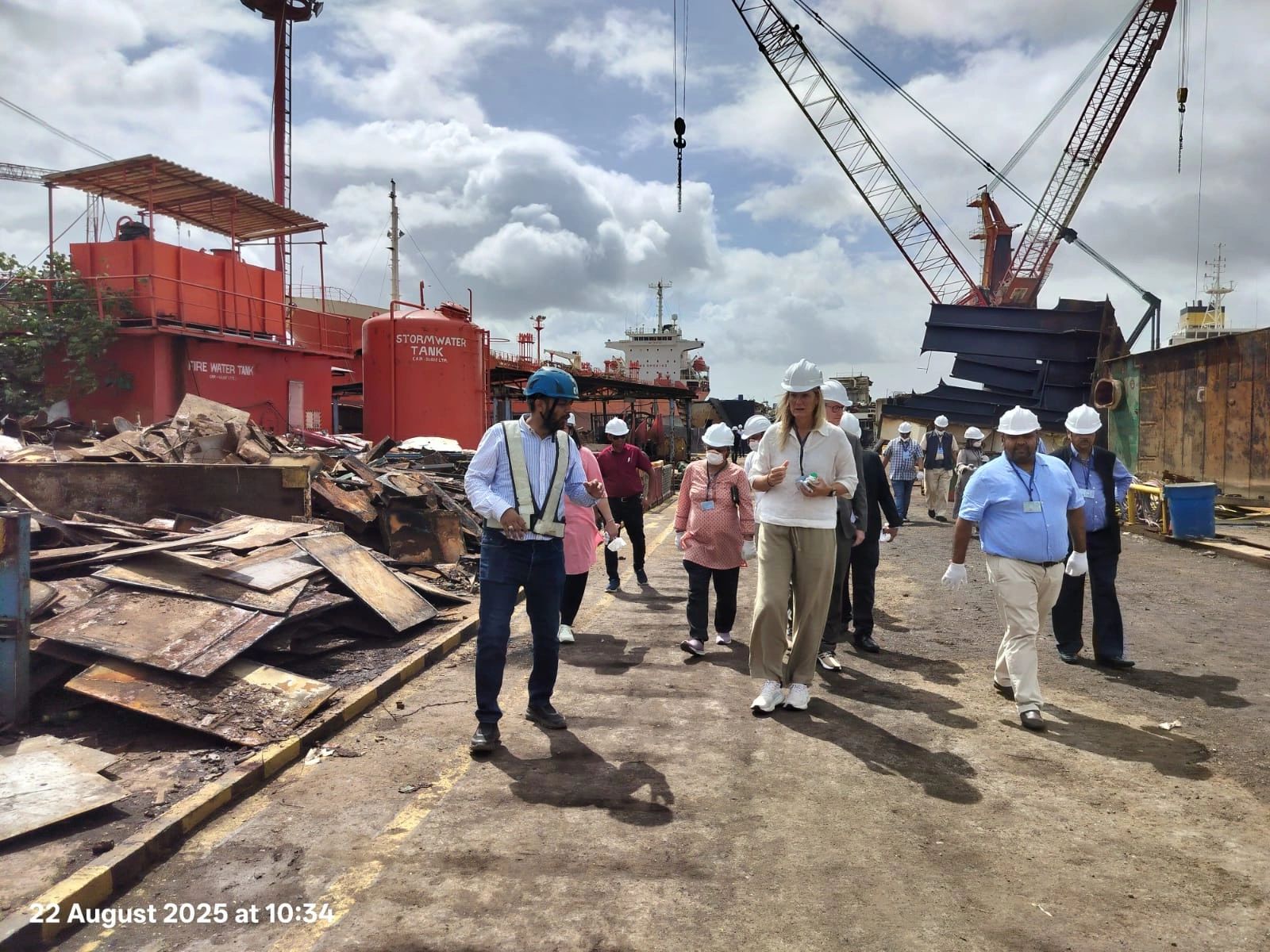
South Asia’s Ship-Breaking Market Expands in 2025- Driven by India’s Surge
South Asia’s ship-recycling industry staged a notable recovery in 2025, with total demolition activity rising 25% year-on-year to 2.25 million light displacement tonnage (mn LDT), up from 1.8 mn LDT in 2024, according to BigMint data. The rebound, however, was uneven, masking sharp divergences across the three key recycling nations—India, Bangladesh and Pakistan.

While India consolidated its leadership with strong growth in arrivals and tonnage, Bangladesh and Pakistan continued to lose ground. Structural compliance gaps, financing constraints and operational bottlenecks eroded their competitiveness, pushing ship owners to favour more reliable destinations.
Overall vessel arrivals across South Asia declined to 224 units in 2025 from 268 units a year earlier, reflecting cautious sentiment among ship owners amid volatile freight markets and stricter environmental and regulatory requirements. India captured a growing share of the available tonnage as Bangladesh and Pakistan saw thinning arrivals, particularly in the second half of the year when financing pressures and compliance hurdles intensified.
India strengthens leadership in ship recycling
India emerged as the clear beneficiary of the regional realignment. Ship recycling activity at the Alang yard rose sharply in 2025, with total arrivals climbing to 1.23 mn LDT—a 66% jump from 0.74 mn LDT in 2024. The number of vessels dismantled increased to 114 units from 106 a year earlier, underscoring Alang’s growing dominance.
A key factor behind India’s performance was its high level of compliance with the Hong Kong Convention (HKC) on ship recycling. As many as 115 of India’s 131 operational yards are now HKC-certified, ensuring uninterrupted access to compliant tonnage at a time when global ship owners are increasingly selective about recycling destinations.
Industry participants note that India’s operational depth—ranging from experienced labour to established downstream steel consumption—has provided resilience in a challenging global environment. Clear regulatory pathways and better coordination between central and state authorities further supported confidence among cash buyers and ship owners.
Alang emerges as a global green maritime hub
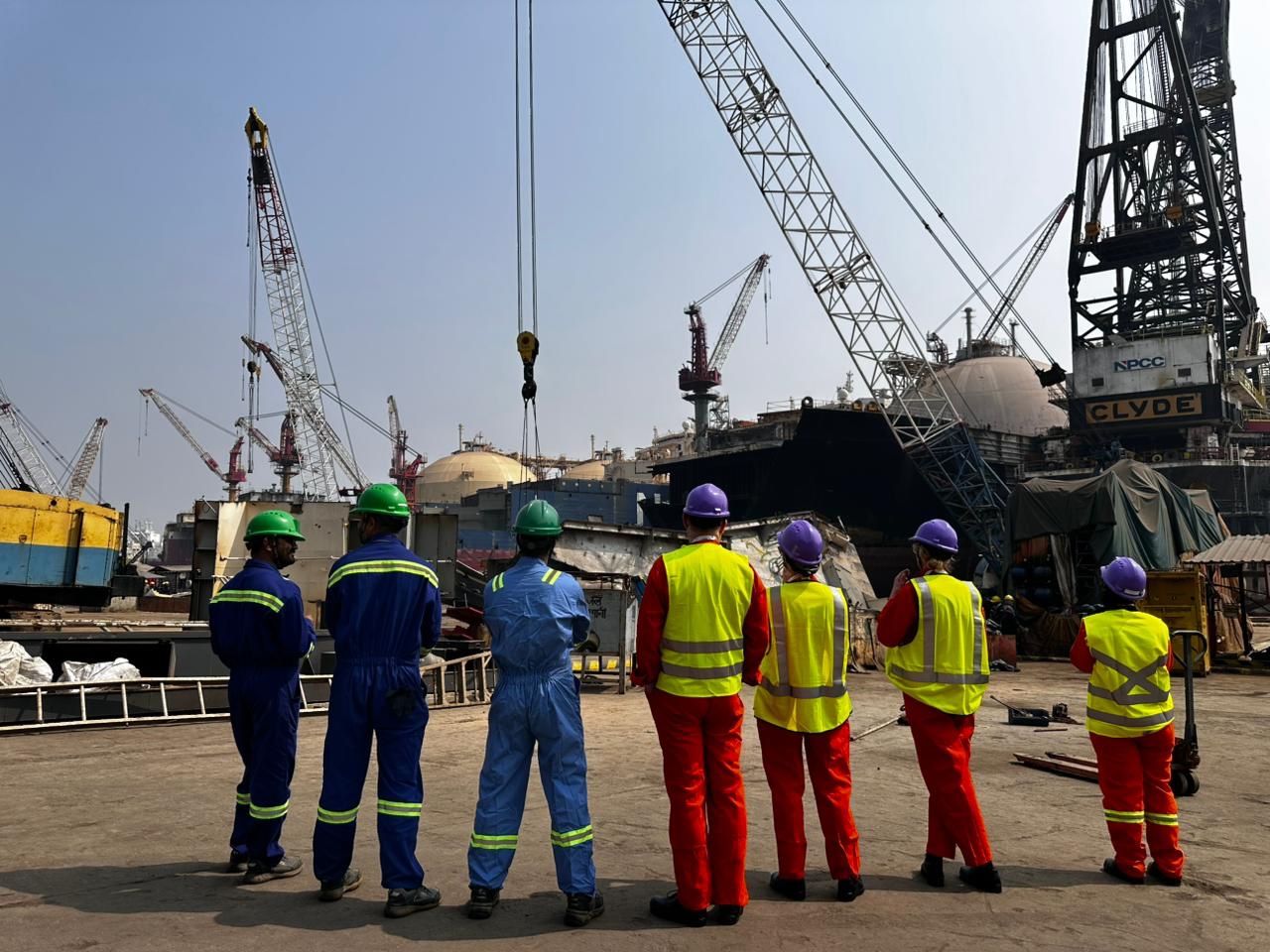
Beyond short-term gains, Alang-Sosiya Ship Recycling Yard is being positioned as a long-term global green maritime hub. Handling around 55% of South Asia’s total demolition volumes, Alang benefits from upgraded infrastructure and a ₹1,224-crore master plan aimed at doubling capacity.
Gujarat’s strategic vision includes recycling 15,000 ships over the next decade and expanding Alang’s capacity to 9 mn LDT by 2035. The plan seeks to transform the yard into an integrated maritime-industrial ecosystem, combining ship recycling with downstream steel processing, renewable energy use and ancillary maritime services.
This forward-looking approach has strengthened India’s image as a compliant and scalable destination at a time when environmental, social and governance (ESG) considerations are reshaping global shipping decisions.
Bangladesh faces financial and regulatory constraints
In contrast, Bangladesh’s ship-breaking sector endured another difficult year. Total demolition volumes edged up by 4% year-on-year to 0.88 mn LDT in 2025 from 0.85 mn LDT in 2024. However, the number of vessels dismantled dropped sharply to 91 units from 137 a year earlier, marking one of the steepest annual declines in activity.
Bangladesh’s challenges were rooted in tightening domestic fundamentals. Falling steel plate prices squeezed recycler margins, while persistent currency volatility raised costs and complicated financing. Political uncertainty ahead of national elections further dampened sentiment and slowed decision-making within the banking and financial ecosystem.
Compliance remains a critical bottleneck. Despite gradual progress on HKC upgrades, only nine of Bangladesh’s roughly 130 yards are currently certified. Non-availability of no-objection certificates (NOCs), paperwork delays and inconsistent yard readiness continue to restrict operational capacity.
Many recyclers turned cautious after absorbing heavy tonnage in earlier periods. Limited resale options, higher freight costs and rising procurement risks led to a more defensive stance, particularly in the second half of the year.
Pakistan witnesses steep volume losses
Pakistan recorded the weakest performance among South Asia’s major recycling nations. Ship recycling volumes fell 33% year-on-year to around 0.14–0.15 mn LDT in 2025 from 0.21 mn LDT in 2024. Vessel arrivals declined to 19 units from 25 a year earlier, pushing activity to a multi-year low.
Although Pakistan secured its first HKC-certified yard, overall certified capacity remains minimal, sharply limiting access to compliant vessels. Delays in implementing the Document of Authorisation for Ship Recycling (DASR) framework, along with gaps in compliance infrastructure and slow regulatory coordination, undermined ship owner confidence.
Market fundamentals also remained weak. Soft steel prices, competition from cheaper Iranian re-rollable imports and persistent currency depreciation widened working-capital pressures. Liquidity shortages, restrictions on letters of credit and anchorage delays further constrained vessel inflows.
An uneven regional recovery
The 2025 recovery in South Asia’s ship-breaking market highlights a widening gap between India and its regional peers. As global shipping increasingly prioritises compliance and financial certainty, India’s early investments in regulation, infrastructure and financing appear to be paying off. Unless Bangladesh and Pakistan accelerate compliance upgrades and address structural constraints, India is likely to further consolidate its dominance in the years ahead.

Author: shipping inbox
shipping and maritime related web portal