



South Asian Ship Recycling Markets Weaken as Currency Volatility and Sluggish Steel Demand Persist : BEST OASIS

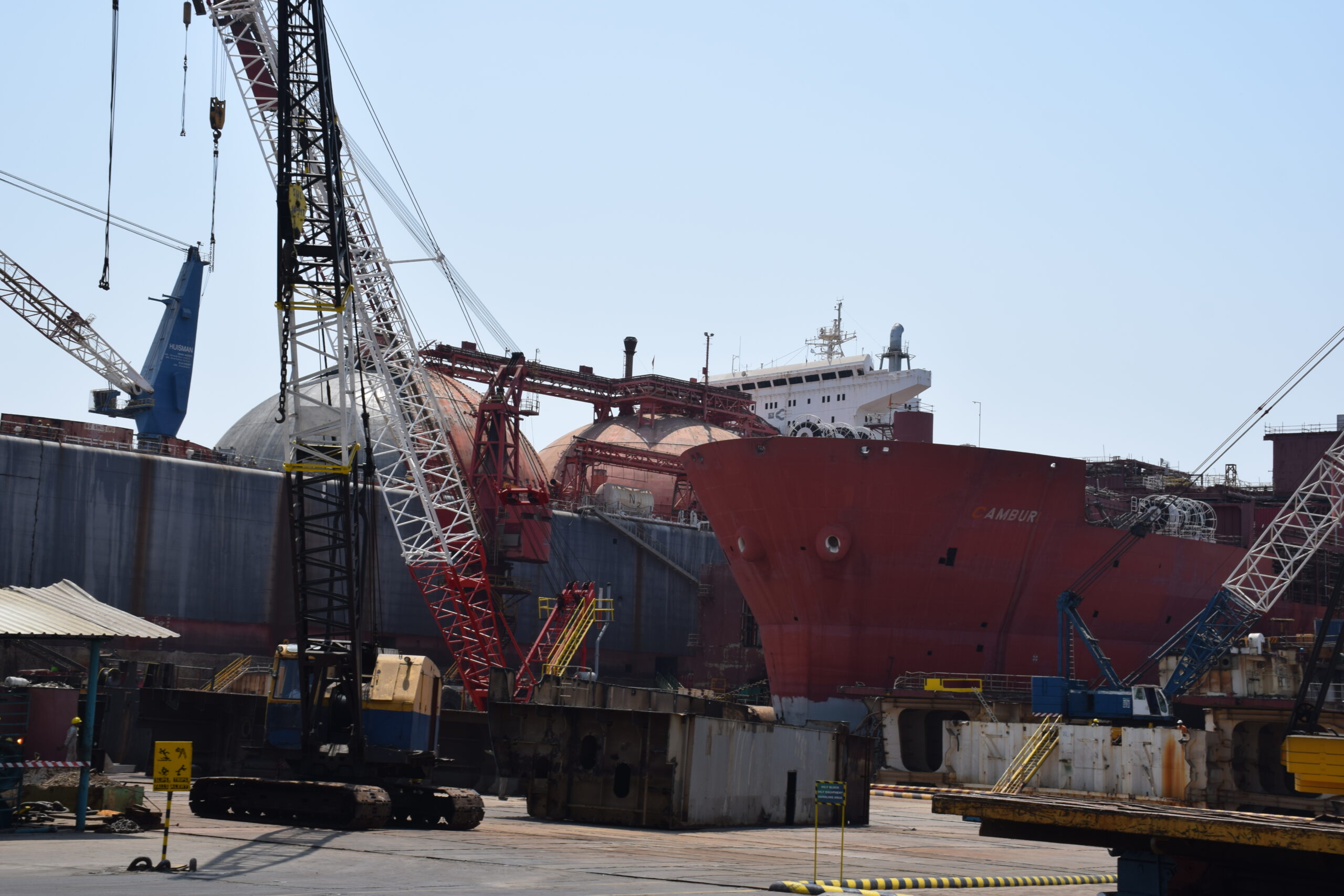
World’s leading cash Buyers for ships sending for recycling, BEST OASIS in their weekly ship recycling market report opined that, the South Asian ship recycling markets endured another difficult week, with cautious sentiment, weak steel fundamentals, and currency fluctuations weighing heavily on activity across India, Bangladesh, and Pakistan. Turkiye, meanwhile, showed marginal improvement, lifted by stronger import and domestic dynamics, though buyers remain wary amid shifting global market signals.
Across the subcontinent, recyclers grappled with a combination of limited vessel availability, distorted price expectations, and subdued end-user demand. With Brent and WTI crude prices fluctuating and regional exchange rates under pressure, the ship-scrap industry continued to face turbulence that restricted market confidence and hindered fresh transactions.
India: Dollar Decline Distorts Market Expectations
In India, recycler sentiment remained distinctly cautious as the sharp fall in the U.S. dollar over the past two weeks unsettled price expectations and disrupted the alignment between offered vessel prices and the prevailing domestic steel rates. Buyers found themselves unable to match the higher asking prices from shipowners, resulting in muted negotiations and limited deal closures.
Ship availability remained exceptionally tight, with most of the few actively marketed vessels instead heading toward Bangladesh, leaving Indian breaking yards operating at minimal capacity. The limited activity that did surface was dominated by dark-fleet tonnage, though only a handful of yards were willing to engage in such trades due to regulatory and financing constraints. As a result, overall buying appetite remained subdued.
Though the onset of winter typically supports domestic steel consumption, persistent downward pressure on steel prices continued to cap the market’s ability to move upward. The softness in sentiment was reflected in local recycling prices, with container units at USD 410/LDT, tankers at USD 395/LDT, and bulkers at USD 380/LDT, marking a marginal week-on-week decline of 0.25%.
Bangladesh: Steel Demand Falls to Multi-Year Lows
Bangladesh saw further deterioration in its domestic recycling market, with price levels sliding steadily toward those seen in India. Local steel demand dropped to multi-year lows amid a pronounced slowdown in the construction sector and an absence of new government-driven infrastructure spending.
With infrastructure projects stalled and liquidity concerns persisting across trading and banking circles, market sentiment remained clouded by uncertainty. Despite softer vessel price levels, buyers appeared reluctant to make firm commitments. Many yards approached negotiations conservatively, preferring to wait for clearer price signals in the coming weeks.
Price expectations suggest that once the current pockets of buying activity conclude, levels may drop further and converge more closely with Indian prices. This trend was evident in the stable yet soft market rates, with container units at USD 430/LDT, tankers at USD 420/LDT, and bulkers at USD 385/LDT, unchanged from the previous week.
Pakistan: Signs of Recovery Amid Realistic Pricing
Pakistan’s recycling market experienced a slight but notable improvement in sentiment, driven by activity in smaller vessels at modest yet realistic price points. The willingness of buyers to re-enter the market under these adjusted conditions supported a cautiously optimistic outlook.
Expectations persist that more tonnage may emerge at similar price ranges, potentially helping sustain market momentum. Prices held steady compared with the previous week, with container units at USD 415/LDT, tankers at USD 400/LDT, and bulkers at USD 390/LDT, reflecting stable week-on-week levels.
While Pakistan continues to face structural challenges in foreign exchange liquidity and financing approvals, the recent uptick in buyer inquiries suggests renewed market participation after weeks of stagnation.
Turkiye: Gradual Improvement Boosts Buyer Confidence
The Turkish market showed mild improvement as both import and local steel fundamentals strengthened. Encouraged by these gradual shifts, buyers marginally improved their offering levels, anticipating a rise in market activity should the current trend persist.
Turkiye recorded the strongest week-on-week growth among major recycling destinations, with container units climbing to USD 290/LDT, tankers to USD 280/LDT, and bulkers to USD 270/LDT, marking a significant 3.70% increase.
An increase in local rebar demand and more active import flows helped stabilize pricing benchmarks, though seasonal factors and broader geopolitical tensions remain potential challenges for sustained recovery.
Exchange Rates and Global Indicators
Currency movements played a central role in shaping market sentiment this week. The Indian rupee weakened marginally, with USD/INR at 89.97, compared to 89.46 the previous week—a depreciation of 0.51. Bangladesh’s taka also saw a minor decline, with USD/BDT at 122.46, compared to 122.21.
Pakistan’s rupee, in contrast, strengthened slightly to 281.59, posting a gain of 0.44, while Turkiye’s lira remained largely stable at 42.50, down just 0.03 from the previous week. These currency fluctuations affected buyer purchasing power, particularly in India and Bangladesh, where weaker currencies constrained the ability to match seller price expectations.
Meanwhile, global steel scrap indicators showed modest week-on-week increases. HMS 1&2 (80:20) and shredded scrap prices stood at USD 358 for India, Bangladesh, and Pakistan, while Turkiye recorded higher levels at USD 372 for HMS and USD 390 for shredded scrap, representing a 2.97% rise.
Vessel Sales: Select Deals Despite Market Slump
Despite the subdued conditions, a handful of vessel sales were recorded this week. The standout transaction was the LNG tanker “Seapeak Asia,” with a lightweight tonnage (LDT) of 27,450.80, sold as-is Oman at USD 420/LDT, excluding insulation and with 880 MT of bunkers ROB. The sellers reportedly targeted selected yards capable of handling specialized cargo residues.
In Turkiye, the FPSO Gryphon A, at 33,049 LDT, was delivered to Aliaga on an undisclosed price, reflecting the confidential nature of high-profile offshore units.
A noteworthy deal involved the chemical/motor tanker Ark Prestige, with 3,307 LDT, sold as-is Colombo at an impressive USD 725/LDT, supported by its high stainless-steel content.
Additionally, three LPG tankers—Patcharawadee 10, 12, and 14—were delivered to Bangladesh at undisclosed prices, alongside the motor tanker Vigo, at 17,740 LDT, also destined for Bangladesh.
Outlook
The immediate outlook for the South Asian ship recycling sector remains cautiously subdued. India and Bangladesh continue to wrestle with weak steel fundamentals, currency pressure, and a shortage of marketable vessels, while Pakistan inches toward recovery on the back of improved buyer confidence. Turkiye’s strengthening demand may signal a gradual shift in regional buying dynamics, though sustainability remains to be seen.
Unless vessel supply improves and steel markets stabilize, recyclers across the region may continue navigating a challenging landscape marked by volatility, limited liquidity, and persistent caution.

Author: shipping inbox
shipping and maritime related web portal