



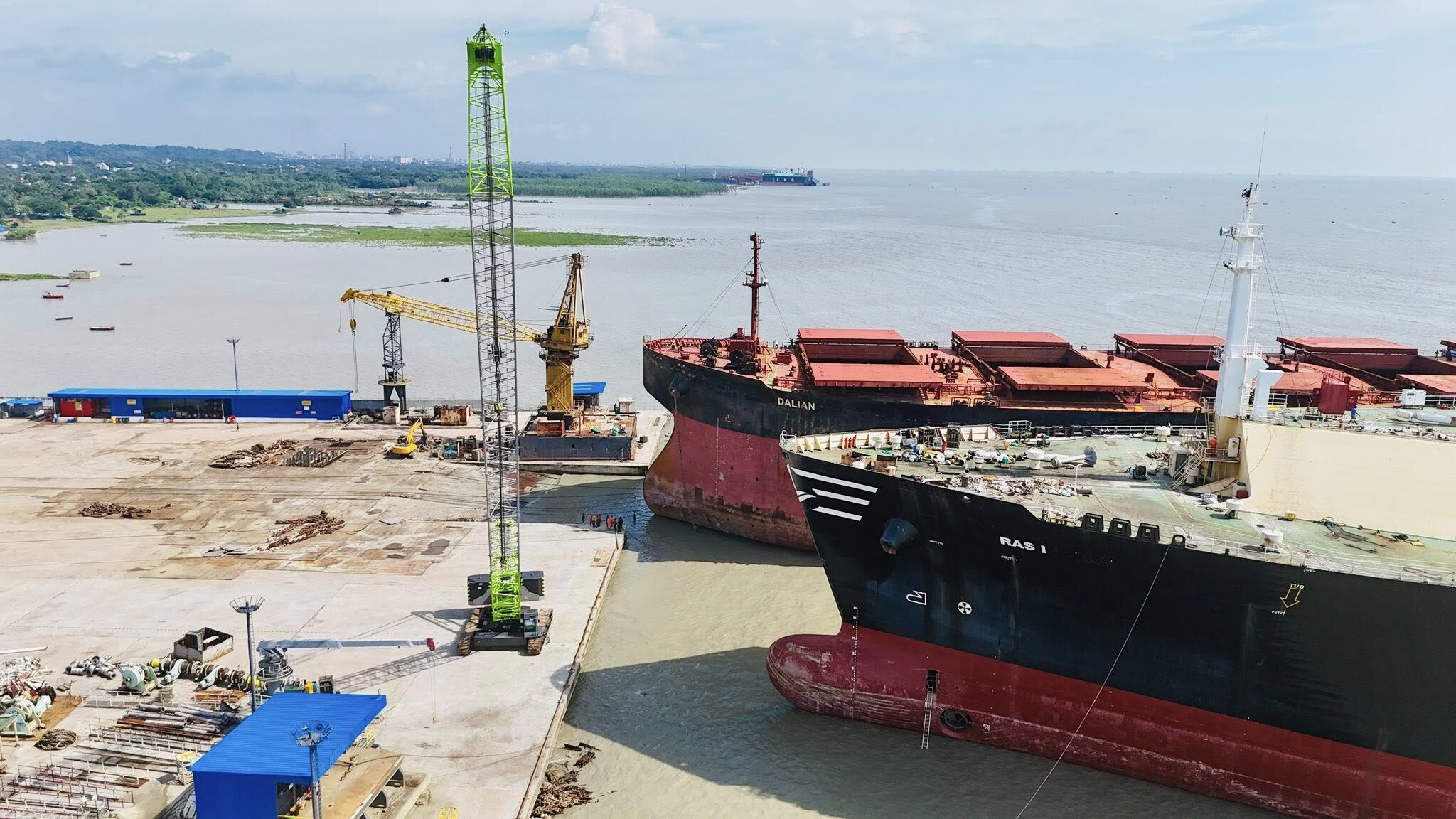
Ship Recycling Markets Show Mixed Signals as India Firms: Bangladesh Stagnates
World’s largest cash buyers for ships sending for recycling, BEST OASIS in their weekly ship recycling report opined that, the global ship recycling market presented a mixed picture this week, with India emerging as the firmest destination on the back of strengthening domestic steel prices, while Bangladesh remained largely stagnant amid geopolitical uncertainty. Pakistan showed tentative signs of improvement, supported by marginally firmer international steel indicators, whereas Türkiye stayed quiet due to the New Year holiday lull.

India: Steel Policy Expectations Lift Market
India continued its upward trajectory this week, with local prices improving on a day-to-day basis. Market participants attributed the positive momentum largely to expectations surrounding government measures on steel imports. Recent reports suggest that India has introduced a three-year safeguard or import duty on selected steel products, beginning at around 12 percent and gradually reducing over time. This move has helped support domestic steel prices and improved sentiment across the recycling sector.
Higher steel realizations have directly translated into firmer bids for end-of-life vessels, pushing India to the forefront among South Asian recycling destinations. However, vessel availability remained limited, partly due to the year-end period when owners typically defer recycling decisions. Despite this constraint, price levels in India largely held steady over the past few days, indicating a consolidating but firm market rather than one driven by speculative spikes.
In the ship recycling segment, India was the only major market to record a notable week-on-week improvement. Container vessels were priced around USD 415 per light displacement ton (LDT), tankers at USD 400/LDT, and bulkers near USD 385/LDT, reflecting a week-on-week increase of nearly 4 percent. This firm undertone underlines India’s growing appeal, especially for owners seeking regulatory-compliant yards and relatively stable returns.
Bangladesh: Market Flat Ahead of Elections
In contrast, Bangladesh’s ship recycling market remained stagnant, with no upward movement recorded during the week. The broader geopolitical backdrop continues to weigh heavily on sentiment, keeping prices flat and discouraging aggressive buying. Yard activity remained muted, and recyclers largely adopted a wait-and-watch approach.
Market participants noted that a meaningful improvement is unlikely unless there is a significant shift in the broader political or economic situation. With national elections scheduled for February, expectations are that conditions may become more stable and supportive in the weeks following the polls. Until then, cautious sentiment is expected to prevail.
Despite the soft tone, Bangladesh continues to attract tonnage due to its established recycling infrastructure. Several vessels were delivered to Chittagong during the week, including motor tankers Jessica, Fuji, and Hakata, as well as the cement carrier Unggul. Sale prices for these vessels remained undisclosed, underscoring the opaque nature of transactions in a subdued market.
Indicative recycling prices in Bangladesh stood at around USD 420/LDT for containers, USD 410/LDT for tankers, and USD 375/LDT for bulkers, unchanged week-on-week.
Pakistan: Slightly Improved Tone, but Reliant on Global Cues
Pakistan continued to look for tonnage, with the market showing a slightly improved tone compared to last week. Sentiment was supported by firmer international indications, as re-rolling and shredded steel prices edged higher. This provided some upside support locally, even though the overall change remained limited.
Recyclers in Pakistan remain heavily dependent on international steel price direction and currency stability for any stronger movement. While bids improved marginally, the market has yet to demonstrate the confidence needed for a sustained rally.
Current indicative prices placed containers at around USD 415/LDT, tankers at USD 400/LDT, and bulkers slightly higher at USD 390/LDT. Despite the marginal improvement, Pakistan continues to trail India in competitiveness, particularly for larger or more complex vessels.
Türkiye: Holiday Lull Keeps Market Quiet
Türkiye remained quiet this week as the market moved through the New Year holiday period, resulting in limited reportable activity. Both price levels and sentiment remained unchanged, mirroring last week’s position. Turkish recyclers continue to be constrained by weak domestic steel demand and volatile currency movements, which have limited their ability to compete aggressively for tonnage.
Indicative ship recycling prices in Türkiye hovered around USD 290/LDT for containers, USD 280/LDT for tankers, and USD 270/LDT for bulkers, reflecting a soft and largely inactive market.
Steel and Currency Indicators
Steel prices offered modest support to sentiment in select regions. The price of HMS 1&2 (80:20) in India rose to USD 358 per ton, while shredded steel edged up to USD 360, marking a week-on-week increase of 0.7 percent. Pakistan also saw marginal gains, with HMS at USD 360 and shredded at USD 365. Bangladesh remained flat, while Türkiye’s steel prices showed no week-on-week change.
Currency movements were relatively stable but slightly unfavorable across most recycling destinations. The Indian rupee weakened marginally to 90.18 against the US dollar, while the Bangladeshi taka, Pakistani rupee, and Turkish lira also recorded small losses. These shifts continue to influence recyclers’ margins and bidding appetite.
Outlook
Overall, the ship recycling market remains uneven as 2026 begins. India stands out as the most resilient and firm destination, buoyed by supportive steel policies and stable domestic demand. Bangladesh and Pakistan remain cautious, awaiting clearer political and economic signals, while Türkiye continues to struggle with subdued activity.
With vessel availability expected to improve after the year-end lull, market participants will be closely watching steel prices, currency trends, and policy developments to gauge whether the current firmness in India can spread across the region in the coming weeks.

Author: shipping inbox
shipping and maritime related web portal