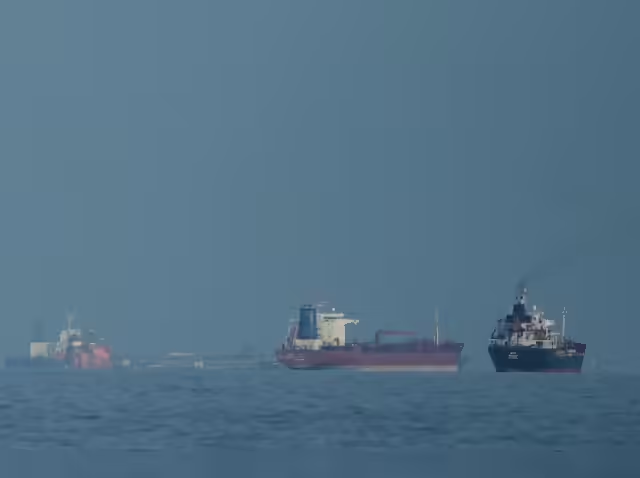





Russian-flagged tanker struck off Turkish coast as Kyiv ramps up “shadow fleet” strikes
A Russian-flagged tanker, the Midvolga‑2, came under attack off the coast of Türkiye, the third such vessel targeted in a week — part of a growing campaign by Ukraine to strike at what it labels Moscow’s “shadow fleet,” a network of tankers used to circumvent international sanctions. Al Jazeera+2Naval News+2

According to the Turkish Directorate General of Maritime Affairs, the Midvolga-2 reported the attack about 130 km (80 miles) off the Turkish coast, while en route in the Black Sea. Al Jazeera The vessel — reportedly carrying sunflower oil destined for Georgia — managed to continue toward Türkiye’s Sinop port; all 13 crew members were unharmed, and no distress signal was issued. Al Jazeera
The strike on Midvolga-2 follows reported drone attacks by Ukraine on two other Russian-affiliated tankers, Kairos and Virat, believed to be part of the vast “shadow fleet.” Ukraine says these vessels help Russia ship crude oil and other exports despite Western sanctions. Al Jazeera+2Reuters+2
According to a recent estimate by a Helsinki-based think tank, some 113 such vessels under false flags transported nearly 11 million tonnes of Russian crude in the first nine months of 2025 — carrying an estimated value of €4.7 billion ($5.4 billion). Al Jazeera+1
The maritime strikes mark a strategic shift. While Ukraine has long targeted fixed energy infrastructure — refineries, pipelines and terminals — the recent operations against mobile tanker vessels represent a direct attempt to choke Russia’s oil-export revenue. Al Jazeera+2Naval News+2
By undermining the shadow fleet, Kyiv aims to impose substantial economic and logistical burdens on Moscow, disrupt supply chains, and send a message that no part of Russia’s energy export apparatus is safe. Naval News+1
The strikes — several occurring in or near Türkiye’s Exclusive Economic Zone (EEZ) — have drawn the ire of Ankara. The Turkish government, balancing its diplomatic ties to both Ukraine and Russia, sharply criticized the attacks. Turkish President Recep Tayyip Erdoğan called them a “worrying escalation,” warning they posed serious threats to navigation, life, property and the marine environment. Al Jazeera+2AP News+2
Furthermore, Türkiye, a NATO member and long-standing Black Sea intermediary, reiterated its call for safe seas and protection of commercial shipping. The incident underscored the risk of wider escalation — not only militarily, but environmentally and economically — if such attacks become more frequent. Al Jazeera+1
The most recent attack demonstrates that Ukraine is willing to extend its maritime campaign deeper into the Black Sea — beyond fixed infrastructure — into the domain of shipping and logistics. If this pattern continues, Russia may respond by deploying naval escorts or increasing its Black Sea Fleet presence, which could heighten the risk of direct naval clashes. Analysts warn that such escalation could turn the Black Sea into a broader maritime battleground. Naval News+1
For now, the Midvolga-2 survived the attack. But the very fact that it was targeted — while carrying non-fuel cargo — sends a powerful signal: Ukraine intends to disrupt all facets of Russia’s export pathways, and no vessel is immune from becoming a target.

Author: shipping inbox
shipping and maritime related web portal