




Russia–India Maritime Cooperation Sparks New Momentum in Global Shipbuilding
A major development is unfolding in the maritime sector as Russia has formally proposed a broad-based strategic cooperation framework with India aimed at boosting the country’s shipbuilding and ship repair capabilities. According to reporting from Maritime Executive, the proposal spans a wide spectrum of technical and industrial domains—from green shipbuilding and ice-class vessel design to establishing coastal repair clusters, enhancing crew training, and advancing maritime research.

The move comes at a time when India is seeking to reduce its dependence on foreign carriers, strengthen its domestic fleet, and position itself among the world’s leading shipbuilding nations. At the same time, Russia is looking to deepen partnerships in Asia, diversify its economic ties, and leverage its niche strengths in naval architecture, Arctic vessel design, and maritime logistics. Together, the collaboration signals far more than a commercial opportunity: it reflects the strategic depth of India–Russia relations and a shared vision for a stronger blue economy.
India’s maritime aspirations have accelerated in recent years as the government pushes to modernise ports, expand coastal infrastructure, and scale up domestic ship construction. The country’s long-term goal is clear—become a world-class shipbuilding and ship-repair hub capable of competing with established centres in East Asia.
What makes Russia’s proposal noteworthy is the specific alignment of capabilities. Moscow brings decades of experience in complex vessel categories, especially ice-class ships designed for Arctic and sub-zero operations, a segment where only a handful of nations possess true competency. Russia is also a large-scale operator in ship repair, offshore engineering, and polar maritime logistics—expertise that can offer India a technological edge.
The partnership also aligns with India’s larger strategy to bring more tonnage under its control, reduce freight dependence on foreign carriers, and build resilient maritime supply chains. As energy shipping, offshore projects, and coastal cargo movement rise, India’s requirement for modern vessels and robust repair ecosystems is expanding rapidly.
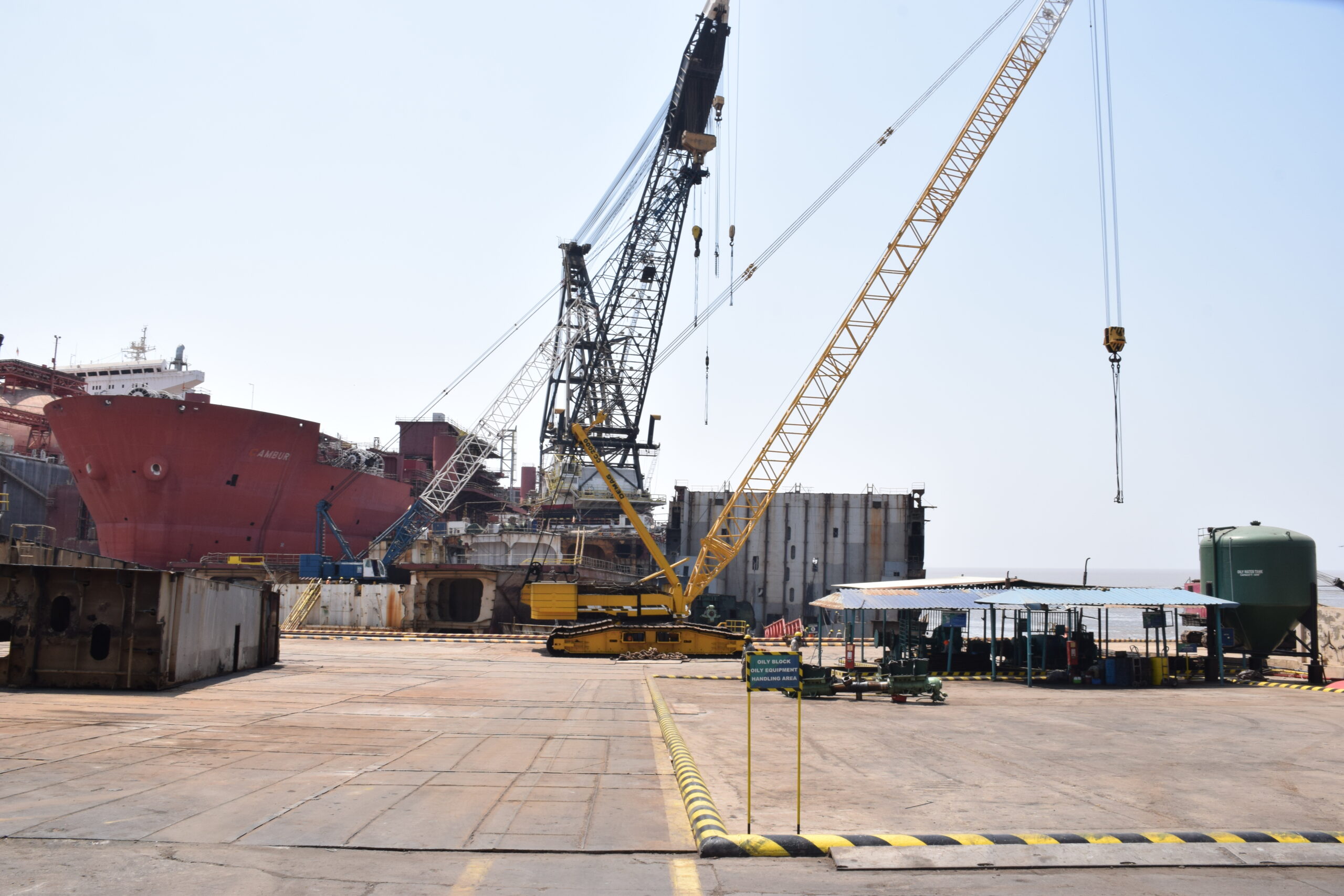
One of the standout proposals involves developing coastal ship-repair clusters in Mumbai and Chennai—two of India’s busiest maritime corridors. India’s ship repair capacity has long lagged behind its demand, forcing thousands of vessels each year to seek services abroad. A coordinated cluster-based model could change that equation.
Such clusters typically involve integrated facilities for dry docking, hull and machinery work, component repairs, spare parts manufacturing, training, classification support, and supply-chain services. By incorporating Russian technical expertise and India’s manufacturing scale, the model could dramatically shorten repair cycles for domestic and foreign vessels, reduce downtime costs, and create large localised ecosystems of suppliers, technicians, and maritime SMEs.
Another core element of the cooperation is joint progress in green shipbuilding—a global priority as the maritime industry navigates decarbonisation mandates. The collaboration could extend into alternative fuels, energy-efficient hull designs, hybrid propulsion, and waste-minimisation systems.
India’s shipyards already possess robust engineering talent, but integrating advanced green technologies remains a challenge due to high costs and limited access to global IP. Russia’s willingness to share design frameworks and collaborate on R&D could help accelerate India’s transition towards cleaner maritime manufacturing.
If the partnership moves forward, it could reshape the global distribution of shipbuilding capability. For decades, the sector has been dominated by China, South Korea, and Japan. India—supported by technology transfer, workforce development, and upgraded infrastructure—could emerge as a competitive alternative in South Asia.
Maritime Executive notes that this cooperation intersects with broader geopolitical and economic trends: expanding the Indo-Pacific maritime network, strengthening blue economy priorities, and building regional industrial resilience. New clusters created in India could attract ancillary industries, suppliers, digital service providers, and specialised logistics operators.
For players across the maritime value chain, the partnership creates new avenues—from equipment manufacturing to training academies, from R&D centres to ship-repair sub-contracting. The potential ripple effects could be substantial.
As the cooperation framework takes shape, several critical questions will define the practical impact:
-
Policy and Infrastructure Positioning:
How will India structure the proposed clusters—through special incentives, port-based zones, investor-friendly policies, or dedicated shipbuilding corridors? Land availability, environmental clearances, and infrastructure connectivity will all be decisive. -
Role of Private Shipyards and Maritime Companies:
Private firms are expected to play a central role in joint ventures. How they integrate Russian expertise into their manufacturing, design, and repair operations will influence sector competitiveness. -
Technology Transfer and Skill Development:
The speed of technology absorption will depend on training, certification systems, and the development of a strong manpower pipeline. India’s maritime institutes could see significant upgrades. -
Segments Likely to Grow Fastest:
Ice-class vessels, coastal ferries, green retrofits, offshore support vessels, and marine equipment manufacturing may see the earliest boosts. Logistics firms and service providers will need to position themselves early to ride the wave.
India and Russia have a long history of defence, energy, and industrial collaboration. Extending this partnership into commercial shipbuilding and maritime infrastructure strengthens both nations’ strategic footprints. Beyond immediate economic gains, the proposal reflects a shared belief in a sustainable, technology-driven blue economy.
If executed with clarity and ambition, the collaboration could shift regional maritime dynamics, elevate India’s global shipbuilding profile, and create new value chains that benefit industries across Asia and beyond. The coming months will reveal how both nations translate this vision into concrete projects—but the signal is unmistakable: a new chapter is opening in the maritime story of South Asia.

Author: shipping inbox
shipping and maritime related web portal