



Massive Emergency Declared at Port of Los Angeles as Hazardous Cargo Ship Fire Triggers Explosions and Evacuations
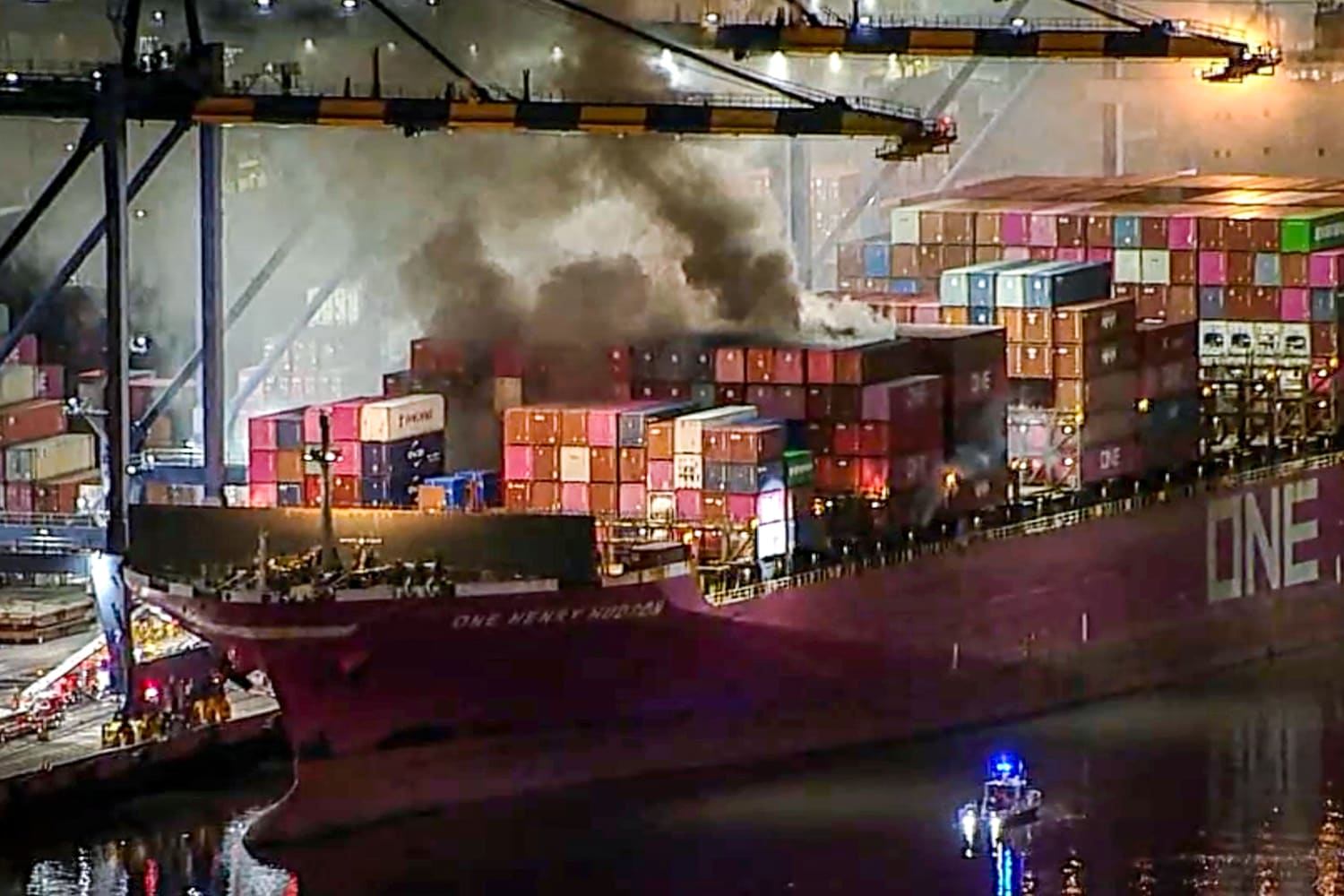
A major emergency response was launched at the Port of Los Angeles on Friday evening after a fire broke out aboard a large container ship in San Pedro, prompting the full evacuation of its 23-member crew and a multi-agency firefighting effort that continued into the night.

The Los Angeles Fire Department (LAFD) confirmed that all crew members from the 1,100-foot container vessel 1 Henry Hudson were safely escorted off the ship without injuries, even as explosions, hazardous materials, and intense heat created dangerous conditions for responders.
The incident began at approximately 6:38 p.m., when an electrical fire was reported below deck. Fire officials said the blaze initially appeared confined but quickly escalated. By just before 8 p.m., a mid-deck explosion rocked the vessel, knocking out lights, crane systems, and other onboard power, and prompting concerns about the integrity of cargo areas storing hazardous materials.
Fire Visible Across Multiple Levels
LAFD spokespersons said flames were visible across several levels of the vessel soon after the explosion. Thermal anomalies were detected in multiple cargo bays, and the ship’s manifest indicated the presence of hazardous cargo in several compartments.
Given the high-risk environment, incident command issued strict orders: no firefighters were to enter below-deck areas where the fire originally started. Instead, crews concentrated on external suppression, surveillance, and containment.
More than 100 firefighters, including land-based units, marine teams, and specialized hazardous materials crews, responded to the scene. Firefighters operated in full protective suits with self-contained breathing apparatus, while hazmat teams continuously monitored air quality for toxins or smoke plumes that could threaten surrounding port operations or nearby neighborhoods.
Marine Units Work to Cool the Hull
LAFD marine units surrounded the vessel with fireboats and began cooling the exterior hull using high-pressure streams, an effort aimed at reducing internal heat levels and preventing the spread of fire to additional cargo bays. Despite the volume of water deployed in the operation, officials stressed late Friday that the ship remained stable and was not in danger of sinking.
To safely assess the fire’s internal progression, emergency teams deployed drones equipped with thermal-imaging cameras, which provided real-time heat signatures and helped guide strategy without putting responders in harm’s way.
City Leaders Monitor Situation; Air Quality Under Review
Los Angeles Mayor Karen Bass confirmed in a post on X that first responders were “actively working to suppress the fire” and that Port Police were assisting the crew. She added that the city was closely monitoring air-quality conditions, which remained a central concern due to the ship’s hazardous cargo.
California Governor Gavin Newsom was also briefed on the emergency. A spokesperson from his office said the governor was coordinating with state and local agencies to ensure necessary resources were deployed.
Major Traffic Disruptions and Maritime Safety Perimeter
At 10:30 p.m., the California Highway Patrol announced that the Vincent Thomas Bridge—a key artery connecting San Pedro, Terminal Island, and the broader port network—would remain closed until further notice. Authorities urged motorists to seek alternate routes, warning of significant traffic delays.
On the water, the U.S. Coast Guard established a one-nautical-mile safety perimeter around the 1 Henry Hudson, halting vessel movements in the immediate area to protect other ships and crews from potential secondary explosions or structural failures aboard the burning vessel.
Vessel Arrived from Tokyo Earlier This Week
According to vessel-tracking data, the Panamanian-flagged 1 Henry Hudson had arrived in Los Angeles from Tokyo on Wednesday and was berthed for cargo operations when the fire began. The cause of the initial electrical malfunction was not immediately known, and investigators were expected to begin a full inquiry once the vessel was secured and cooled.
Progress Slow Amid Hazmat Threat
Firefighters continued working into the early hours of Saturday. Officials said that progress remained slow due to the fire’s below-deck origins, the complexity of the ship’s design, and the presence of hazardous materials requiring extreme caution.
“Below deck is a maze of confined spaces,” an LAFD official noted. “Add hazardous cargo to that environment, and it becomes one of the most dangerous scenarios firefighters can face.”
As of midnight, containment efforts were ongoing, with emergency crews maintaining suppression operations from multiple angles. Air monitoring remained active, and authorities said additional updates would be provided as the situation evolved.
The Port of Los Angeles—the busiest container port in the United States—continued operating under restricted conditions, though officials emphasized that immediate threats were isolated to the affected vessel.
The full extent of the damage to the 1 Henry Hudson, the status of its cargo, and the timeline for reopening affected port corridors were still under assessment as response teams worked through the night.

Author: shipping inbox
shipping and maritime related web portal