



India’s Ship Recycling Revolution: Navigating Global Standards- Green Goals and Economic Gains
India has taken a decisive leap into the future of sustainable industrial practice with the rollout of stringent ship recycling regulations aligned with the global Hong Kong International Convention for the Safe and Environmentally Sound Recycling of Ships (HKC). This move, the latest in a series of strategic policy shifts, positions the country at the forefront of environmentally responsible ship recycling and reinforces its leadership in an industry critical to both global maritime commerce and coastal economies. Business Standard+1

The new regime was ushered in late December 2025, when the Ministry of Ports, Shipping and Waterways formally notified several binding provisions under the Recycling of Ships Act, 2019. These provisions, dormant since their enactment, were activated in anticipation of detailed regulatory standards that will soon be published to give practical effect to India’s commitment under the HKC. Business Standard
A Global Benchmark Comes to Life
The HKC, adopted at a diplomatic conference in Hong Kong in 2009 and entering into force globally in June 2025, establishes rigorous international norms for ship recycling, encompassing environmental safeguards, worker safety, and hazardous waste management across a vessel’s life cycle. India’s accession and legal alignment demonstrate its intent to be a pioneering force in the “green” transformation of the ship recycling sector. ETInfra.com+1
At its core, the Convention seeks to mitigate the risks posed by the dismantling of ships — many of which contain asbestos, heavy metals, hydrocarbons, and ozone-depleting substances — by ensuring that recycling operations meet standards that are protective of both human health and the marine environment. Ships must now carry an inventory of hazardous materials from the point of construction through to the end of their operational life; recycling yards must be certified by competent authorities; and detailed recycling plans must be prepared for each vessel. Business Standard+1
“These provisions are completely aligned with the Hong Kong Convention and are poised to give India a competitive edge,” said a senior official from the Ministry, who spoke on condition of anonymity ahead of the formal release of the detailed regulations. Business Standard
Charting the Course: What the New Rules Mean
Under the newly enforced legal framework in India:
-
Mandatory Hazard Inventories: Every ship must have a certified inventory of hazardous materials, facilitating informed recycling decisions and safer handling practices. Business Standard
-
Government Oversight: Officials at the rank of joint secretary or higher are empowered to conduct compliance surveys and issue certifications, ensuring accountability throughout the process. Business Standard
-
Environmental Liability: Ship recyclers are now financially liable for environmental damage and cleanup in the event of oil spills and other marine incidents during recycling operations. Business Standard
-
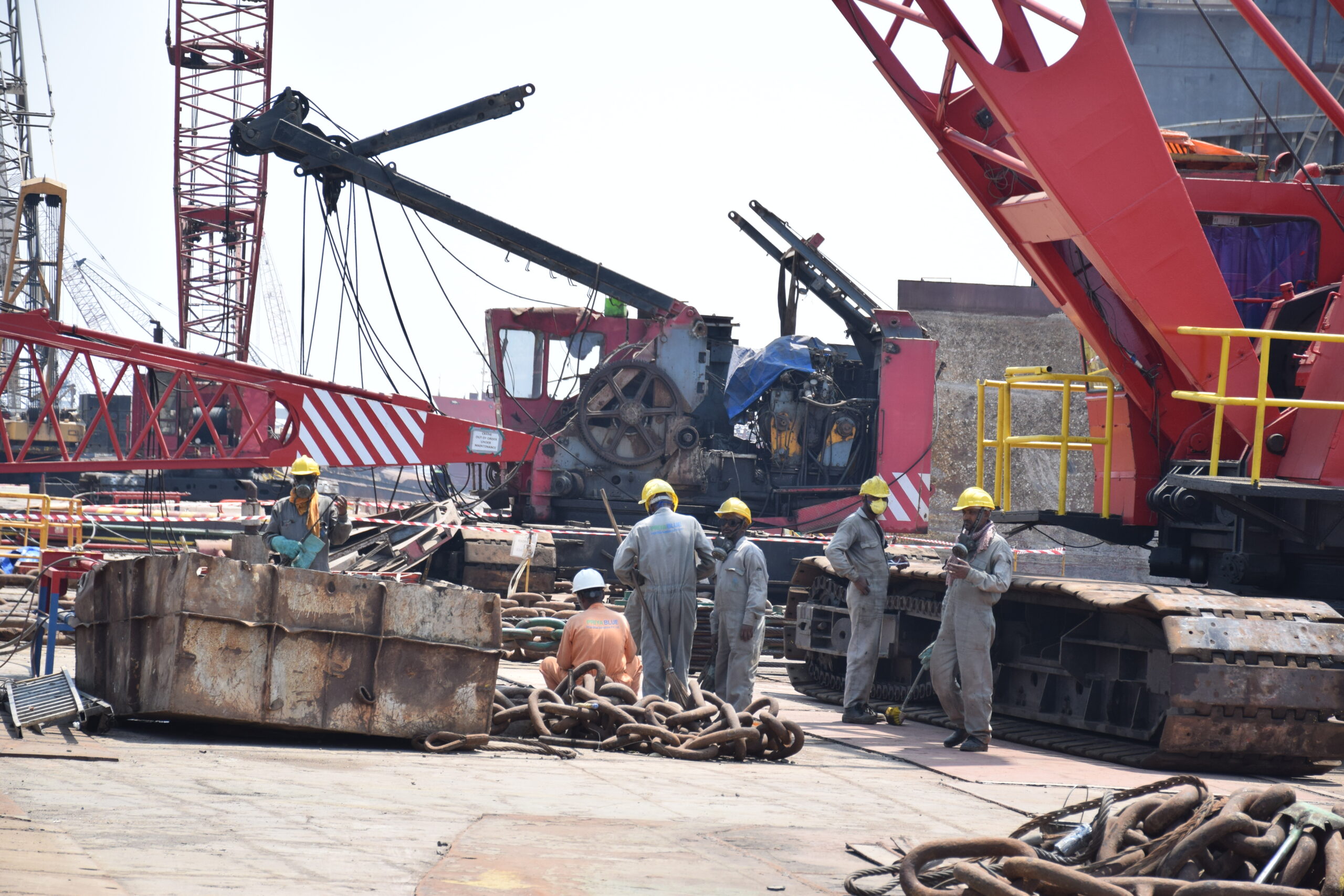
Enhanced Worker Safety: Detailed procedures and checks — both before and during ship recycling — are designed to reduce occupational hazards and protect the workforce engaged in an inherently risky industry. Business Standard
The government’s phased approach — first enforcing key statutory provisions and then introducing granular operational rules — gives recycling yards and ship owners time to adapt to the new regime, while signaling to international stakeholders India’s seriousness about meeting and even exceeding global standards. Business Standard
India’s Competitive Advantage
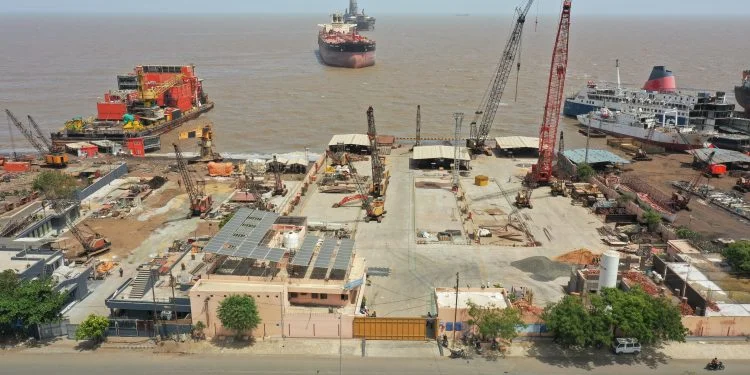
South Asia has long been the hub of global ship recycling, with India, Bangladesh and Pakistan handling the bulk of the world’s end-of-life tonnage. India’s Alang-Sosiya yard in Gujarat’s Bhavnagar district is emblematic of this strength — historically one of the largest concentrations of ship recycling activity in the world. ETInfra.com
According to industry estimates, nearly 90 per cent of Indian ship recycling yards already meet Hong Kong Convention compliance standards — a factor that could significantly ease the transition to full regulatory enforcement. Business Standard
Experts believe these reforms could translate into meaningful economic gains. Although compliance will inevitably raise operational costs, it also enhances the global acceptability of Indian ship recycling facilities among international ship owners — particularly those seeking environmentally sound demolition services. Increased demand from these owners could expand market share and cement India’s position as a global leader in green ship recycling. Business Standard
“While costs may increase, wider acceptance of Indian ship recycling yards by global owners is likely to boost our market share,” said Kuljit Singh, Partner at EY India. Business Standard
Challenges on the Horizon
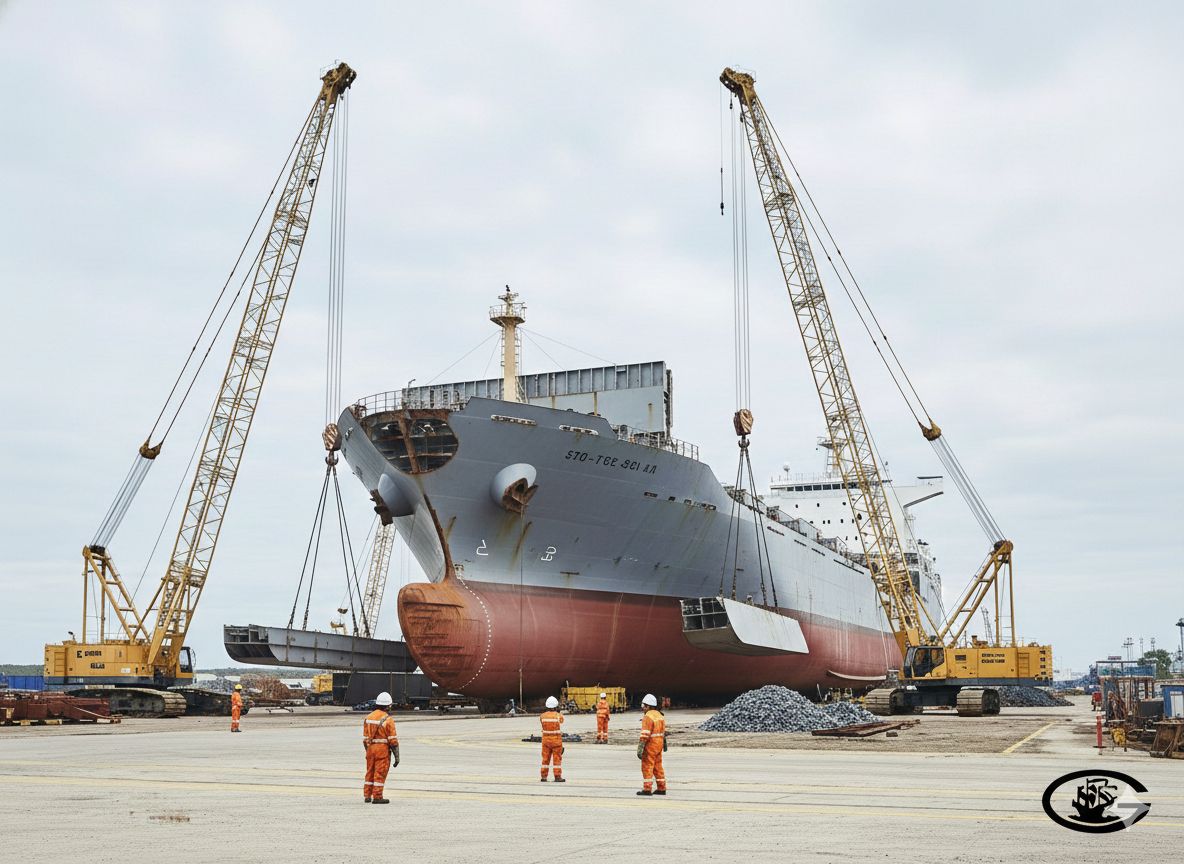
The transition to HKC-aligned practices is not without challenges. Traditional methods like beaching — where ships are beached at high tide and dismantled without full separation from the sea — may need to be replaced or supplemented with more environmentally sustainable techniques such as dry docking. Business Standard
Additionally, debates persist globally about the legal categorization of scrapped ships and associated risks, as under some interpretations of related conventions like the Basel Convention, end-of-life vessels may be defined as hazardous waste, posing complex legal questions for owners and states acting under multiple regulatory regimes. ETInfra.com
Despite these hurdles, the consensus among policymakers and industry players is that higher compliance standards will, over time, elevate India’s stature in the global maritime economy while simultaneously safeguarding its coastline and workforce from the hazards traditionally associated with ship recycling. Business Standard
Looking Ahead: A Sustainable Future for Ship Recycling
Implementation of the ship recycling reforms dovetails with broader national priorities — from strengthening environmental governance to enhancing India’s contribution to sustainable industrial practices worldwide. Alang and other Indian yards are poised to serve as models, not just for regional ship recycling but as benchmarks for global green industrial transformation. ETInfra.com
The forthcoming detailed regulations — expected in early 2026 — will clarify compliance expectations and further solidify India’s roadmap forward. Meanwhile, government outreach and capacity-building efforts continue to help recyclers, ship owners and regulators align their operations and expectations ahead of full HKC implementation. Business Standard
In the broader maritime landscape, these reforms represent a critical intersection of economic opportunity and environmental stewardship — one where India is not merely responding to international norms, but shaping them. As the world increasingly prioritises sustainability, India’s embrace of the Hong Kong Convention signals a bold commitment to responsible industry leadership that could resonate far beyond its shores. Business Standard

Author: shipping inbox
shipping and maritime related web portal