




Establish structured licensing window to recycle sanctioned ships: Anil Sharma of GMS
India’s HKC-compliant yards can offer a regulated, environmentally sound pathway to dismantle shadow fleet vessels, argues world’s largest cash buyer of ships

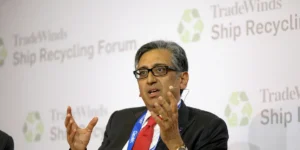
As the global maritime industry grapples with the growing risks posed by an expanding “shadow fleet” of ageing and often uninsured vessels, Anil Sharma, Founder and Chief Executive Officer of GMS — the world’s largest cash buyer of ships for recycling — has called on Western governments to urgently establish a structured licensing mechanism that would allow sanctioned ships to be dismantled under strict regulatory oversight.
In an intervention that has sparked renewed debate across shipping, finance and environmental policy circles, Sharma urged the United States, the United Kingdom and European authorities to move beyond what he described as a policy stalemate. Ignoring the end-of-life problem of sanctioned vessels, he said, only allows unsafe ships to continue operating on the world’s oceans, heightening risks to human life, marine ecosystems and global trade routes.
“Regulators cannot ignore this issue,” Sharma said. “There are ageing and dangerous vessels operating on the world’s oceans today. Ignoring them does not make them disappear. These ships must be removed responsibly through safe and legal recycling channels.”
Ship recyclers caught in a bind
The call comes at a time when ship recyclers, particularly in South Asia, find themselves in a difficult position. On one hand, they have invested heavily over the past decade to upgrade facilities to comply with the Hong Kong International Convention for the Safe and Environmentally Sound Recycling of Ships (HKC), a global treaty adopted by the International Maritime Organisation (IMO) that entered into force in June 2025. On the other, they face severe legal and financial risks if they accept vessels linked to sanctions regimes.
The dilemma is especially acute for recycling yards in India, which has emerged as the world’s leading destination for compliant ship recycling. While sanctioned “dark fleet” vessels — often trading under opaque ownership structures and flags of convenience — represent a significant portion of the ageing global fleet, recyclers fear attracting secondary sanctions, losing access to international banking channels, or being cut off from insurance markets.
Some players, industry insiders say, quietly take the risk in order to maintain volumes and recover investments. Others, including GMS, have chosen to stay clear altogether.
“To be sure, GMS has stayed clear of dealing with sanctioned fleet despite the slack in global ship recycling activity,” Sharma said, underscoring the company’s stance. “But the absence of a lawful pathway does not eliminate the problem — it only pushes it into more dangerous territory.”
A subdued market, underused capacity
The timing of Sharma’s proposal is significant. Global ship recycling volumes have been among the lowest in years, as strong freight markets and geopolitical disruptions have kept older vessels trading longer than expected. For recycling yards that have upgraded to HKC standards — often at considerable cost — this has translated into underutilised capacity and financial stress.
“In the current subdued recycling market, a structured licensing window would help keep upgraded Indian ship recycling capacity productively utilised,” Sharma said. “It would sustain employment and support the wider downstream ecosystem, including re-rolling mills, logistics providers, equipment reuse businesses and associated services.”
India’s ship recycling industry directly employs tens of thousands of workers and indirectly supports a much larger industrial ecosystem. A prolonged downturn risks job losses and erosion of hard-won safety and environmental gains, industry representatives warn.
Sharma, who has been named in Lloyd’s List’s “Top 100 Most Influential People in Shipping” for 2025 — the 16th consecutive year he has featured on the list — proposed a tightly controlled, time-bound framework as a starting point. GMS has suggested a six-month licensing window to evaluate the effectiveness and integrity of such a programme.
“Authorities would retain complete control over monitoring, transaction visibility, and the implementation of any penalty or restriction mechanisms deemed necessary,” he said.
Shadow fleet risks mount globally
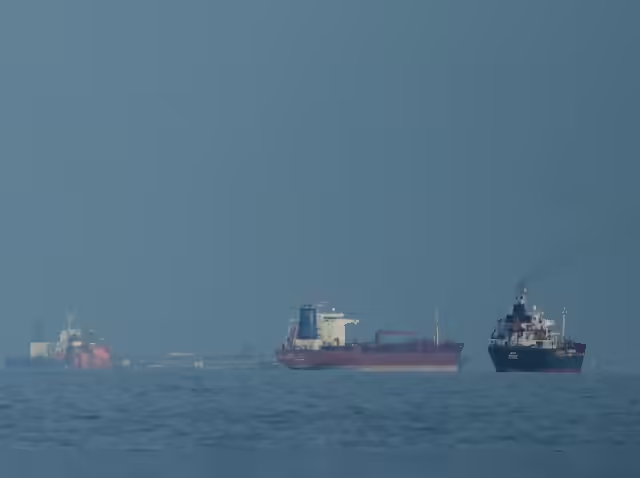
The urgency of the issue is underscored by the rapid growth of the shadow or dark fleet over the past three years, driven largely by sanctions imposed on Russia’s energy exports following the Ukraine conflict. These vessels, many of them ageing tankers, operate outside Western regulatory oversight, often without proper insurance, classification or transparency.
According to analysis by maritime data specialist Lloyd’s List Intelligence, the shadow fleet now comprises more than 1,400 vessels. A separate 2025 maritime safety and marine insurance risk review estimates that around 17 per cent of the world’s tanker fleet belongs to the dark fleet.
European authorities have continued to tighten restrictions. On December 18, 2025, the European Union imposed restrictive measures on an additional 41 vessels linked to the Russian shadow fleet, taking the total number of designated vessels to nearly 600.
Industry experts warn that many of these ships are well past their prime, with deteriorating hulls, outdated equipment and questionable maintenance practices. Accidents involving such vessels could result in major oil spills, loss of life and severe environmental damage, particularly in sensitive maritime corridors.
A regulated solution gains support
Sharma’s call aligns with a growing chorus of voices within the global maritime industry urging policymakers to distinguish between sanctioning illicit trade and responsibly managing end-of-life assets.
Senior industry leaders, including Evangelos Marinakis, founder of Capital Group; Jan Dieleman, chief executive of Cargill’s Ocean Transportation arm; and Lars Barstad, chief executive of Frontline, have recently highlighted the need for lawful, environmentally responsible mechanisms to allow sanctioned vessels to be recycled safely.
The argument is straightforward: while sanctions are intended to curb specific economic activities, they should not inadvertently encourage unsafe practices or environmental harm by leaving ageing ships to operate indefinitely.
For months, GMS has been advocating this position with policymakers, including direct outreach to authorities in the United States. The company has sought to explain why responsible recycling, under transparent and tightly controlled conditions, is the only practical way to neutralise the risks posed by the ghost fleet.
“Responsible recycling is not a loophole,” an industry executive familiar with the discussions said. “It is risk mitigation.”
India’s HKC advantage
Central to GMS’s proposal is India’s readiness to shoulder this responsibility. India is a contracting party to the Hong Kong Convention, which entered into force on June 26, 2025, marking a watershed moment for the global ship recycling industry. The convention sets rigorous standards for worker safety, environmental protection, hazardous material management and documentation throughout a ship’s life cycle and dismantling process.
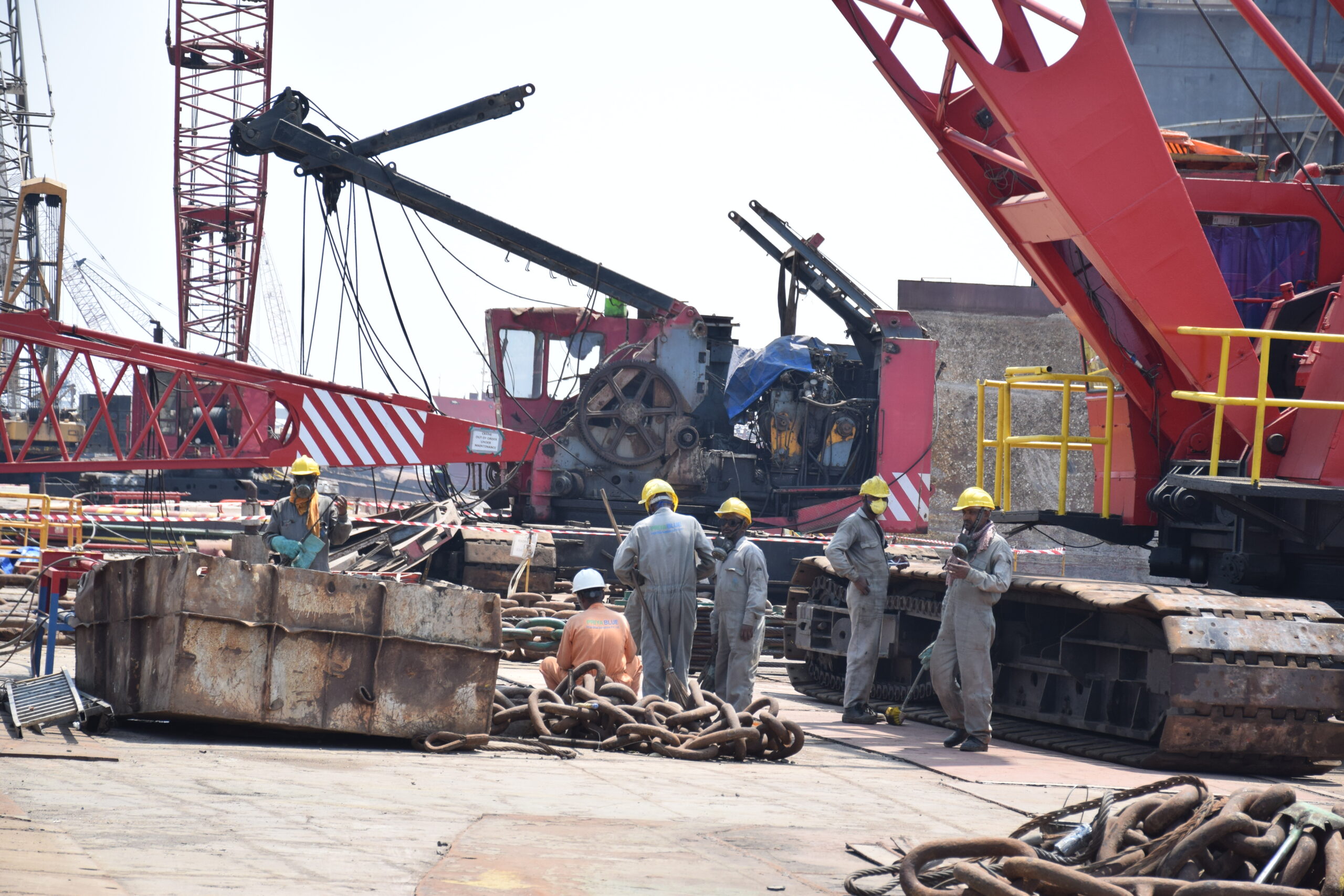
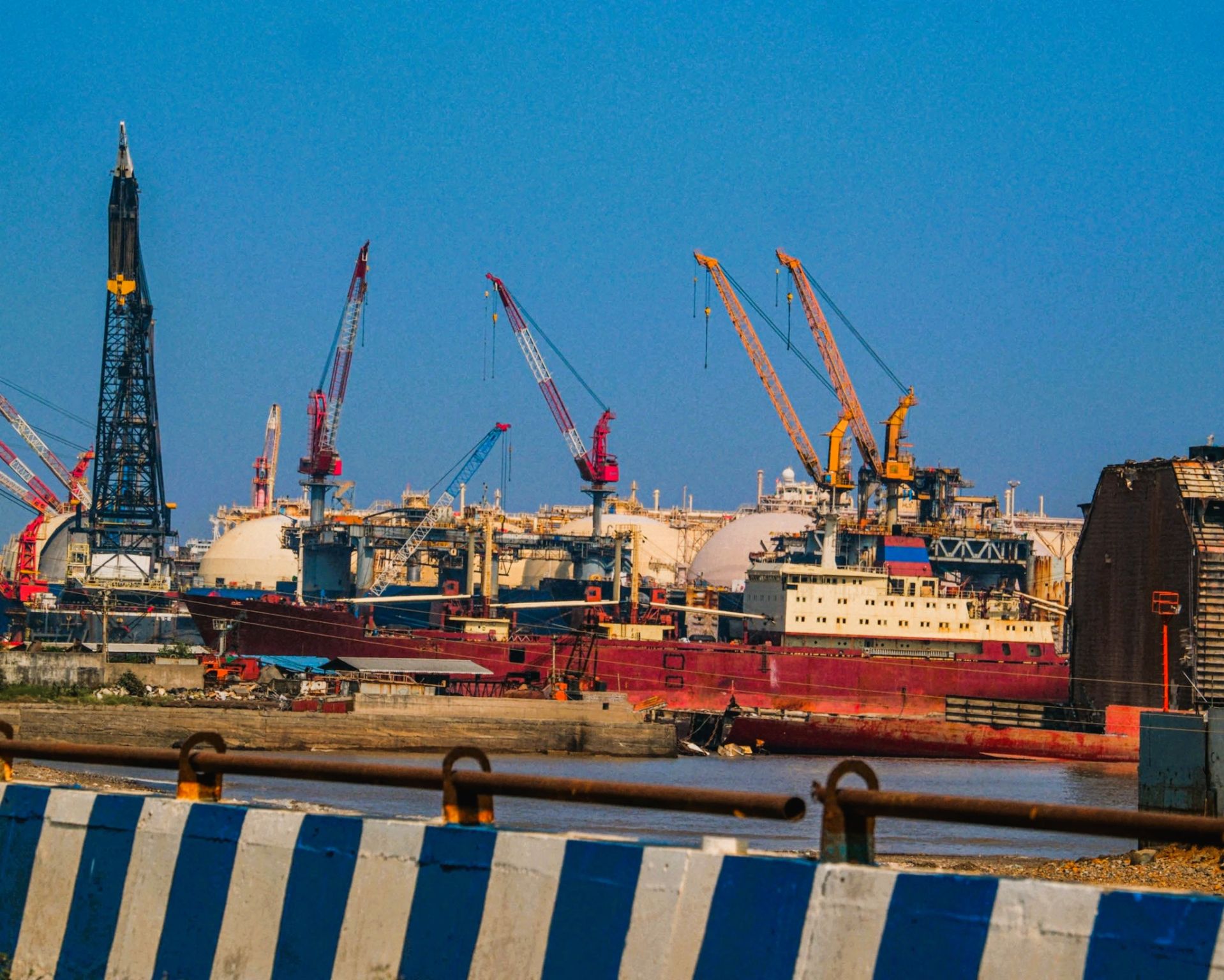
India has already operationalised its compliance framework, with more than 110 HKC-compliant ship recycling yards, primarily concentrated at Alang in Gujarat. These yards are subject to regular audits, oversight by national authorities and adherence to detailed ship recycling plans approved on a vessel-by-vessel basis.
“Compliant cash buyers and yards exist, fully capable of recycling such vessels in accordance with global environmental and safety norms,” GMS said in a statement. “U.S. dollar-based banking channels are well established for transparent transactions, ensuring complete regulatory visibility for authorities.”
From a regulatory standpoint, proponents argue, recycling offers far greater transparency than continued trading in the shadow market. Transactions can be monitored, ownership histories scrutinised, and proceeds controlled — reducing the scope for misuse.
Balancing sanctions and safety
The proposal, however, is not without controversy. Critics caution that any relaxation of restrictions could be perceived as diluting the effectiveness of sanctions. Others worry about enforcement challenges and the risk of sanctioned entities exploiting recycling channels for financial gain.
Sharma counters that a properly designed licensing regime would address these concerns. Under such a framework, each vessel would require explicit approval, proceeds could be frozen or directed as authorities see fit, and non-compliance would attract severe penalties.
“This is not about helping sanctioned actors,” he said. “It is about removing unsafe assets from the global fleet in a way that protects people, the environment and the integrity of the regulatory system.”
A call to global maritime bodies
In his closing remarks, Sharma appealed to international maritime organisations and industry associations to back the initiative.
“We encourage all maritime bodies — the IMO, ICS, Intertanko, Intercargo, BIMCO and others — to support this initiative,” he said. “A responsible path exists. It is time to use it.”
As geopolitical tensions show little sign of easing and the shadow fleet continues to expand, policymakers face a complex balancing act. Sharma’s proposal adds momentum to a debate that is likely to intensify in the months ahead: whether the world can afford to let ageing, high-risk vessels roam the seas indefinitely, or whether a controlled, transparent recycling pathway offers a safer alternative.
For India’s ship recycling industry — and for global maritime safety — the answer could have far-reaching consequences.

Author: shipping inbox
shipping and maritime related web portal