



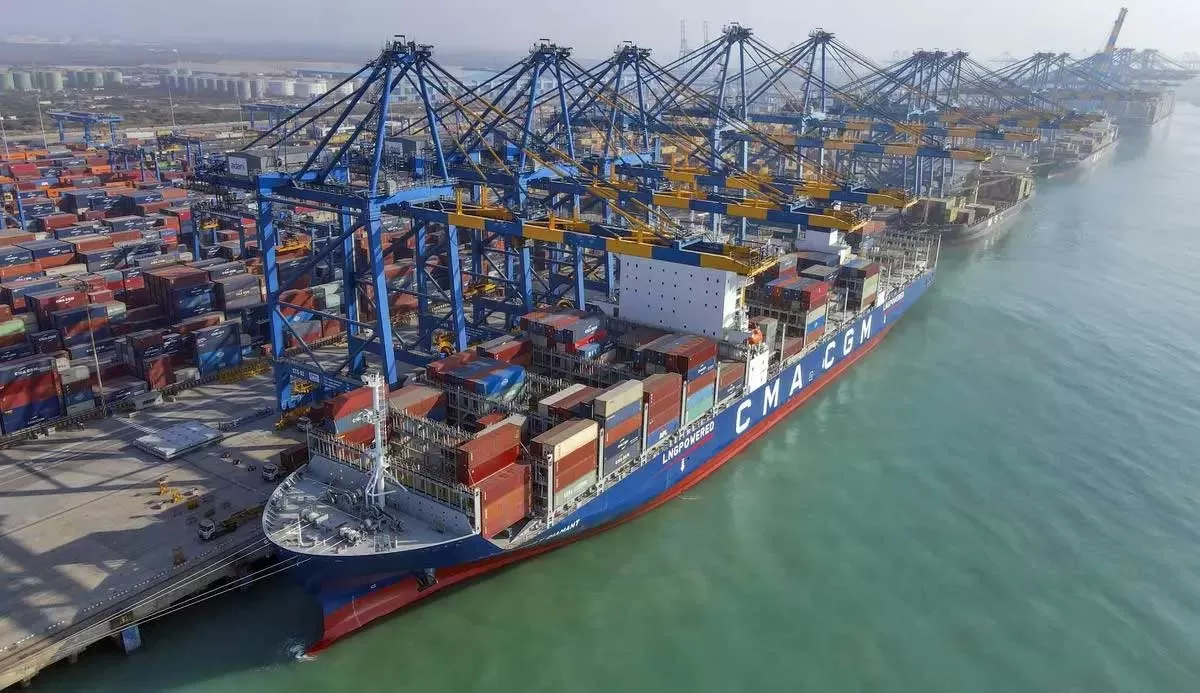
Adani’s Mundra Port sets new throughput records in January 2026
Adani’s Mundra Port has reported a record-breaking performance in January 2026, reinforcing its position as a critical gateway for India’s export-import trade and underlining the dominance of Adani Ports and Special Economic Zone Ltd (APSEZ) in the country’s port sector.

The standout performance came from the automobile and liquid cargo segments. Mundra achieved its highest-ever monthly automobile export volume, shipping 25,762 vehicles through its dedicated roll-on/roll-off (RoRo) terminal. This surpassed the previous peak recorded in May 2024 and highlighted the port’s growing role in India’s vehicle export ecosystem. Major original equipment manufacturers such as Maruti Suzuki and Toyota are increasingly routing exports through Mundra to destinations across Africa, Europe, East Asia, Australia and the Middle East, reflecting steady overseas demand for India-manufactured vehicles.
Operational efficiency was also on display with a new single-call benchmark. Mundra loaded 5,701 vehicles on a single vessel at a gross rate of 145 units per hour, a feat achieved through close coordination between yard operations, planning teams and ship management, while adhering to safety protocols.
On the liquid cargo front, Mundra handled a record 1.120 million tonnes in January, surpassing its earlier high set in December 2025. The performance underscored the port’s ability to manage energy products, chemicals and industrial liquids alongside high volumes of containers and bulk cargo. Across its national network, APSEZ handled 44.8 million tonnes during the month, a year-on-year increase of 12%, driven by a 16% rise in container volumes and a 21% jump in liquids.
APSEZ, India’s largest private port operator, operates 15 domestic ports with a combined capacity of 633 million tonnes per annum. Mundra alone accounts for 338 million tonnes of capacity, making it the country’s largest port and giving APSEZ a significant scale advantage, even as public-sector ports such as Jawaharlal Nehru Port Authority post record container volumes.
The company’s recent momentum aligns with strong activity in India’s automobile sector, which reported healthy domestic sales and export growth in January 2026. Policy support from the Union Budget 2026–27, with its emphasis on infrastructure and logistics, is also seen as favourable for APSEZ’s expansion plans. International rating agencies, including S&P, Moody’s, Fitch and JCR, have affirmed ratings that reflect confidence in the company’s business profile and balance sheet, with JCR rating APSEZ at A-/Stable, a notch above India’s sovereign rating.
However, strong operational performance has also brought valuation concerns to the fore. With a market capitalisation of around ₹3.57 lakh crore and a trailing price-to-earnings multiple of about 28.6, some analysts consider the stock expensive. MarketsMOJO recently downgraded its stance to “Sell”, citing stretched valuations despite acknowledging the strength of the underlying franchise.
External challenges remain, including higher interest costs and a softer global trade environment influenced by geopolitical disruptions. Red Sea route diversions are lengthening transit times for India–Europe trade, while concentration risks persist due to Mundra’s exposure to large auto exporters.
Looking ahead, APSEZ has raised its FY26 EBITDA guidance to ₹22,800 crore and continues to invest in growth projects such as Vizhinjam Phase 2 and automotive logistics hubs. The group’s long-term ambition is to handle one billion tonnes of cargo annually and emerge as the world’s largest port operator by 2030.

Author: shipping inbox
shipping and maritime related web portal