



Europe’s Ship-Recycling Dilemma: Is the EU Undermining Its Own Circular Economy?
Alang’s upgraded infrastructure deserves an objective assessment, not a geographical disadvantage
By Staff Reporter

BHAVNAGAR : The European Union has long projected itself as a global champion of environmental protection, sustainable development, and the circular economy. Its Ship Recycling Regulation (EU) No. 1257/2013 was introduced with a legitimate objective: ensuring that end-of-life vessels are dismantled under safe, environmentally sound, and socially responsible conditions.
However, recent developments concerning the proposed inclusion of two ship-recycling facilities at Alang-Sosiya, Gujarat, in the European List of Approved Ship Recycling Facilities raise a pressing question: Is Europe’s ship-recycling policy consistently recognising environmental performance, or are geographical location and recycling methodology becoming overriding considerations?
The issue has assumed critical significance following the European Parliament’s Environment Committee objection on November 4, 2026, to the European Commission’s proposal to include two Indian facilities—Shree Ram Vessel Scrap and YSI Recyclers—despite the Commission having undertaken its technical assessment and recommended their inclusion.
The matter deserves a scientific, technical, and regulatory examination rather than an ideological debate over beaching.
Perspective: Environmental Standards Must Be Universal, Not Geographical
India’s position is not that Alang should be exempted from international environmental and safety rules. On the contrary, Alang’s transformation reflects decades of capital investment and institutional reform aimed at building a modern, regulated recycling ecosystem. The two proposed facilities deserve a verdict rooted in verifiable compliance—just as Turkish and European yards are judged on their individual merits.
A global circular economy cannot be strengthened by locking out compliant recycling capacity without accounting for the practical consequences. The true test of Europe’s environmental leadership lies not in the number of yards it excludes, but in whether it applies uniform scientific rigour, transparency, and accountability irrespective of geography. Environmental responsibility must be universal, and its recognition equally objective.
Atul Sharma, Maritime Environment & Ship Recycling Professional; Former Head of Environment Cell, Gujarat Maritime Board (GMB)

The EU’s Own Capacity Challenge
According to the European Commission’s Blue Economy Observatory, approximately 15,385 vessels were registered under EU Member State flags in the first quarter of 2025. Their combined tonnage stood at roughly 249.1 million gross tonnes (GT), representing 14.8% of the global fleet by GT.
More importantly, the average age of EU-flagged vessels was 23.35 years. Specific categories—including floating production, storage, and offloading (FPSO) vessels, passenger ships, and refrigerated cargo vessels—recorded considerably higher average ages. While actual dismantling timelines depend on vessel economics, maintenance, and regulatory shifts, these figures signal a substantial upcoming requirement for ship recycling.
A 2024 peer-reviewed study, Demolition of the European Ships Fleet: A Scenario Analysis, published in Marine Policy, estimated that roughly 70% of the existing European fleet had over ten years of operational history, around 75% of the current fleet could be recycled by 2045, and peak demolition frequency could occur around 2042.
This serves as an urgent long-term warning for policymakers. The EU’s February 2026 European List contained 41 facilities: 30 in Europe (including the EU, Norway, and the UK), 10 in Türkiye, and one in the United States, with no Indian facility included at that stage.
Whether this listed network—given its actual operational throughput, vessel-size limitations, and geographical distribution—can handle large ocean-going vessels in the coming decades remains questionable. The European shipowners’ association has itself flagged concerns regarding the suitability and capacity of existing listed yards for large vessels and has backed the inclusion of qualified Indian facilities.
The Turkish Comparison: Consistency of Assessment is Essential
Türkiye maintains a significant presence on the European List, with ten facilities included in its February 2026 edition. While a comparison with Türkiye requires technical nuance—listed Turkish facilities generally operate using the beaching method, whereas Alang is internationally known for its tidal beaching method—both systems involve shore-based dismantling and must meet the same environmental, hazardous-waste containment, and occupational-safety standards.
In February 2026, the European Commission removed a Turkish facility, Dortel Gemi Söküm, after inspections revealed inadequate shoreline protection, shoreline cutting without an impermeable floor, and insufficient waste containment. This demonstrates that the Commission conducts facility-specific compliance audits in Türkiye, reinforcing a core principle: identical environmental objectives and scrutiny must apply regardless of geography.
India is not seeking preferential treatment; it is seeking an equivalent, evidence-based opportunity for assessment.
Alang is No Longer the Industry of the Past
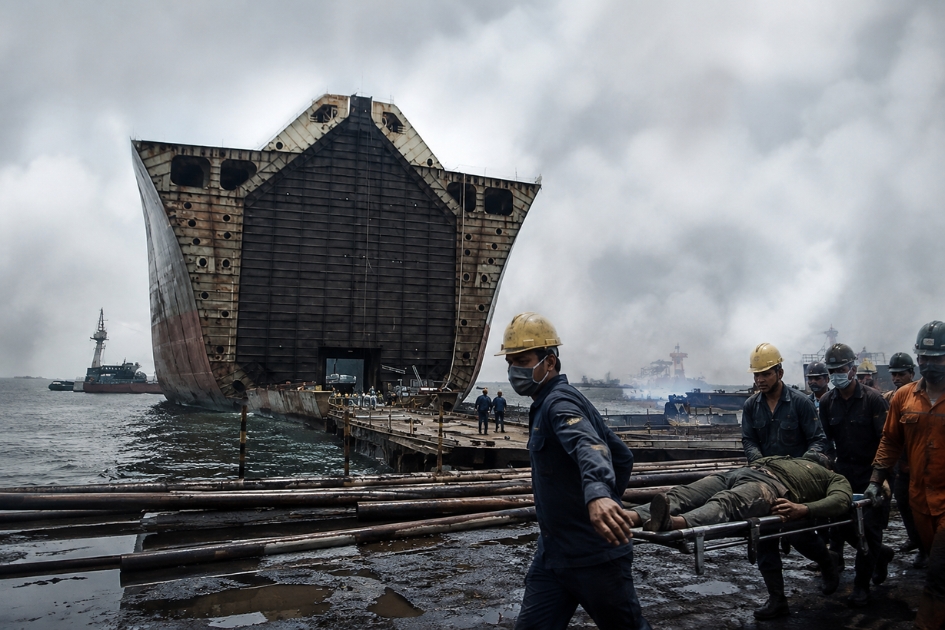
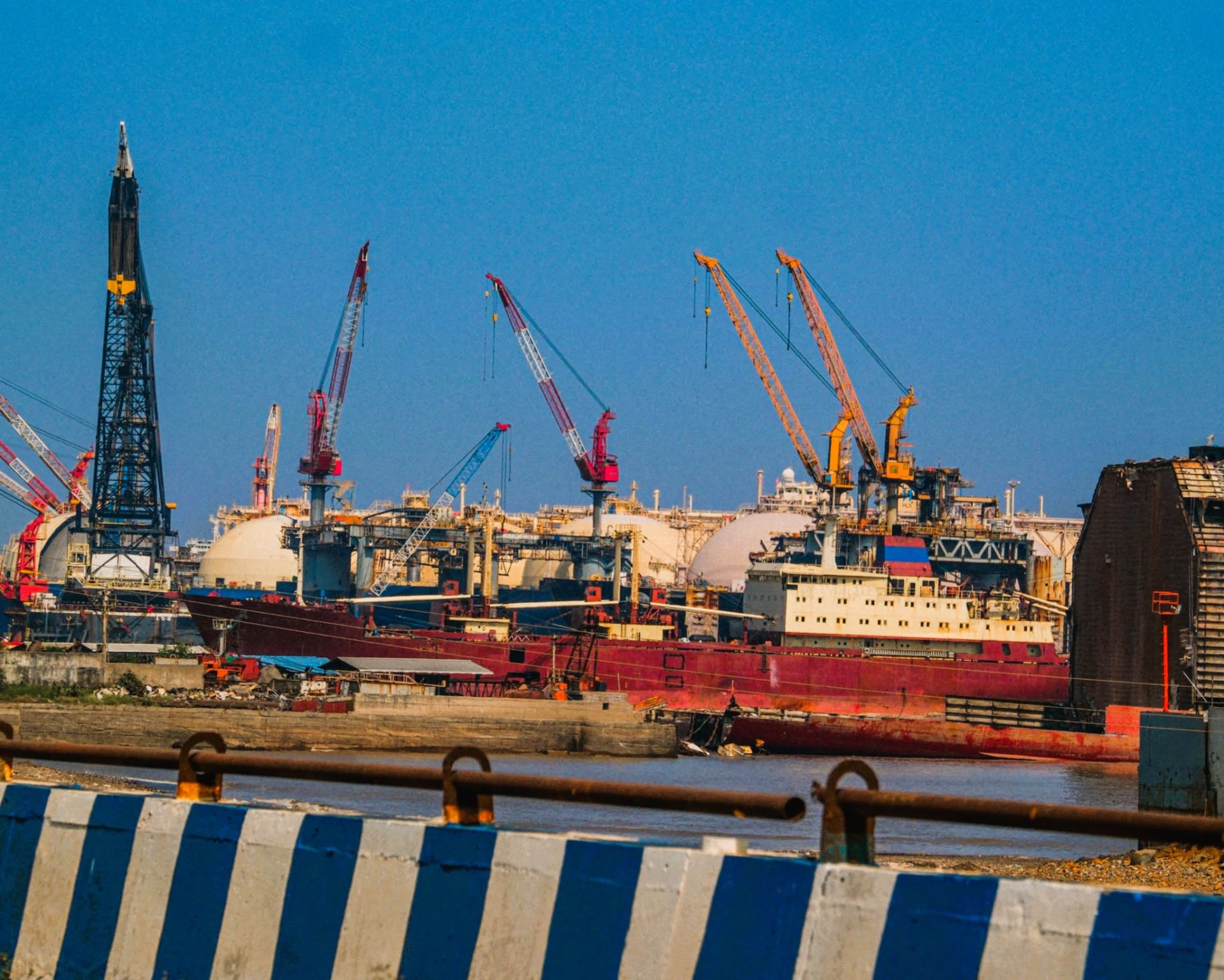
Joint Secretary of Ship Recycling Industries Association (India) Mr Haresh Parmar said that judging present-day Alang-Sosiya through photographs or perceptions of its early decades ignores decades of transformation. Established in 1982–83, the yard has undergone major infrastructural and regulatory upgrades.
According to a July 2026 parliamentary disclosure by the Ministry of Ports, Shipping and Waterways:
-
National Share: Alang-Sosiya accounts for approximately 98% of India’s ship-recycling activity.
-
Scale & Capacity: It comprises 128 operational plots with an installed capacity of roughly 4.5 million Light Displacement Tonnes (LDT) annually.
-
Global Compliance: A total of 115 recycling plots have achieved compliance with the Hong Kong Convention.
-
Track Record: Over 8,900 vessels, aggregating more than 71 million LDT, have been recycled since inception.
-
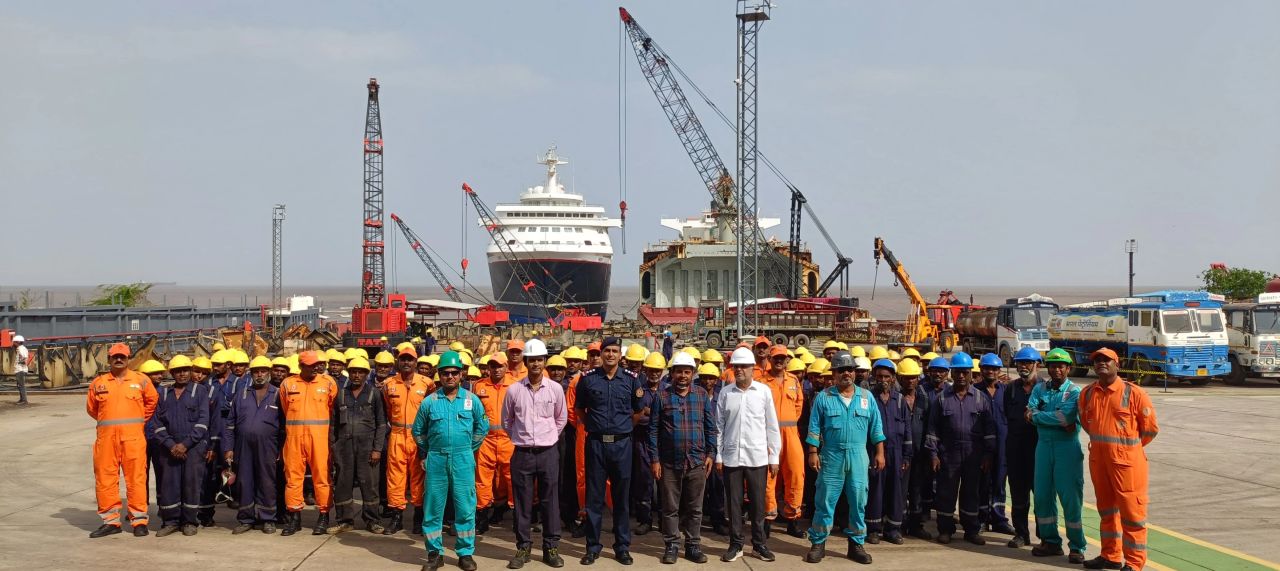
Livelihoods: The sector directly employs approximately 15,000 workers and supports over 1.5 lakh people indirectly.
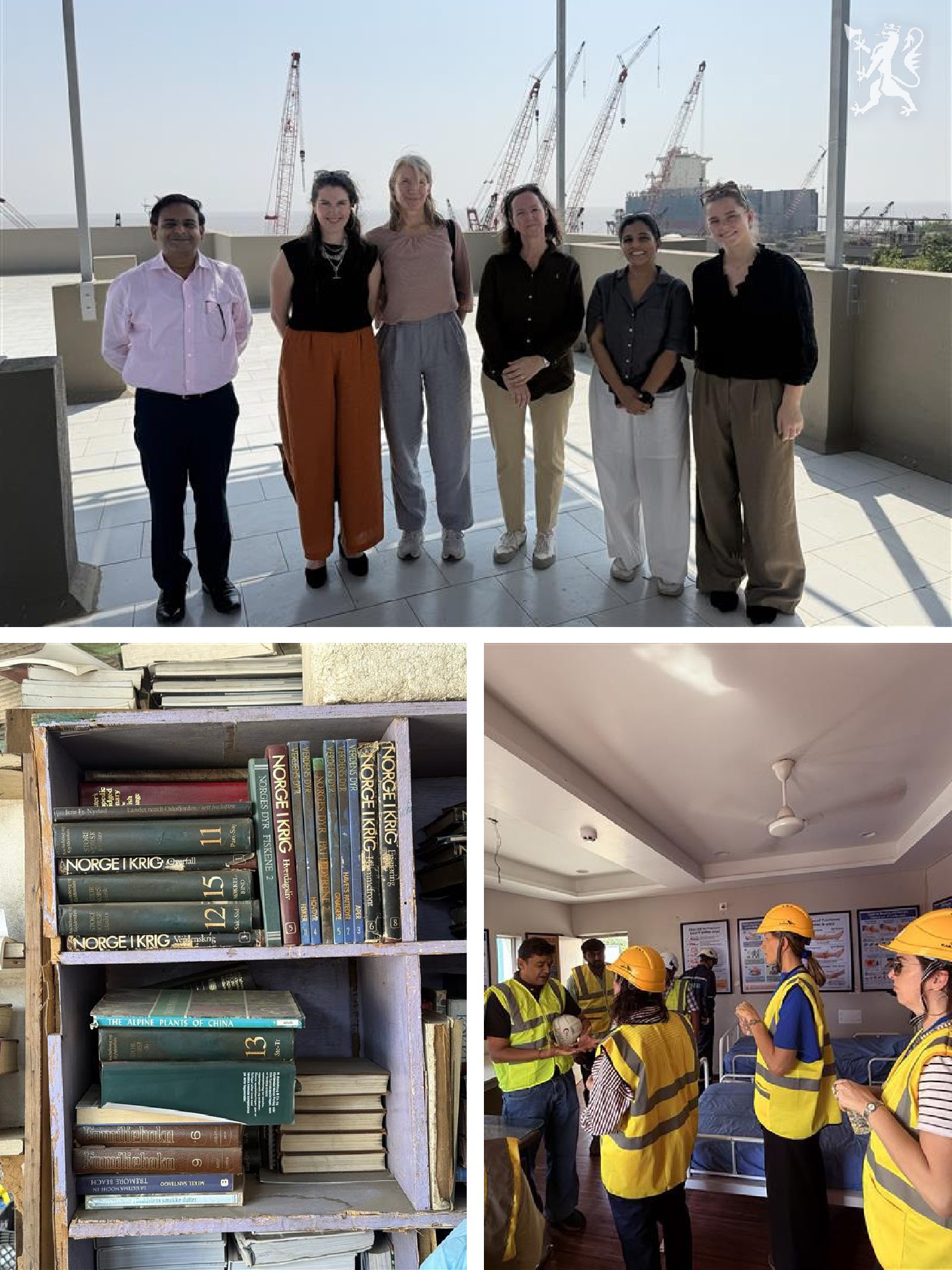
Equally vital is the common infrastructure established and maintained by the Gujarat Maritime Board (GMB) supporting individual plots:
-
Hazardous-Waste Management: An operational Treatment, Storage, and Disposal Facility (TSDF) equipped with hazardous and non-hazardous waste disposal cells, effluent treatment, and incineration units.
-
Occupational Health: Dedicated hospital and emergency medical infrastructure, including ambulance networks and trauma-care facilities.
-
Safety Training: A specialised Training and Welfare Complex covering gas cutting, crane operations, and safety supervision, which has cumulatively trained over 1.57 lakh workers since 2003 (per GMB’s 2023–24 annual report).
-
Worker Welfare: Residential housing and supporting civic amenities for the workforce.
-
Regulatory Oversight: Continuous monitoring, inspections, and compliance audits by governmental authorities, recognised organisations, and the GMB.
Ship recycling cannot be evaluated solely within the physical boundary of an individual plot; the environmental and social performance of the entire ecosystem—including downstream hazardous-waste management and emergency response—must be factored in.
Hong Kong Convention: A New Global Benchmark
The Hong Kong International Convention for the Safe and Environmentally Sound Recycling of Ships, adopted in 2009, entered into force on June 26, 2025. As a contracting Party, India has institutionalised its mandates through the Recycling of Ships Act, 2019, the Recycling of Ships Rules, 2021, and subsequent 2026 regulations.
With major recycling nations—including India, Türkiye, Bangladesh, and Pakistan—having acceded to the Convention, mandatory global baselines now govern hazardous material inventories, facility certification, and reporting. While the EU Ship Recycling Regulation goes further in areas such as impermeable surfaces and drainage containment, these stricter benchmarks should trigger objective facility-level verification rather than a blanket rejection of an entire nation’s methodology.
The European Commission’s initial proposal to include the two Alang yards in its draft 16th European List indicates that its technical evaluation diverged from the subsequent political objection raised by the Parliament’s Environment Committee. The technical grounds for that divergence warrant transparent scrutiny.
Is Europe Risking Its Own Circular-Economy Objectives?
Ship recycling is a vital source of secondary raw materials, not merely a waste-disposal activity. Alang’s industrial ecosystem recovers steel, machinery, non-ferrous metals, and reusable equipment, reducing reliance on virgin raw materials and feeding downstream manufacturing.
The irony is that while Europe champions resource efficiency, its shipowners remain heavily reliant on non-European yards. The European Commission’s 2025 evaluation of its Ship Recycling Regulation exposed a critical loophole: the reflagging of EU-owned vessels just prior to dismantling. In 2023, although EU-flagged ships accounted for roughly 13% of the global fleet, less than 7% of end-of-life vessels recycled worldwide retained an EU flag at the time of scrapping.
Flag-based restrictions alone cannot guarantee responsible recycling across the broader European-owned fleet. Excluding compliant, high-volume yards in India leaves European shipowners with fewer viable options for large vessels, tighter logistical bottlenecks, and higher dismantling costs.
Looking Towards 2036: The Approaching Recycling Wave
The coming decade will prove decisive as fleet ageing, decarbonization mandates, and shifting fuel economics accelerate vessel retirements. While the Marine Policy study’s projection—that 75% of the current European fleet may require recycling by 2045—is a macro-level indicator rather than an annual ship-by-ship forecast for 2027–2036, it underscores the urgency of early capacity planning. India’s established ecosystem, skilled workforce, and downstream steel linkages belong in that international capacity framework.
A Call for Scientific and Regulatory Consistency
India does not seek a dilution of European environmental standards or exemptions from rigorous oversight. Instead, the European Union should:
-
Publish Transparent Findings: Release facility-specific assessment reports detailing the exact technical grounds for accepting or rejecting applications.
-
Apply Equivalent Benchmarks: Evaluate Indian and Turkish yards against identical environmental and occupational-safety criteria, accounting fairly for operational methods.
-
Assess the Full Ecosystem: Factor in common infrastructure such as GMB’s TSDF, hospitals, safety-training centres, and emergency-response networks.
-
Align with Global Baselines: Recognise the Hong Kong Convention as the international baseline while transparently verifying additional EU SRR requirements.
-
Conduct Realistic Capacity Planning: Model long-term ship-recycling capacity needs for 2027–2036 and beyond based on vessel sizes and real annual throughput.
-
Ensure Due Process: Establish a time-bound, transparent review and appeal mechanism for inspected facilities that submit compliance evidence.

Author: shipping inbox
shipping and maritime related web portal