



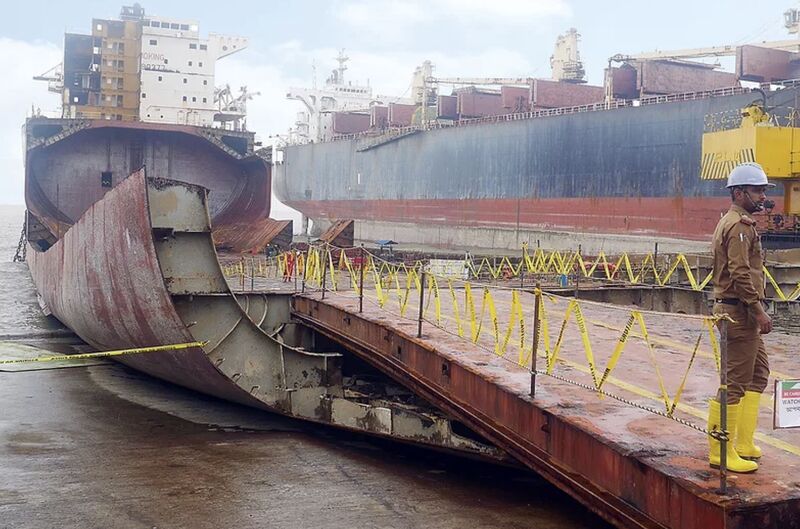
NO TWO-WAY TRAFFIC: CALL FOR SINGLE GLOBAL REGULATORY FRAMEWORK TO PREVENT DOUBLE BURDEN ON END-OF-LIFE SHIPS

MUMBAI / NEW DELHI: In a major development for the global shipping industry, including India’s prominent ship-breaking hub in Alang, international discussions have moved a step closer toward resolving a long-standing regulatory conflict over ship recycling.
The Open-ended Working Group (OEWG) of the Basel Convention recently concluded its 15th meeting, bringing unexpected optimism to maritime stakeholders. Crucially, member nations did not support the dual application of both the Basel Convention and the Hong Kong International Convention (HKC) for the Safe and Environmentally Sound Recycling of Ships to end-of-life vessels.
The outcome has been strongly welcomed by BIMCO (Baltic and International Maritime Council), the world’s largest direct-membership shipping organisation. BIMCO noted that avoiding a “double regulatory burden” is vital, as overlapping international regimes risk creating massive legal uncertainty, operational inefficiencies, and disincentives to compliance.
The Conflict of Two Conventions
For years, the ship recycling industry has been caught in a legal tug-of-war between two United Nations frameworks:
-
The Basel Convention (1989): Designed to govern transboundary movements of hazardous waste, treating end-of-life vessels under standard waste-shipment protocols like Prior Informed Consent (PIC).
-
The Hong Kong Convention (HKC): A specialized framework tailored specifically for ships, which officially entered into force in June 2025. It regulates the entire lifespan of a vessel, ensuring safe dismantling without risking human health or the environment.
Because the Basel Convention treats ships as general packaged hazardous waste, its intersection with the maritime-specific HKC has created deep legal complexity for vessels moving across international borders for dismantling.
“Clarity Closer, But More Work Needed”
While the refusal to enforce a dual-compliance mechanism is a significant victory for shipowners and yards, BIMCO cautioned that the industry isn’t out of the woods yet. No final conclusions were reached at the OEWG meeting on how the overlapping obligations should be implemented in practice.
Delegations at the meeting highlighted several unresolved roadblocks:
-
Defining the Turning Point: Diverging interpretations of exactly when an operational ship officially becomes “waste.”
-
Boundary Hurdles: Continued uncertainty regarding transboundary movement procedures for international vessels destined for scrap.
-
Enforcement Duplication: Potential gaps or conflicts between the jurisdiction of a ship’s Flag State (under HKC) and the exporting/importing state definitions (under Basel).
Direct Impact on India’s Alang Yards
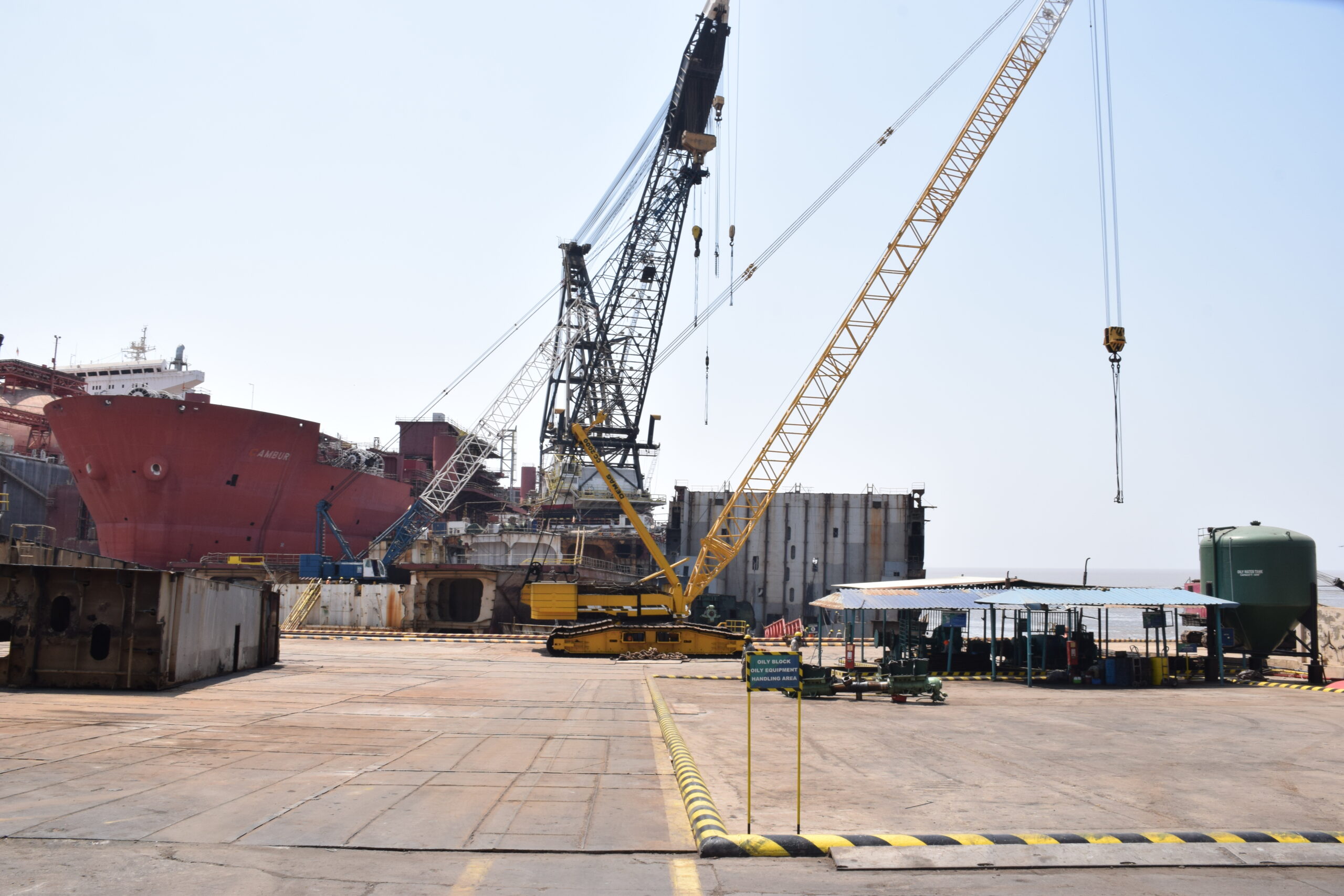
The regulatory breakthrough holds immense consequence for India. The beaching yards of Alang, Gujarat, have spent over a decade upgrading infrastructure, investing in worker safety, and acquiring Statements of Compliance to meet strict HKC standards.
Global shipping bodies argue that clear rules are necessary to safeguard these investments. “It is essential that regulatory developments support this progress rather than undermine it,” BIMCO stated, urging governments to officially recognize the HKC as the primary global framework for ship recycling.
Over 16,000 ships are projected to require recycling globally over the next decade—more than twice the volume handled in the preceding ten years. Industry experts warn that unless clear, harmonized guidelines are established between the Basel and HKC frameworks, the transition to green ship-recycling could slow down, leaving shipowners stranded in legal limbo.
The shipping industry is now pinning its hopes on the upcoming International Maritime Organization (IMO) “experience-building phase,” which will test the real-world application of the HKC and seek to iron out the remaining legal wrinkles before the next Basel Conference of the Parties (COP).

Author: shipping inbox
shipping and maritime related web portal