




Indian Recyclers Struggle Amid Regional Competition as Global Ship Recycling Market Remains Cautious: BEST OASIS

The global ship recycling market continued to reflect a cautious yet competitive tone this week, according to leading cash buyer BEST OASIS, with Indian recyclers facing mounting pressure from stronger price offerings in neighbouring markets, particularly Bangladesh.
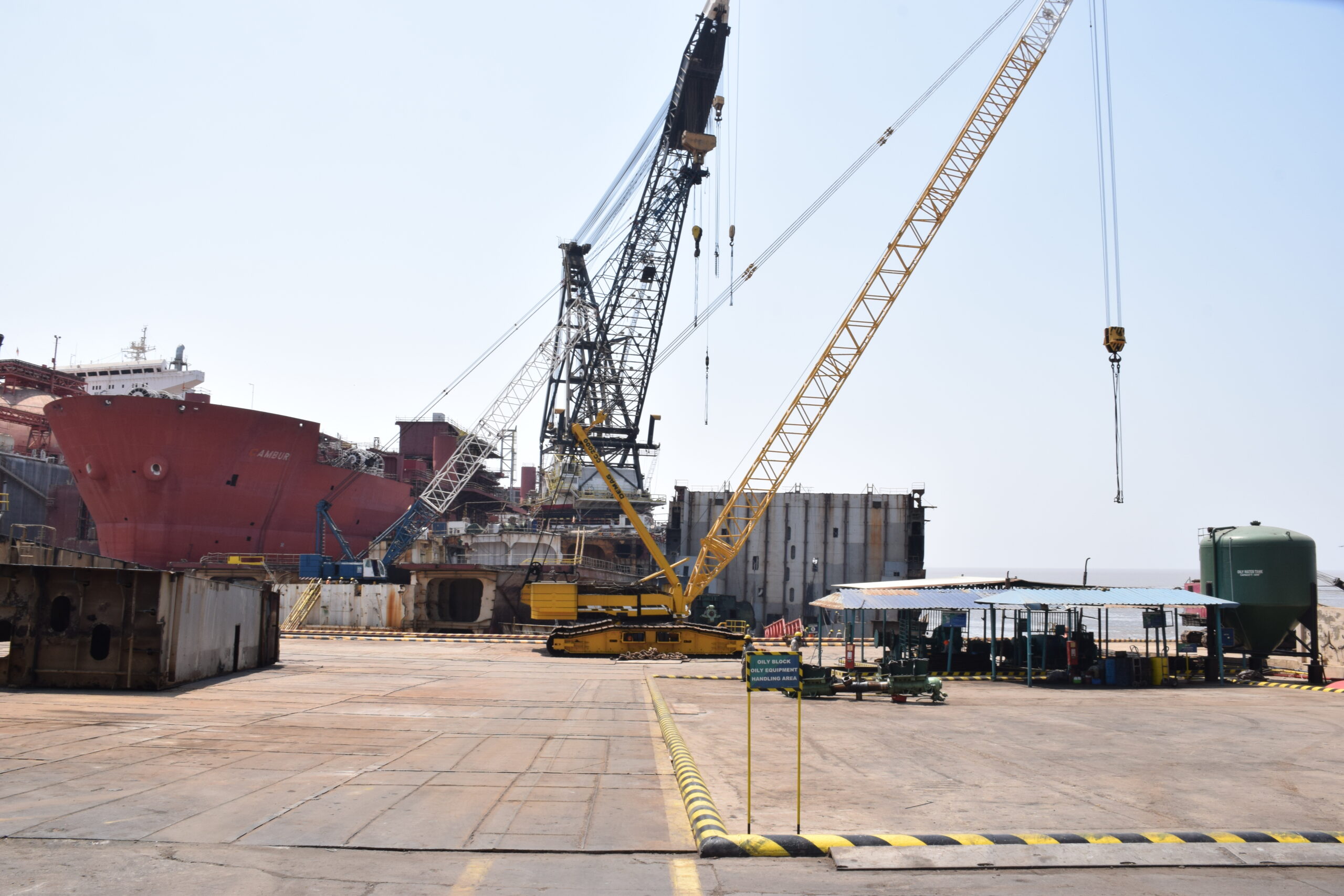
In India, recyclers are grappling with persistent challenges in securing fresh tonnage. Market participants report that higher price levels being offered by Bangladeshi buyers are diverting vessels away from Indian shores. This trend has significantly tightened the availability of ships for recycling at key locations such as Alang Ship Recycling Yard, the world’s largest ship breaking facility.
Domestic fundamentals are also weighing on sentiment. Local steel prices remain under pressure, limiting the ability of Indian buyers to match aggressive bids from regional competitors. At the same time, the US dollar has shown marginal strengthening against the Indian rupee compared to the previous week, adding another layer of complexity to import economics. Despite this, currency volatility persists, reflecting broader global uncertainty.
Industry observers note that overall sentiment in India remains cautious, with recyclers constrained by what many describe as unsustainable pricing levels. Market participants suggest that if geopolitical tensions ease, further strengthening of the US dollar and softer local steel prices across major recycling destinations could reshape competitive dynamics in the coming weeks.
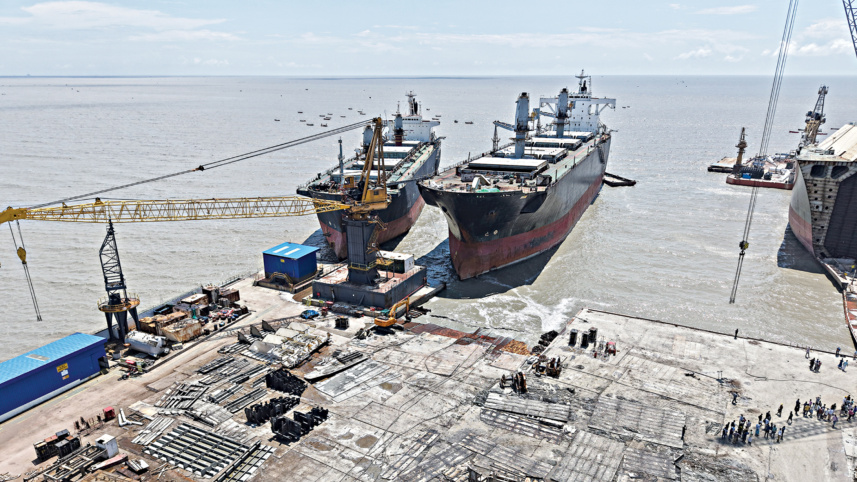
In Bangladesh, the market has softened slightly, with prices declining by approximately BDT 200 in USD terms. However, buyer appetite remains firm, supported by continued interest in acquiring vessel candidates. The country’s ship recycling hub at Chittagong Ship Breaking Yard continues to attract tonnage due to its relatively higher price offerings.
Supply constraints remain a defining feature of the Bangladeshi market. Ongoing geopolitical uncertainties have limited the availability of recyclable vessels, helping maintain a stable-to-firm pricing environment. Analysts believe that near-term market direction will largely depend on how global geopolitical conditions evolve.
Pakistan presents a more uncertain picture. The market lacks recent benchmark transactions, making it difficult to establish a clear pricing trend. While buyers in Gadani Ship Breaking Yard continue to show interest in acquiring vessels, they are struggling to compete with the stronger price levels offered in Bangladesh. Limited vessel supply further constrains activity.
That said, local scrap demand is providing some support to the Pakistani market, particularly as imports from the Middle East remain disrupted due to ongoing regional conflicts. This has created a degree of underlying demand for recycled steel, even as overall sentiment remains cautious.
In contrast, the Turkish market has remained broadly stable. At Aliaga Ship Recycling Yard, most recycling yards are operating at full capacity, leaving little room for new acquisitions. Buyers have shown limited urgency, adopting a disciplined approach to pricing and focusing only on vessels that meet very specific requirements.
While market fundamentals in Türkiye have not deteriorated, the lack of available capacity has effectively slowed new transactions. As a result, the market continues to display a “wait-and-see” attitude, with recyclers unwilling to stretch prices amid already full inventories.
On the commodities front, Brent crude prices edged up slightly to $96.12 per barrel, while WTI crude saw a notable decline to $91.04. Exchange rate movements remained relatively stable across major recycling nations, with minor fluctuations observed in USD/INR, USD/BDT, USD/PKR, and USD/TRY pairs.
Steel scrap prices showed a week-on-week increase across most regions. In India, HMS 1&2 (80:20) prices rose to $400 per tonne, while Bangladesh and Pakistan reported stronger gains at $405 per tonne. Turkey also saw a modest increase, with prices reaching $405 per tonne.
Ship recycling prices remained firm in the Indian subcontinent. India reported levels of $430 per LDT for container vessels, $415 for tankers, and $400 for bulk carriers. Bangladesh continued to lead the market with higher price levels, while Pakistan followed closely. Türkiye, however, remained significantly lower, reflecting its softer market conditions.
Among notable transactions this week, two chemical tankers—Stolt Cedar and Stolt Sea—were delivered to Alang at prices of $910 and $850 per LDT, respectively, highlighting continued activity despite market challenges.
As the industry navigates a complex mix of economic pressures, geopolitical uncertainties, and regional competition, stakeholders remain watchful. The coming weeks are expected to hinge on macroeconomic stability and the availability of recyclable tonnage, both of which will play a critical role in shaping market direction.

Author: shipping inbox
shipping and maritime related web portal