



MSC Eyes Cruise Ships to Evacuate Stranded Seafarers from Persian Gulf

Global cruise operator MSC Cruises has proposed an emergency plan to deploy idle cruise liners in the Persian Gulf to evacuate thousands of stranded seafarers, as maritime operations in the region continue to face uncertainty.
The proposal was outlined by Pierfrancesco Vago, Executive Chairman of the Cruise Division at MSC Group, during an industry interaction in Miami Beach on Tuesday. He confirmed that the company is currently in discussions with the International Maritime Organization (IMO) to explore the feasibility of the initiative.
According to Vago, several cruise ships currently stationed in the Gulf are unable to leave due to prevailing conditions, but could instead be repurposed for humanitarian operations. “The situation remains fluid, and while there is no fixed timeline, we are preparing ourselves to act swiftly should the opportunity arise,” he said.
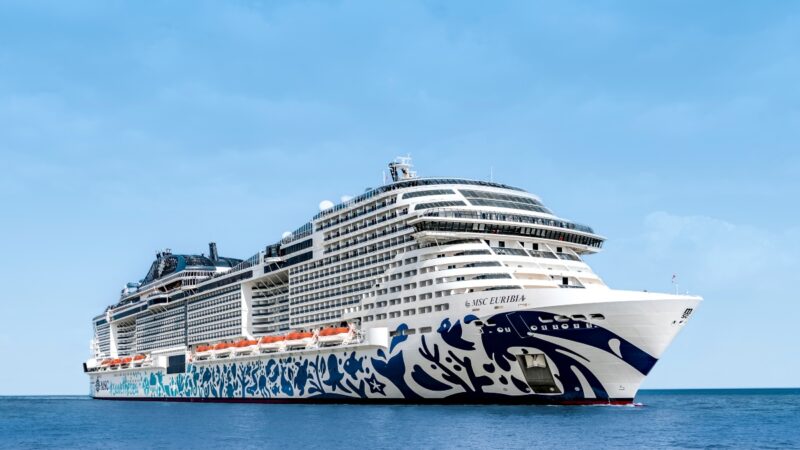
At present, six cruise vessels are reported to be in the region, including MSC Euribia, Mein Schiff 4, Mein Schiff 5, Celestyal Journey, Celestyal Discovery, and Aroya. Collectively, these ships have the capacity to accommodate approximately 17,000 people, making them a potentially effective solution for large-scale evacuation efforts.
The crisis has left thousands of seafarers stranded aboard commercial vessels across the Gulf, with limited options for crew changes or safe disembarkation. Industry stakeholders have raised concerns over crew welfare, citing fatigue, mental stress, and logistical challenges caused by prolonged deployments at sea.
In response, MSC Cruises has already begun scaling down operations on some of its vessels in the region. Vago revealed that crew levels on the MSC Euribia have been reduced to minimum manning requirements. The ship, which was originally scheduled to operate in Northern Europe during the upcoming summer season, has had its planned voyages cancelled.
Other cruise operators are facing similar disruptions, as restrictions and safety concerns continue to prevent vessels from repositioning outside the Gulf. This has not only impacted cruise itineraries within the region but also triggered a ripple effect on global deployment schedules.
The proposed evacuation plan, however, is still in its early stages and hinges on multiple factors, including security conditions, regulatory approvals, and coordination with international maritime bodies. The IMO is expected to play a central role in facilitating dialogue between governments, shipping companies, and port authorities to ensure any evacuation is carried out safely and efficiently.
Experts note that using cruise ships for humanitarian missions is not unprecedented. During past crises, including the COVID-19 pandemic, cruise liners were occasionally used for repatriation efforts due to their large capacity and onboard facilities. However, executing such an operation in a geopolitically sensitive region like the Persian Gulf would require meticulous planning and real-time coordination.
Meanwhile, passengers affected by the cancellation of scheduled sailings have been advised to remain in contact with cruise operators for updates regarding refunds or alternative travel arrangements. Cruise lines have assured customers that they are monitoring the situation closely and will provide timely assistance.
For now, the primary focus remains on safeguarding the welfare of seafarers who continue to serve aboard vessels in challenging conditions. While MSC’s proposal offers a potential pathway to ease the crisis, its implementation will depend on how the situation evolves in the coming days.
As uncertainty persists, the global maritime community is watching closely, hoping for a swift and coordinated solution to bring relief to thousands of seafarers awaiting safe passage out of the region.

Author: shipping inbox
shipping and maritime related web portal