




Scrapping Squeeze Looms as Container Shipping Faces Overcapacity and Tighter Recycling Rules
As the global container shipping industry braces for a prolonged period of overcapacity, vessel demolition is increasingly seen as a key mechanism to restore balance between supply and demand. However, just as scrapping is expected to accelerate, regulatory constraints — particularly in Europe — are shrinking available recycling capacity, raising concerns over whether the industry can dismantle ageing ships at the pace required.

The challenge is stark. According to shipping consultancy Drewry, barely 6,000 teu of container capacity was scrapped worldwide in 2025. Rival analyst Alphaliner put the figure slightly higher at 8,172 teu, but noted that only 12 container vessels were demolished during the year — the lowest level of recycling in two decades. This historically low scrapping comes despite a large and ageing fleet, and at a time when new deliveries continue to add pressure to freight and charter rates.
Looking ahead, Drewry expects a dramatic shift. The consultancy forecasts that container ship demolition could exceed 400,000 teu this year, rising to more than 700,000 teu annually in subsequent years as market conditions deteriorate and owners are forced to remove surplus capacity.
One possible catalyst is the anticipated return of container traffic to the shorter Suez Canal route between Asia and Europe. Alphaliner argues that reduced sailing distances would release significant capacity back into the market. “With the substantial release of tonnage and cascading that the shorter teu-mile distances will create, freight and charter rates could come under significant pressure, leading shipowners to consider scrapping some of their older tonnage,” the analyst said.
Yet while economic forces point towards higher demolition volumes, regulatory developments may limit where and how ships can be recycled. Central to this debate is the Hong Kong International Convention for the Safe and Environmentally Sound Recycling of Ships (HKC). Adopted by the International Maritime Organization (IMO) in May 2009, the convention finally entered into force in June last year — 16 years later — with the promise of safer and cleaner ship recycling practices.
Under the HKC, vessels must carry an inventory of hazardous materials, and owners are required to send ships for recycling to approved yards that meet defined safety and environmental standards. However, the European Union has taken the view that the convention does not go far enough.
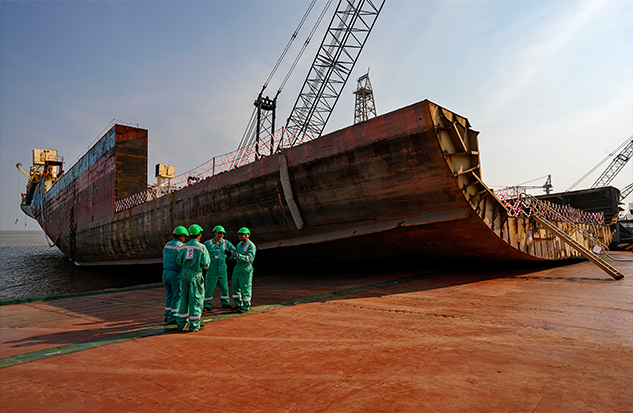
The EU does not recognise shipbreaking yards that dismantle vessels by beaching them on tidal shores, a method widely used in South Asia, including India, Bangladesh and Pakistan. European authorities argue that beaching poses unacceptable risks to workers and the marine environment due to inadequate containment of pollutants.
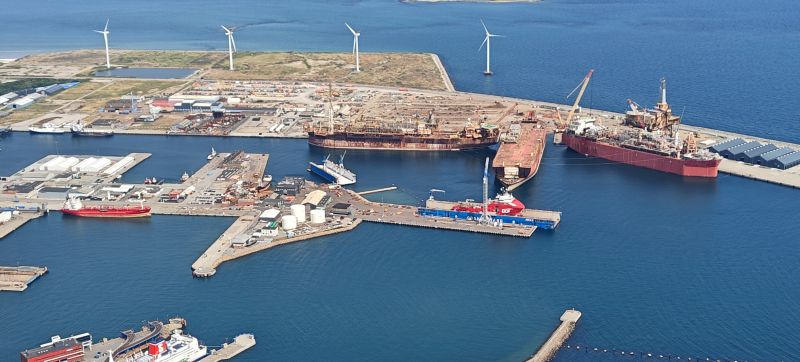
As a result, the EU is moving to unilaterally strengthen the application of ship recycling rules. It has already established its own Ship Recycling Regulation (SRR), backed by a list of EU-approved yards. The 15th update of this list was released in December, and it continues to exclude many subcontinental facilities.
According to Alphaliner, the EU has also identified loopholes in the HKC — notably the practice of reflagging vessels at the end of their operational lives to non-EU flags, allowing owners to bypass EU-approved yards. To close this gap, Brussels is considering making shipowners responsible for safe recycling regardless of a vessel’s flag. Proposals under discussion include tougher penalties and the introduction of a “ship recycling licence” aimed at bridging the price gap between EU-listed yards and cheaper South Asian facilities.
These moves come at a time when the structure of the global container fleet suggests a wave of scrapping is inevitable. A recent age-profile analysis by consultant MDS Transmodal shows that while vessels above 10,000 teu are set to expand by 50–100% by 2030, opportunities to recycle these newer ships will remain limited.
In contrast, smaller vessels are ageing rapidly. “Sub-5,000 teu vessels are ageing fast — more than 60% are over 25 years old — and few replacements are on order,” said MDS Transmodal analyst Antonella Teodoro. “By 2030, the global fleet below 2,500 teu could contract by 40–80%.”
MDS Transmodal estimates that by 2030 there will be around 3,450 container ships aged over 25 years, with 2,050 of them operated by the world’s top 10 carriers. If all ships over 25 were scrapped by then, about 11 million teu of capacity would be removed. Even if only half that number is recycled, demolition volumes would still need to exceed 1 million teu per year — far above recent levels.
Historically, such figures are not unprecedented. Alphaliner notes that 2016 saw the highest level of container ship recycling in the past 20 years, with 655,000 teu scrapped — nearly a decade before the HKC entered into force.
Environmental groups, however, argue that higher costs are justified. Ingvild Jenssen, executive director and founder of the NGO Shipbreaking Platform, supports the EU’s hard line. She warns against what she describes as a “double standard” whereby European regulators would approve facilities in third countries that could not legally operate within Europe.
“Beaching — the current method used by Indian yards — does not provide full containment of pollutants,” Jenssen said. “It is not allowed in the EU, explicitly banned in China and the UAE, and has even been identified as a method that needs to be replaced by drydocks by the Indian government in its Maritime India Vision 2030.”
With the EU expected to unveil further measures to bolster the HKC in the first quarter of this year, shipowners face a narrowing set of demolition options just as scrapping demand is set to surge — a tension that could reshape the economics of container shipping in the years ahead.

Author: shipping inbox
shipping and maritime related web portal