




New SPV- Old Problems: Who Failed Gujarat’s Non-Major Ports?
Critics say the creation of a new entity cannot substitute for fixing institutional lapses within the Gujarat Maritime Board

The Gujarat government’s decision to grant in-principle approval for the formation of a special purpose vehicle (SPV) to develop, operate and maintain ports owned and operated by the Gujarat Maritime Board (GMB) has triggered a wider debate on accountability, institutional capacity and the reasons behind years of reported infrastructure and maintenance challenges across the state’s non-major ports.
A memorandum issued by the state ports and transport department on December 31, 2025, confirmed that the government has cleared the proposal to set up an SPV, with 51% equity participation by GMB and 49% by the state government. An allocation of ₹50 crore has been approved in the state budget for 2025–26, which will be counted towards the government’s equity contribution in the new entity.
The SPV will function as the implementing agency under the overall supervision and control of the GMB. Ownership of all port assets and revenues will remain with the GMB, while the SPV will be authorised to levy administrative fees for its activities and undertake marine-related and value-added services as approved by the maritime board.
While the official rationale behind the move is to accelerate redevelopment and address long-standing maintenance bottlenecks, the decision has also raised uncomfortable questions: if GMB already has a dedicated institutional structure, a large technical workforce and experienced engineers, why was such a drastic structural intervention required? And more importantly, who bears responsibility for the poor infrastructure and maintenance issues that have plagued several GMB-controlled ports over the years?
A vast network under strain
The Gujarat Maritime Board manages 48 non-major ports across the state, grouped into 10 major clusters, including Magdalla, Bharuch (Dahej), Bhavnagar, Jafrabad, Veraval, Porbandar, Okha, Jamnagar (Bedi and Sikka), Navlakhi and Mandvi. These ports form a critical backbone of Gujarat’s maritime economy, supporting cargo movement, coastal trade, fisheries, ship recycling and allied industries.
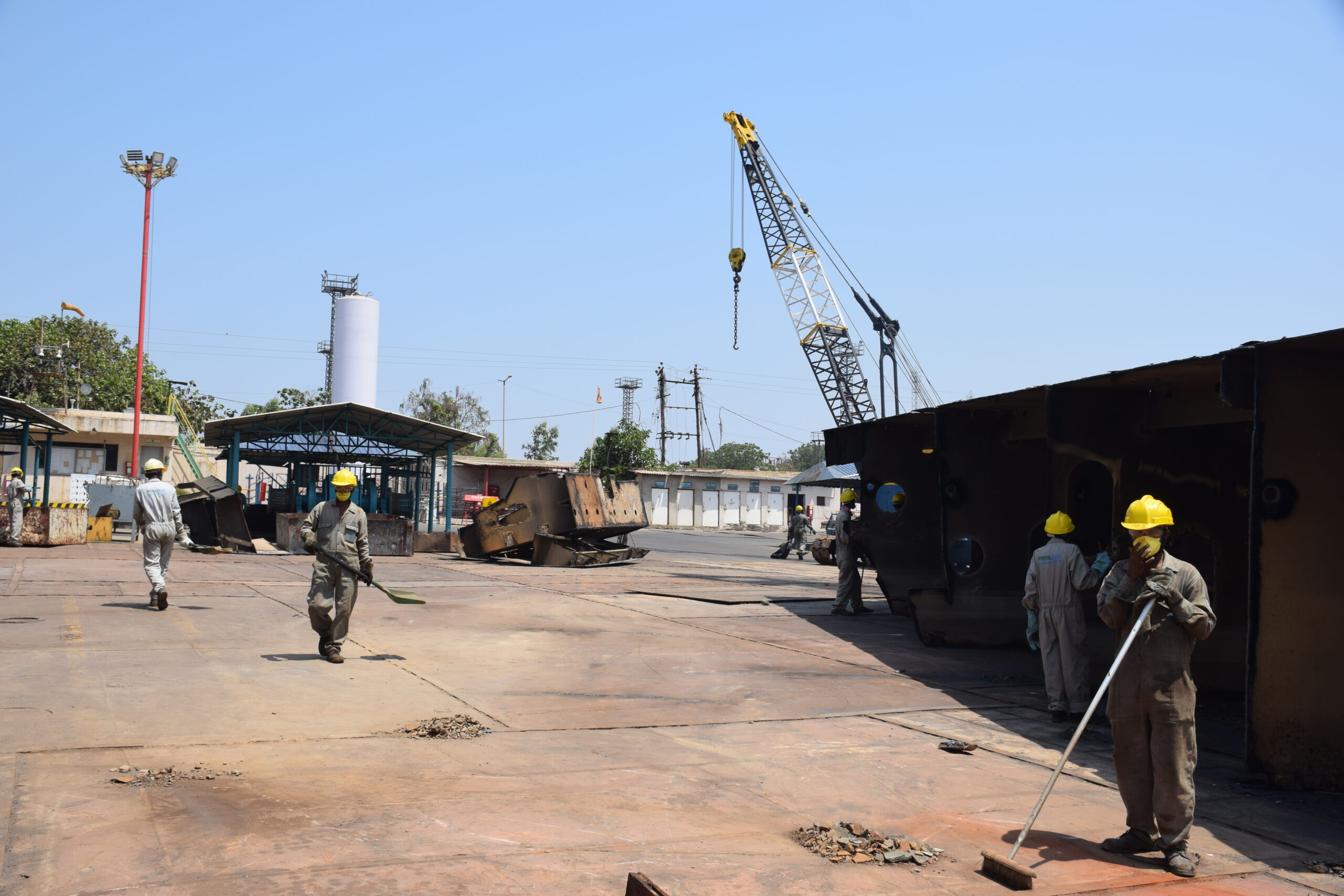
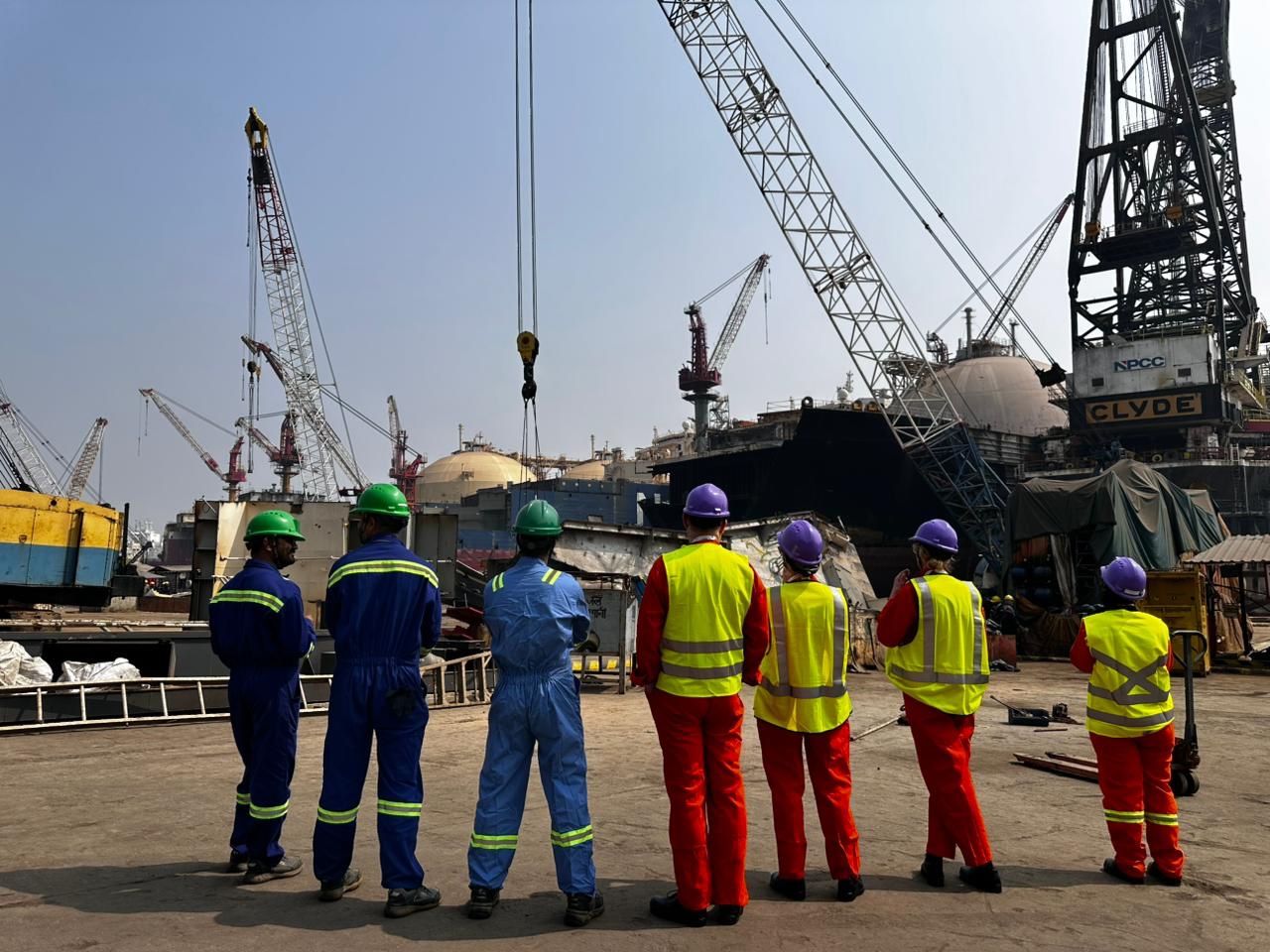
Key individual ports such as Alang, the world’s largest ship recycling hub, as well as Mundra, Pipavav, Hazira and Tuna, play a strategic role in India’s logistics and energy ecosystem. While several of these ports are privately operated under concession agreements, they continue to function under GMB’s regulatory and oversight framework.
Despite Gujarat’s reputation as India’s most port-led economy, insiders acknowledge that ports directly operated by GMB — as opposed to privately run terminals — are facing mounting maintenance challenges. Ageing infrastructure, delayed dredging, inadequate berthing facilities, and slow execution of upgrade projects have been repeatedly cited by port users and officials.
A senior officer close to the development said, “At present, almost all the ports directly under GMB are facing maintenance challenges. Despite several administrative efforts, GMB faced difficulty in achieving faster development of these ports. With this consideration, the state government decided to form an SPV to initiate redevelopment of all GMB ports.”
Under the proposed model, the government will provide budgetary support, while GMB is expected to contribute significant funds from its own resources. The SPV is envisioned as a professional, project-focused vehicle that can circumvent some of the procedural delays inherent in traditional departmental operations.
The accountability question
However, the formation of an SPV has also brought to the fore questions about institutional accountability within the GMB itself. GMB has its own organisational setup, with a substantial technical workforce, including engineers tasked specifically with infrastructure development and maintenance.
When asked about responsibility for maintenance and infrastructure issues, a serving port officer of GMB reportedly pointed to one individual — Mr Bhavesh Talaviya, Chief Engineer of the GMB — stating that he has been overseeing these functions for nearly 15 years.
This disclosure has intensified scrutiny, particularly because Mr Talaviya is due to retire in February 2026. According to sources, the GMB is planning to grant him an extension of service, even as the government sets up an SPV ostensibly to address failures in development, operation and maintenance.
Critics argue that this raises a fundamental contradiction. If the chief engineer has been directly responsible for overseeing infrastructure and maintenance for over a decade, and if the ports are now acknowledged to be in a state requiring urgent redevelopment, should there not be a formal assessment of performance? Why has no inquiry been initiated into the failure of key projects or the persistent complaints of poor maintenance?
“Instead of fixing accountability within the existing system, the government appears to be creating a parallel structure,” said a former senior official familiar with maritime governance. “An SPV may help in execution, but it does not answer the question of why the original system failed and who should be held responsible.”
Extension amid restructuring
The reported plan to grant an extension to the chief engineer has further fuelled controversy. Observers point out that extensions are typically justified on grounds of exceptional performance, institutional memory or the need for continuity in critical projects. In this case, however, the very justification for creating an SPV rests on the argument that the existing system was unable to deliver timely development and proper maintenance.
“If poor infrastructure and maintenance are being acknowledged at the highest levels, how does one justify extending the tenure of the person who was at the helm of these functions for 15 years?” asked a port sector analyst. “This sends a confusing signal about accountability and reform.”
No official statement has yet been issued by the GMB or the state government addressing these specific concerns, including whether any internal review of past performance has been conducted or whether the extension proposal is linked to the transition into the SPV framework.
What the SPV will do
According to the December 31 memorandum, the SPV will operate under the supervision and control of the GMB, suggesting that it will not be an entirely independent entity. While this ensures continuity and alignment with the board’s broader strategy, it also raises questions about whether the new structure will truly represent a break from past practices.
The SPV will not own port assets or revenues, which will remain with the GMB. Instead, it will be authorised to levy administrative fees and undertake marine-related and value-added services as approved by the board. Officials say this will give the SPV financial flexibility while preserving public ownership of strategic assets.
Proponents argue that an SPV can bring sharper focus, professional project management and faster decision-making, particularly for redevelopment and modernisation projects. Similar models have been used in infrastructure sectors such as roads, metros and urban redevelopment.
A test of governance reform
For Gujarat, which has long projected itself as a model of infrastructure-led growth, the success or failure of this SPV will be closely watched. Beyond improving physical infrastructure, the initiative will be judged on whether it introduces greater transparency, accountability and clarity of roles within the maritime administration.
Experts caution that structural reforms without parallel governance reforms risk becoming cosmetic. “An SPV can be a useful tool, but it cannot substitute for accountability,” said an academic specialising in public sector reforms. “If the same individuals, the same decision-making culture and the same lack of performance review continue, the outcomes may not change.”
As the SPV moves from in-principle approval to actual implementation, stakeholders — including port users, industry bodies and the wider public — are likely to demand clearer answers. Who failed, why did they fail, and what safeguards are being put in place to ensure that history does not repeat itself?
With ₹50 crore already earmarked from the state budget and more funds expected from GMB’s own resources, the stakes are high. The coming months will reveal whether the SPV marks a genuine turning point for Gujarat’s non-major ports or merely adds another layer to an already complex maritime governance structure.

Author: shipping inbox
shipping and maritime related web portal