



Bridging the Global Ship Recycling Divide: Why Law- Geography and Reality Must Finally Converge
Global ship recycling today no longer suffers from a lack of rules. It suffers from a failure to connect them. What is often described as a compliance gap is, in reality, a deeper governance failure created by fragmented legal regimes that refuse to engage with where and how ship recycling actually takes place. The result is a system that is legally dense, institutionally complex, and operationally incoherent—leaving shipowners, regulators and recyclers trapped in a regulatory gridlock.

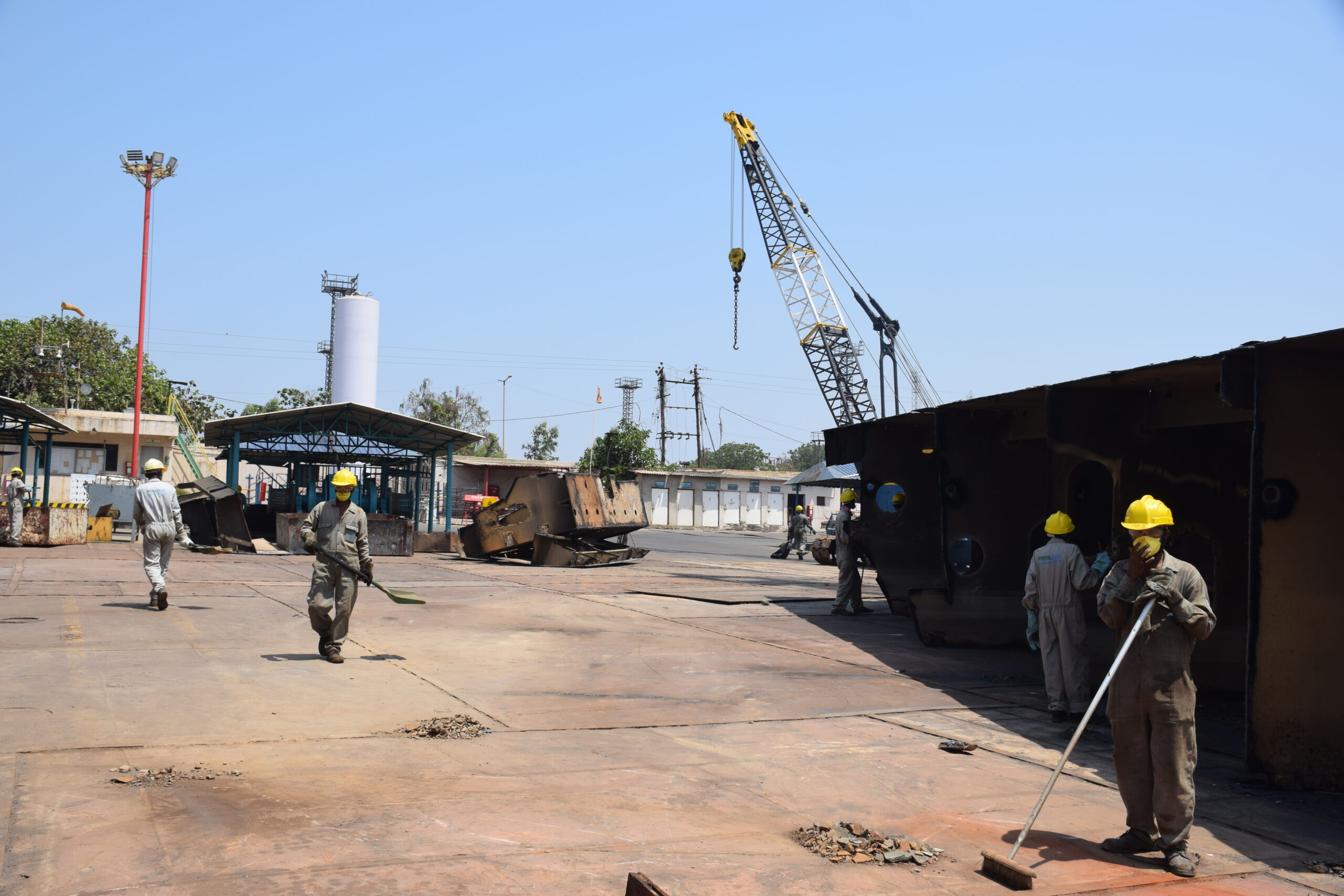
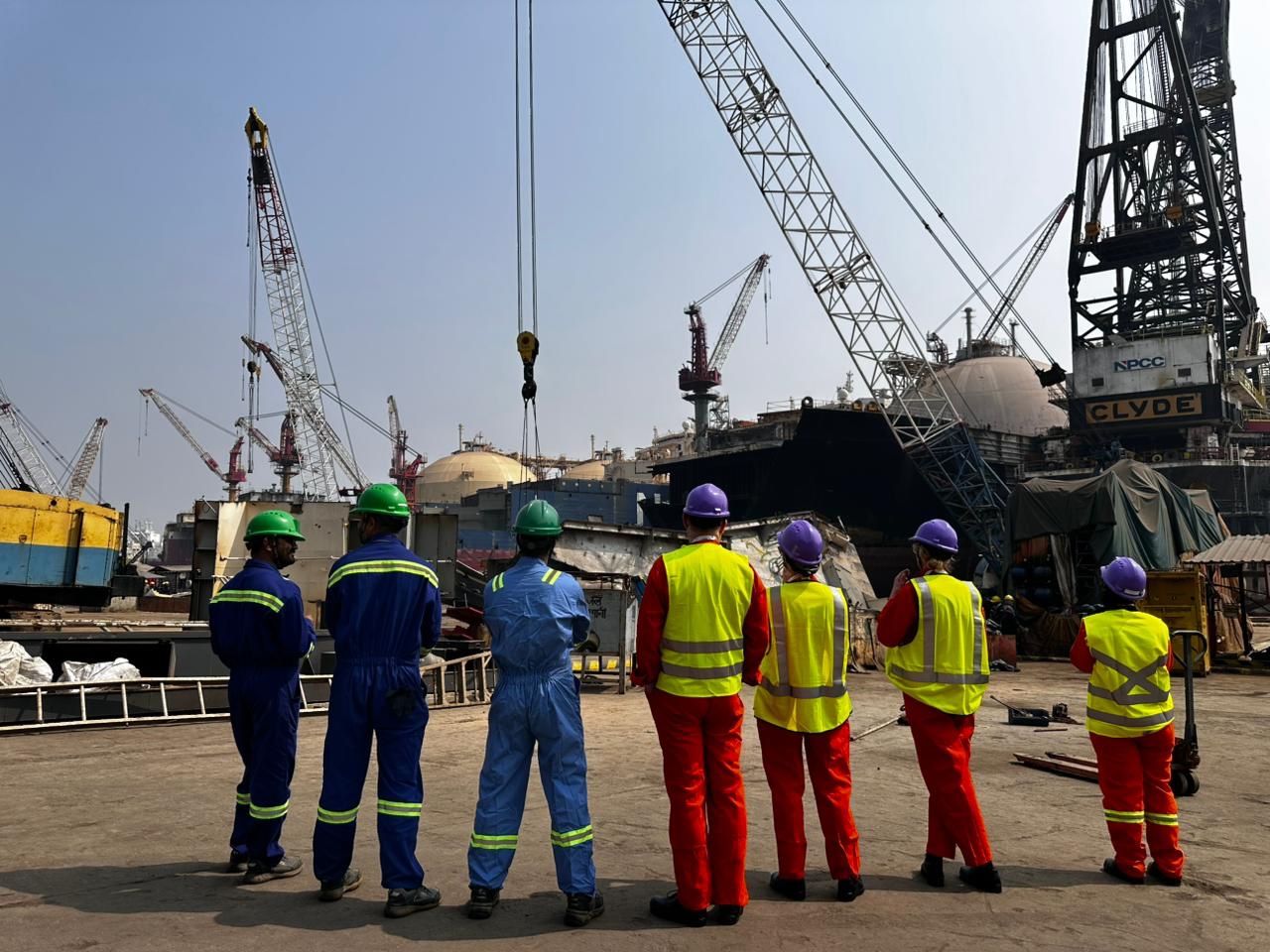
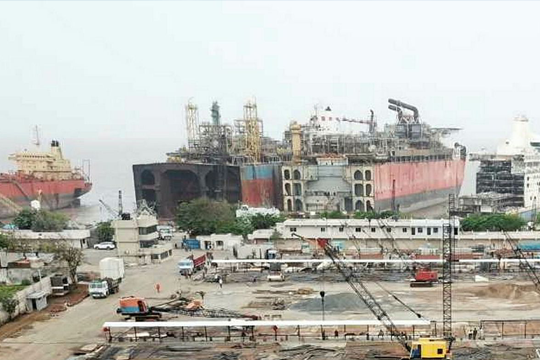
At the heart of this contradiction lies South Asia. Bangladesh and India are now the world’s two largest ship-recycling states when measured by annual steel recovered from end-of-life vessels. Together, they account for close to four-fifths of global ship-recycling activity. This dominance did not arise by accident, nor has it persisted through regulatory neglect. Over the past decade, both countries have undertaken extensive legal and technical reforms to align their domestic ship-recycling frameworks with international standards.
These reforms were not symbolic. They followed detailed gap analyses comparing national laws with the Hong Kong International Convention for the Safe and Environmentally Sound Recycling of Ships (HKC), alongside parallel assessments of hazardous-waste management regimes against the Basel Convention. Only after completing these exercises did India, in 2019, and Bangladesh, in 2023, ratify the Hong Kong Convention and restructure their approval systems, institutional oversight, and enforcement mechanisms to make compliance function in practice.
Under the Hong Kong Convention framework, the legal expectation is clear: ships belonging to states parties should be recycled in facilities that meet convention standards. In response, a substantial number of South Asian recyclers have invested heavily in infrastructure, safety systems, worker training, waste-handling capacity, and compliance management. In India, nearly 90 per cent of ship-recycling facilities now operate within this framework. In Bangladesh, investment has followed a phased but accelerating trajectory. These developments represent genuine regulatory convergence, not merely paper compliance.
Yet despite this progress, the global system has reached an impasse. Roughly 30 per cent of the world’s merchant fleet is owned by European shipping companies. These beneficial owners operate under a regulatory regime that deliberately goes beyond international conventions. The EU Ship Recycling Regulation (EU SRR), working in tandem with EU waste-shipment law, effectively prohibits EU-flagged ships—and in many cases EU-owned ships—from being recycled outside facilities appearing on an EU-approved list. Crucially, that list currently contains no ship-recycling facilities in South Asia.
This exclusion is often framed as a question of standards. In reality, it reflects a deeper structural mismatch. EU requirements sit significantly above the Hong Kong Convention baseline, both substantively and institutionally. They assume advanced enforcement capacity, mature judicial oversight, and decades of regulatory consolidation. South Asian legal systems are improving rapidly, but they are not replicas of European governance models. That difference, however, cannot justify regulatory paralysis in an industry that depends on South Asia for its very existence.
The core problem is not that standards are too high. It is that no serious effort has been made to harmonise EU law with the geographical, economic and industrial realities of ship recycling. The EU-approved list remains overwhelmingly concentrated in OECD states. Its aggregate capacity is negligible relative to global end-of-life shipping volumes, and its cost structure is fundamentally misaligned with the industry. Labour costs in OECD recycling facilities are commonly twenty to one hundred times higher than in India and Bangladesh, creating an efficiency gap that determines where ships can be dismantled at scale.
Cost, however, explains only part of the picture. Geography is equally decisive. South Asia enjoys a natural advantage that no regulatory reform can replicate elsewhere. In Bangladesh, India and Pakistan’s coastal belt, tidal variations of 30 to 40 feet are routine. This enables gravity-assisted beaching and dismantling, reduces dependence on heavy dock infrastructure, lowers energy demand, and permits sectional removal under controlled conditions when properly regulated. Decades of engineering, environmental and occupational research confirm that no other region combines this tidal profile with an established industrial workforce, a secondary steel market and deep supply-chain integration.
This is not a policy preference; it is a physical constraint. No OECD coastline offers comparable conditions, and no amount of regulatory ambition can legislate geography out of existence.
Ship recycling is also among the most dangerous and labour-intensive activities in the maritime economy. As long as beaching remains the dominant dismantling method recognised in international law, no high-income country can realistically compete with South Asia on cost, capacity or throughput. India, Pakistan and Bangladesh combine factors found nowhere else: extreme tidal variation, decades of accumulated technical experience, established re-rolling and resale markets, and a large workforce facing sustained employment pressure. Other regions lack either the geography, the industrial depth or the legal space to absorb global ship recycling at scale.
This reality exposes a structural contradiction in the current legal framework. EU-flagged ships may, in limited circumstances, be recycled outside the OECD if the receiving facility is EU-listed. Non-EU-flagged ships face a far more restrictive pathway. Once a vessel becomes waste within EU territory, the Basel Convention—and for many states, the Basel Ban Amendment—effectively prohibits its export to non-OECD countries. This legal trap affects the remaining 70 per cent of the global fleet that is not EU-flagged but nonetheless enters EU jurisdiction at the end of its life.
The result is regulatory gridlock. EU ships cannot access South Asian capacity because those yards are not listed. Non-EU ships cannot legally reach South Asia once classified as waste in EU territory. Both channels are blocked simultaneously, leaving shipowners navigating a compliance maze that no amount of good faith can resolve.
In this context, harmonisation is no longer a policy option; it is an operational necessity. If the Basel Convention, the Basel Ban Amendment, the Hong Kong Convention and the EU Ship Recycling Regulation are to function as a coherent system, new legal architecture is unavoidable. The most realistic path forward is a deliberate policy decision by OECD and EU states to extend their ship-recycling standards beyond their own territories through a system of certified equivalence.
Under such a model, ship-recycling facilities outside the OECD could be recognised as compliant for Basel purposes if they demonstrably meet OECD-level environmental, safety and enforcement standards. In parallel, the EU would establish a formal pathway under its Ship Recycling Regulation for EU-standard certification of non-OECD facilities, particularly in South Asia, where global capacity actually exists.
This approach does not dilute the Basel regime. It preserves its underlying logic. Basel was never intended to impose a blanket territorial prohibition divorced from performance. Its purpose is to prevent hazardous waste from being transferred to substandard facilities. Where a facility outside the OECD demonstrably operates at OECD standards, the scientific and legal justification for prohibition falls away.
Absent this policy shift, evasion will remain rational. Flag hopping will increase, ownership chains will grow more opaque, and environmental and labour risks will remain concentrated in South Asia while regulatory credit is claimed elsewhere. For more than four decades, South Asia has been the nerve centre of global ship recycling. It will remain so for the foreseeable future. The real choice facing the international community is no longer between regulation and flexibility—it is between functional governance and legal fiction.

Author: shipping inbox
shipping and maritime related web portal