



Ship Recycling Regulations 2026: India’s Maritime Recycling Industry at a Defining Crossroads
New safety, environmental and compliance regime promises global credibility, but raises costs and operational challenges for ship recyclers

The Indian ship recycling industry, one of the largest in the world and a critical contributor to the country’s circular economy, is standing at the threshold of a profound transformation. With the Union Ministry of Ports, Shipping and Waterways notifying the Ship Recycling Regulations, 2026, the sector is being ushered into a far more regulated, safety-driven and environmentally accountable era.
Framed under Section 43 of the Ship Recycling Act, 2019, with prior approval of the Central Government, the new regulations are closely aligned with the Hong Kong International Convention for the Safe and Environmentally Sound Recycling of Ships, 2009. The government describes the move as a decisive step towards safeguarding workers, protecting fragile coastal ecosystems and enhancing India’s standing as a responsible global ship recycling hub.
For the industry, however, the road ahead is likely to be demanding. While stakeholders broadly acknowledge the long-term benefits of harmonising Indian practices with international standards, they also warn that the transition will bring significant operational, financial and administrative challenges—particularly for smaller and older recycling yards.
Wide applicability across Indian waters
The Ship Recycling Regulations, 2026 have a sweeping scope. They apply to all ship recycling facilities operating in India or under India’s exclusive territorial jurisdiction, covering activities in territorial waters, the Exclusive Economic Zone (EEZ) and other maritime zones where India exercises pollution control authority.
The rules extend not only to existing Indian-registered ships, irrespective of their location, but also to new ships required to be registered in India. Importantly, foreign-flagged vessels entering Indian ports, shipyards, offshore terminals or coastal waters for recycling also fall squarely within the regulatory framework.
Even government-owned vessels, including warships and naval auxiliaries designated for recycling in India, are covered—underscoring the government’s intent to ensure uniform standards across civilian and state-owned assets alike.
Clear definitions and a multi-agency framework
The notification lays out detailed definitions for key technical and regulatory terms, including hazardous materials, Light Displacement Tonnage (LDT), safe-for-entry and safe-for-hot-work conditions, and the roles of various authorities. It clearly identifies the responsibilities of a wide range of institutions such as the National Authority, State Maritime Boards, Port Authorities, Pollution Control Boards, the Petroleum and Explosives Safety Organisation (PESO), the Atomic Energy Regulatory Board, and state-level Industrial Safety and Health Directorates.
While this clarity is intended to streamline oversight, industry players fear that the involvement of multiple agencies could also lead to procedural delays and increased compliance burdens unless coordination mechanisms are robust.
Mandatory authorisation and five-year certification
One of the most significant changes introduced by the regulations is the requirement that every ship recycling facility must be designed, constructed and operated in a safe and environmentally sound manner, as prescribed in the First Schedule of the rules.
Each facility must hold a valid Authorisation Certificate (Form 3), issued for a period of five years. No yard can operate without approval under the Ship Recycling Rules, 2021, and facilities are required to establish comprehensive management systems to prevent risks to workers, nearby communities and the environment.
For many yards—particularly those established decades ago—meeting these infrastructure and system requirements will entail substantial capital investment.
Ship Recycling Facility Management Plan made compulsory
The regulations make it mandatory for every recycling yard to prepare and submit a detailed Ship Recycling Facility Management Plan (SRFMP) for approval by the Competent Authority. This plan must spell out the yard’s occupational safety and environmental protection policies, clearly define the roles and responsibilities of employers and workers, and outline training, emergency preparedness and response mechanisms.
It must also include systems for monitoring, reporting and record-keeping, procedures for accident and disease reporting, and explicit compliance with national laws as well as International Labour Organization (ILO) and International Maritime Organization (IMO) guidelines.
The Competent Authority is required to complete its assessment within 30 days, provided no deficiencies remain—an assurance that, if implemented effectively, could help reduce uncertainty for operators.
Stricter safety, training and medical requirements
At the heart of the new regime is a strong emphasis on worker safety. The regulations mandate certified training programmes for all workers, including contractual labour, with initial and refresher training at intervals not exceeding three years. Training programmes must be reviewed annually and properly documented.
Medical examinations are to be conducted at least once every two years, and annually for workers aged 45 and above. In the event of workplace accidents, immediate medical treatment and compensation are compulsory.
Crucially, only competent and authorised persons are permitted to approve high-risk operations such as hot work and confined space entry. For yards accustomed to informal or loosely documented practices, this marks a fundamental cultural shift.
Safe-for-hot-work standards and infrastructure upgrades
Perhaps the most capital-intensive requirement relates to safe-for-hot-work conditions. To meet these standards, recycling yards must establish gas-free systems, continuous monitoring mechanisms, fire prevention and firefighting infrastructure, certified equipment, on-site medical facilities and trained emergency response teams.
Ship breakers warn that these requirements, while necessary from a safety standpoint, could significantly raise operating costs. Smaller yards, in particular, may struggle to mobilise the investments needed to comply, potentially leading to industry consolidation.
Hazardous waste handling and TSDF linkage
The regulations impose stringent controls on the removal, labelling, segregation and disposal of hazardous materials. Mandatory membership of authorised Treatment, Storage and Disposal Facilities (TSDFs) and the use of licensed transporters for hazardous waste will further add to compliance costs.
All hazardous substances must be handled in a manner that poses no risk to human health or the environment, with strict adherence to hazardous waste, air pollution and water pollution laws.
Inspections, audits and enforcement powers
Under the new framework, the Competent Authority or recognised organisations are empowered to conduct on-site inspections and audits, with inspection reports to be issued within seven days. Facilities found to be repeatedly non-compliant can be denied authorisation, and corrective actions must be implemented before fresh applications are considered.
While facilities must be given at least seven days’ prior notice before inspections, the regulations also grant authorities the power to suspend operations immediately in cases of fire, explosion, oil spills or serious pollution incidents—a provision that has heightened anxiety among recyclers.
Recycling-ready certificates and controlled ship entry
Ship owners intending to recycle vessels must now obtain a Ready for Recycling Certificate from the National Authority. Depending on the case, Form 1 is issued for international recycling and Form 2 for domestic recycling.
Before a vessel is moved from an anchorage to a recycling yard, written permission from the Competent Authority is mandatory, along with final clearance from port authorities or State Maritime Boards and customs verification. Indian-registered ships recycled abroad must be dismantled only at facilities authorised under applicable international regulations.
Mandatory completion reporting and traceability
Upon completion of partial or full recycling, ship recyclers must submit a Statement of Completion (Form 9) within 14 days, detailing any accidents, incidents or environmental damage. Partial recycling has been clearly defined, ensuring traceability if remaining sections of a ship are transferred elsewhere.
Balancing ambition with ground realities
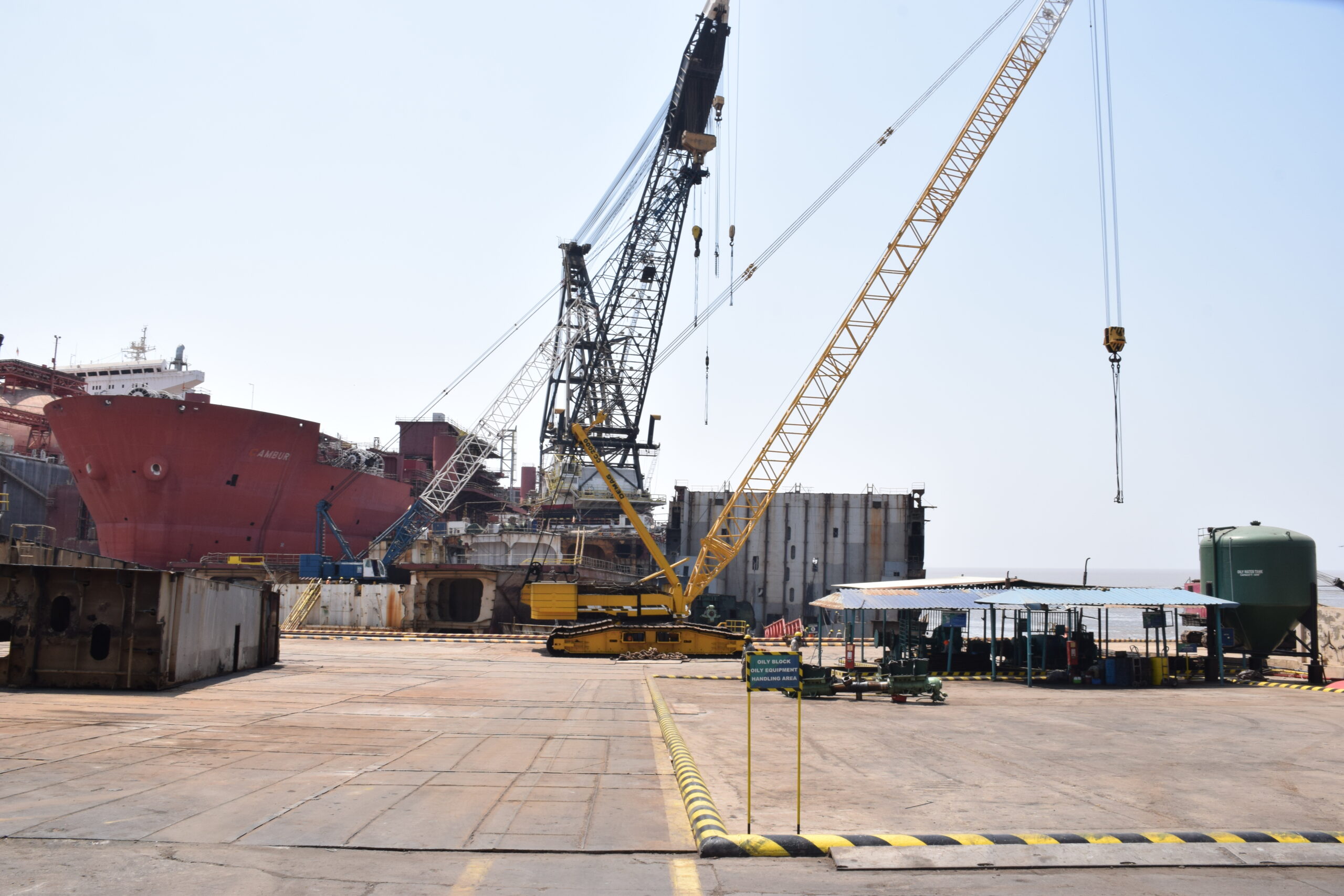
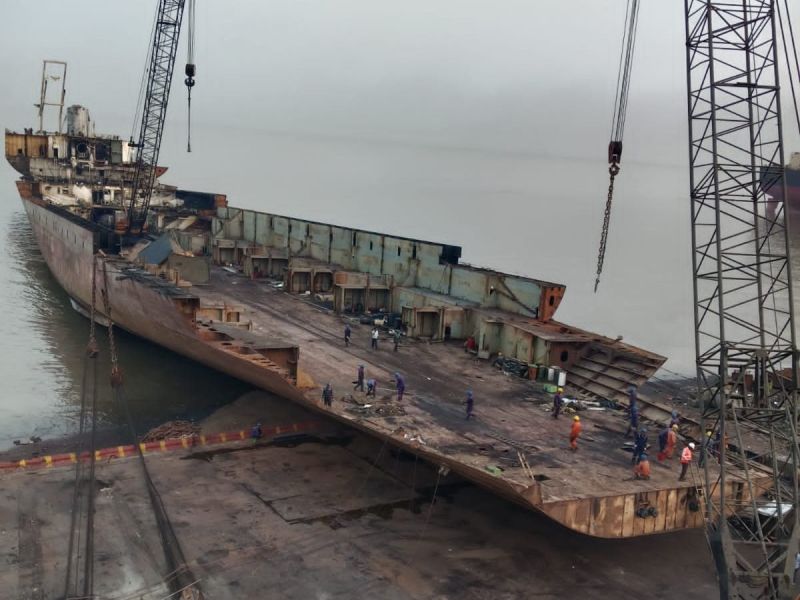
India, particularly through the Alang–Sosiya ship recycling yard in Gujarat, has long been a global leader in ship recycling. The government believes the Ship Recycling Regulations, 2026, will further strengthen India’s credibility, sustainability credentials and competitiveness.
Industry stakeholders, while supportive of the broader objectives, caution that without transitional support, streamlined approvals and financial incentives, compliance costs could squeeze smaller operators out of the market.
What is clear, however, is that ship recycling in India is no longer viewed merely as an exercise in cutting steel. It is being redefined as a complex industrial activity intertwined with worker welfare, environmental stewardship and international accountability. The success of the new regulations will ultimately depend on how effectively ambition is matched with implementation on the ground.

Author: shipping inbox
shipping and maritime related web portal